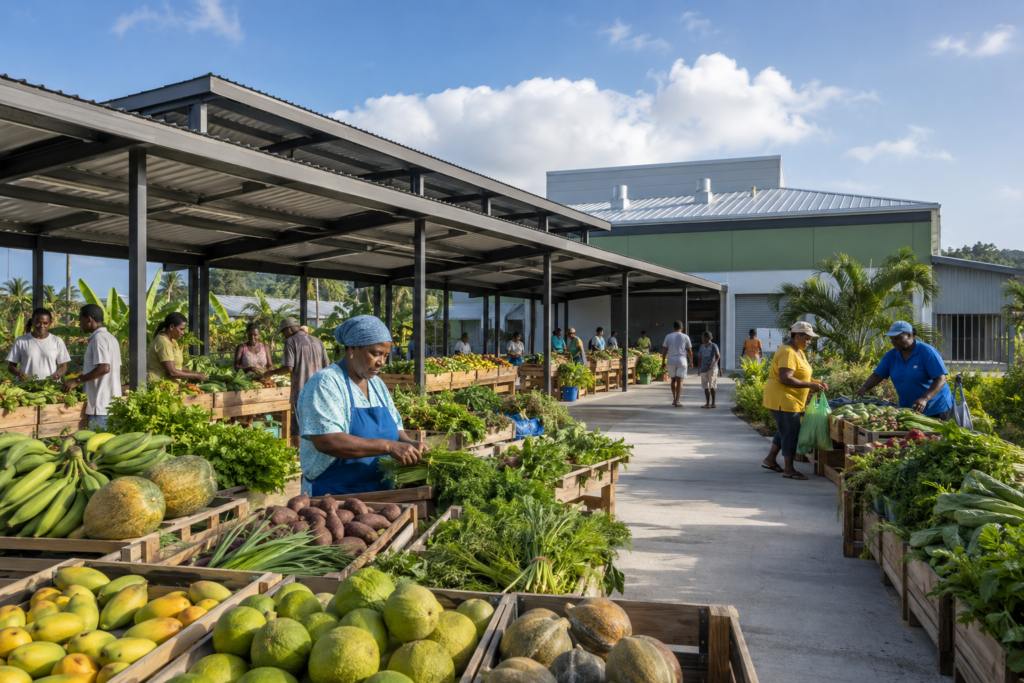
The government of Antigua and Barbuda has formally announced a strategic infrastructure initiative aimed at strengthening the nation’s domestic food production network and reducing long-standing reliance on imported food products. At the core of this project are two key components: a centralized, modern food emporium designed to connect local farmers, processors, and vendors directly to consumers, and two purpose-built abattoirs that will be constructed to serve the country’s northern and southern agricultural regions.
According to government officials, the new facilities are intended to address multiple longstanding challenges facing the twin-island nation’s food sector. For years, small-scale livestock farmers have lacked access to regulated, sanitary slaughtering infrastructure, forcing many to either operate outside formal safety standards or pay exorbitant fees for private processing. The two new abattoirs will bring operations into compliance with international food safety guidelines, opening new opportunities for local producers to sell their products both domestically and potentially in regional export markets.
The centralized food emporium, meanwhile, will function as a one-stop hub for fresh, locally sourced produce, meat, and processed food goods. It will cut out middleman markup that has driven up food costs for consumers, while giving local producers a dedicated, high-traffic space to showcase their goods. Government planners note that the project aligns with the administration’s broader national food security agenda, which was accelerated after global supply chain disruptions during the COVID-19 pandemic exposed the vulnerability of the nation’s heavy dependence on imported food.
Pre-construction feasibility studies and site assessments are already underway, with government representatives indicating that construction on the facilities is expected to begin within the next 12 months. Funding for the project is being drawn from a combination of national development budgets and targeted regional agricultural development grants. Once completed, the initiative is projected to create dozens of full-time jobs in the agricultural, processing, and retail sectors, while lowering average food costs for households across Antigua and Barbuda.