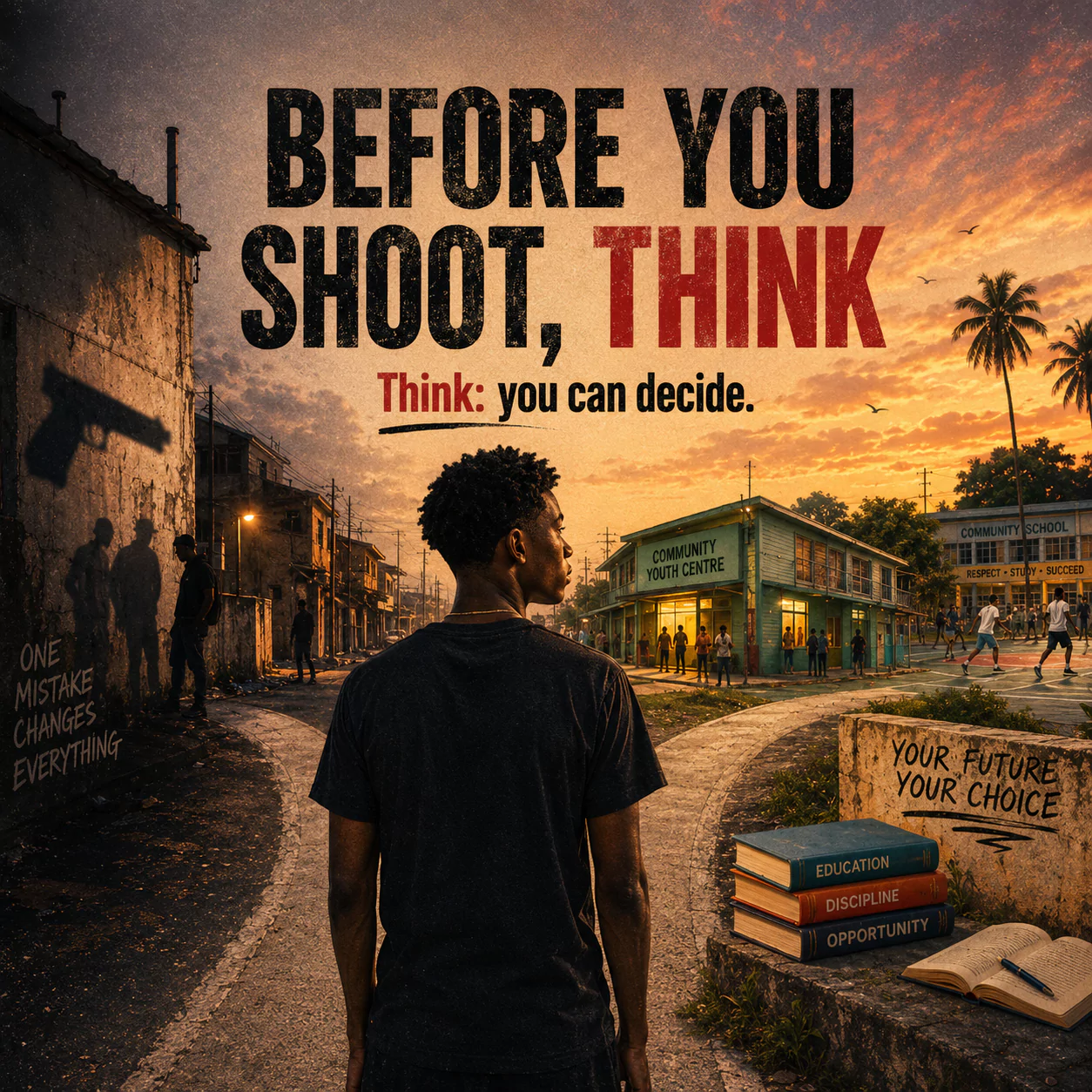
In an urgent open letter addressed to the young people of Antigua and Barbuda, Ambassador Dario Item has issued a heartfelt appeal to end the growing wave of youth-connected gun violence, framing the crisis not as a failure of the nation’s youth, but as a shared national responsibility that demands immediate, collective action.
Item opens his message by emphasizing that the letter is not a condemnation of young people, but a reminder that Antigua and Barbuda cannot afford to lose another promising life to violence before it has had the chance to flourish. He proposes a simple, powerful mantra that every resident should adopt: *Before you shoot, think. Think: you can decide.* This simple call to reflection challenges young people to pause before anger curdles into bloodshed, before pride leads to a lifetime behind bars, before one impulsive act destroys two families – both the victim’s and the shooter’s. He asks at-risk youth to consider how a single bullet can erase everything their loved ones, their community, and their own future beg them to protect.
The crisis of violent crime is no longer a hidden problem in Antigua and Barbuda. Local newsrooms have documented an endless stream of shootings, homicides, armed robberies, and youth recruitment into gangs, leaving countless families grieving and entire communities living in fear. Recent official crime data from national police confirms that even as overall crime rates have declined across the country, rates of gun-related incidents and aggravated robbery have risen, underscoring that violent, weapon-connected crime remains an urgent priority that cannot be ignored.
This crisis is not one that can be solved by law enforcement alone, Item argues. While police, courts, and correctional services play a critical role in maintaining public safety, the crisis of youth violence is a deep national wound that requires far more than punitive action. Police Commissioner Everton Jeffers’ warning that Antigua and Barbuda risks losing an entire generation to violence if it fails to address systemic failures at home, in schools, and in community spaces is not just another headline – it must be a turning point for national policy.
Item acknowledges that investing in law enforcement capacity is a necessary step: boosting police numbers, upgrading equipment, vehicles, communications infrastructure, maritime surveillance, intelligence capabilities, and modern monitoring technology such as CCTV cameras and drones can help deter crime, identify offenders, and speed up response times to violent incidents. But he stresses that these tools alone cannot solve the root of the problem. Cameras can record a shooting, but they cannot teach a young person why pulling the trigger is wrong. Police can arrest a suspect, but they cannot rebuild a child traumatized by systemic neglect or intergenerational poverty. Prisons can punish criminal acts, but they cannot give young people a sense of purpose and belonging that keeps them away from violence in the first place.
That is why, Item argues, the battle against gun violence will never be won by force alone. Tougher laws, increased patrols, longer prison sentences, and better surveillance are necessary, but they are not sufficient. The national campaign he champions centers on the core message of personal agency, paired with national investment in opportunity: *Before you shoot, think. Think: you can decide. Your life is worth more than a gun. Your future is bigger than a gang. Your name can mean more than fear.*
To turn this message into action, Item outlines a multi-pronged strategy focused on prevention rather than just reaction. First, the nation needs trained, empathetic educators who can reach young people who have disengage from traditional support systems – adults equipped to address the root causes of violence: anger, shame, intergenerational trauma, poverty, social rejection, and chronic frustration. These adults must teach young people critical life skills: conflict resolution, emotional regulation, respect for self and others, personal responsibility, and hope for the future, alongside core academic and vocational training.
Schools, he adds, must move beyond reacting to violence after it occurs, and embed prevention into their daily curricula. This includes mandatory anti-violence education, peer mediation programs, mentorship pairing, access to school counseling, extracurricular opportunities in sports and the arts, vocational training, entrepreneurship development, digital literacy, and clear pathways to formal employment after graduation.
The National Youth Parliament has already identified a critical gap in youth services: a lack of accessible community sports and recreation facilities for young people during after-school hours. Empty unstructured time, when there is no guidance, no safe space, and no opportunity for positive growth, quickly becomes dangerous time that leaves young people vulnerable to gang recruitment. Item stresses that this gap must be closed immediately: the most effective way to get young people off the streets is to give them a better, safer place to go. When a young person has a tangible, hopeful future to work toward, violence loses much of its pull.
Directly addressing young people who may be considering carrying a gun or using deadly force, Item debunks the myth that weapons bring power and respect. *That weapon is lying to you*, he writes. It tells you that you are strong, but it makes you a target. It tells you that you are respected, but it only makes people fear you, avoid you, and prepare to mourn you. It tells you that you are in control, but the moment you pull the trigger, you lose control of the rest of your life forever. He once again urges reflection: think of your mother receiving the call that you have been killed or arrested. Think of your younger sibling hearing your name connected to violence on the evening news. Think of your child growing up without you while you serve a life sentence. Think of the person standing in front of you – they are someone’s child, someone’s parent, someone’s friend, someone’s whole world. Then think again. You have a choice: you can walk away, you can reach out for help, you can put the gun down. You do not have to let rage, bad company, quick easy money, or one reckless moment write the story of your life.
Item also issued a direct challenge to national and local leaders across Antigua and Barbuda: it is unfair to ask young people to choose a better path if the nation has not built that path for them. Leaders cannot tell young people to leave the streets if there are no open recreational fields, no accessible vocational training centers, no available mentors, no clear pathways to jobs, no free counseling, no safe community spaces, and no caring adults ready to guide them. Personal responsibility is non-negotiable, Item says, but the provision of opportunity is a national responsibility.
He closes by reaffirming that the young people of Antigua and Barbuda are not disposable, not just statistics, not lost causes. They are the nation’s hope, they are its future. Every dollar invested in violence prevention is a dollar invested in long-term national security. Every trained youth educator is a crime-fighting asset. Every after-school program is a shield against violence. Every apprenticeship is a tangible alternative to joining a gang. Every caring mentor can save a life.
Antigua and Barbuda must fight crime with strong law enforcement, yes. But it must also fight violence with consistent, accessible education. It must fight gang recruitment with real opportunity. It must fight hopelessness with a clear sense of purpose. It must fight fear with connected, supportive communities. It must address the crisis of guns before a gun is ever lifted.
*Dear young people, this country needs you alive*, Item writes. It needs your talent, your strength, your ideas, your courage, your creativity, your businesses, your leadership, your hands, your mind, your future. Do not surrender your life to a trigger. Think. You can decide.