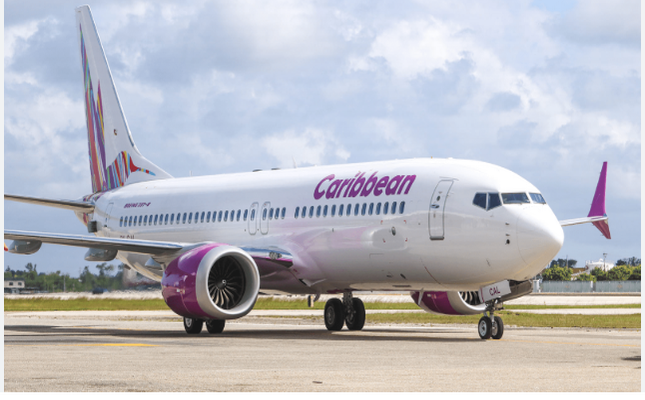
BASSETERRE, St Kitts – State-owned Caribbean Airlines, headquartered in Trinidad and Tobago, has unveiled another round of cuts to its regional route network, announcing Tuesday that it will end all direct flights between Barbados and Tobago starting September 2. The move marks the latest in a series of regional service withdrawals for the carrier, which is grappling with soaring operating costs and persistent financial headwinds across its network.
In an official public statement released August 25, the airline confirmed that it will terminate operations on direct flights BW212 and BW213 as part of what the company frames as a broader network schedule optimization strategy to cut operational expenses and align its services with current travel demand. While direct service between the two islands will end, the carrier noted that it will maintain connectivity between Barbados, Trinidad and Tobago through its existing scheduled routes, offering passengers multiple connecting itineraries across the three markets.
Travelers who hold existing reservations for the discontinued flights will be automatically rebooked onto alternative same-day services operated by Caribbean Airlines, according to the company. Spokespersons for the airline added that all affected passengers will be contacted directly with full details of their adjusted travel plans, and urged customers to verify that the contact information linked to their bookings is up to date to ensure they receive timely communications about schedule changes.
The discontinuation of the Barbados-Tobago route is not an isolated adjustment: it follows a pattern of regional retreat for the carrier that unfolded earlier in 2026, when Caribbean Airlines announced its full withdrawal from the St Kitts-Nevis and Dominica markets. The company explicitly cited sustained operating losses on both routes to justify those cuts. For the St Kitts-Nevis route alone, public reports indicate losses surpassed $1.6 million US dollars before the service was scrapped.
In May 2026, St Kitts and Nevis Tourism Minister Marsha Henderson revealed that the government was not given advance notice of Caribbean Airlines’ withdrawal from its market, leaving officials with no opportunity to propose financial concessions or policy adjustments to keep the route operating. Despite the sudden pullout, Henderson emphasized that the federation would not be left without critical regional air links. At the time of the initial withdrawal, St Kitts and Nevis already maintained connections to Barbados via rival regional carriers InterCaribbean Airways and Winair, which also offer connecting service to Trinidad and Guyana. Both countries are key source markets for tourism to the federation, making southern Caribbean connectivity a high priority for local officials.
Henderson added in May that the St Kitts and Nevis government had entered into discussions with an unnamed potential carrier to restore direct air service between the federation and Trinidad and Tobago, noting that factors beyond simple ticket sales and route profitability may have driven Caribbean Airlines’ exit from the market.
Caribbean Airlines, which has been reeling from the impact of rising fuel costs and broader inflation-driven increases to operating expenses across the region, has defended its incremental cuts as a necessary step to stabilize its financial position. Even as it scales back its network, the carrier says it remains committed to preserving air connections between major Caribbean destinations. However, industry analysts note that repeated route withdrawals are putting growing strain on regional air connectivity, leaving smaller island economies scrambling to fill gaps in service and maintain critical travel links that support their tourism-dependent economies.