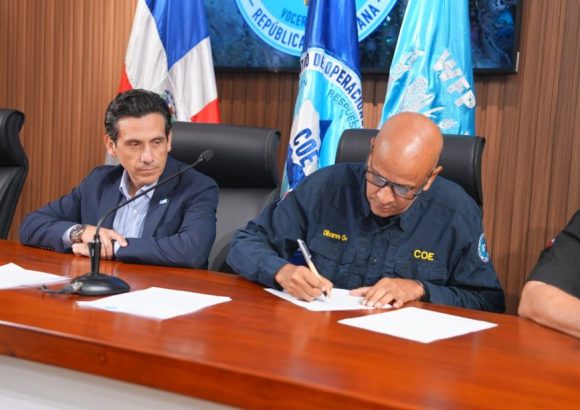
In Santo Domingo, the Dominican Republic’s national Emergency Operations Center (COE) has formalized a new strategic partnership with the United Nations World Food Programme (WFP) through a signed Memorandum of Understanding, aimed at lifting the country’s ability to prepare for, respond to and recover from major emergencies and natural disasters.
This collaborative agreement centers on three core pillars: targeted technical assistance, systematic institutional capacity building, and innovative advancement in risk management practices. The overarching objectives are to streamline cross-agency coordination, upgrade national early warning infrastructure, strengthen humanitarian logistics networks, and improve the speed and accuracy of emergency decision-making at all levels of government.
Under the terms of the partnership, the two organizations will implement a series of coordinated initiatives. These include upgrading national information gathering and analysis systems, scaling up functional early-warning frameworks and early-intervention mechanisms that allow for faster action before disasters strike, optimizing humanitarian aid mobilization through the existing Sectoral Logistics Committee, and enhancing public communication systems to ensure life-saving alerts reach at-risk communities without delay.
To embed these improvements in long-term operations, the partnership will also deliver targeted training programs, practice drills and joint full-scale exercises designed to upskill emergency management personnel and boost both their technical expertise and on-the-ground operational effectiveness. Additionally, the collaboration will reinforce national Damage Assessment and Needs Analysis (DANA) processes, which play a critical role in guiding the allocation of humanitarian resources and prioritizing post-disaster recovery work across affected regions.
This new cooperation comes at a critical moment for the Dominican Republic, which faces repeated annual exposure to a wide range of natural hazards, including Atlantic hurricanes, tropical storms, flash floods, prolonged droughts, seismic activity, dangerous landslides and seasonal forest fires. All WFP activities carried out under this agreement will align with the organization’s 2024–2028 Country Strategic Plan for the Dominican Republic, a framework that prioritizes advancing food security, improving nutritional outcomes, expanding social protection systems, and helping local communities build long-term resilience to climate change and recurring emergencies.
Overall, the agreement is projected to significantly strengthen the Dominican Republic’s ability to safeguard civilian lives and protect household livelihoods across the country, by building a more coordinated, faster-acting and community-centered national disaster management system.