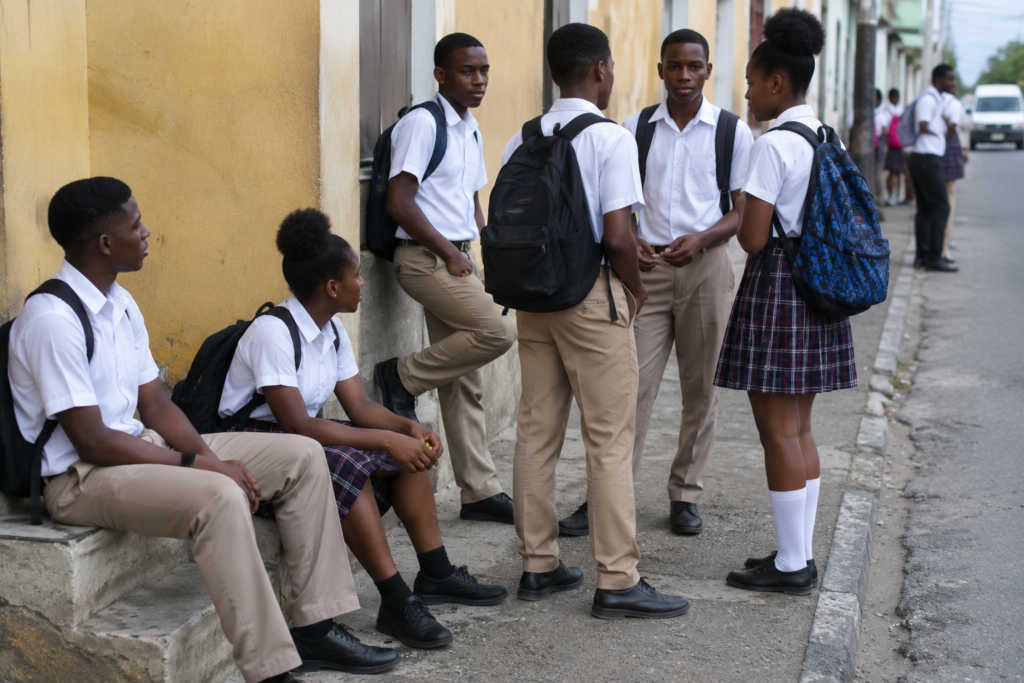
As the new school term approaches Antigua and Barbuda, law enforcement agencies have launched intensified security preparations to safeguard students, staff and campus surroundings, with a slate of high-priority locations flagged for enhanced monitoring.
Leading the security planning is Assistant Commissioner of Police Lisbon Michael, head of the Royal Police Force of Antigua and Barbuda’s Criminal Investigations Department, who confirmed that the department has conducted a full review of its existing strategic safety framework to guarantee secure learning environments for returning students.
In an interview with local public broadcaster ABS’ flagship program *Antigua Barbuda Today*, Michael outlined that key sites marked for extra attention include the East and West Bus Stations, major transit hubs that thousands of students use daily, the busy commercial district Heritage Quay, and Clare Hall Secondary School. He categorized these locations as “hot areas”, noting that they have a documented history of public safety challenges linked to school populations.
To align security protocols with education sector needs, police leadership has already held detailed consultations with the Ministry of Education to coordinate proposed safety actions, though Michael declined to disclose granular information on officer deployment schedules or the full suite of planned security measures. Despite the lack of specific details, he remained upbeat about the upcoming reopening, projecting that the first weeks of the term will unfold without major incident.
“We anticipate it is going to be pretty much quiet,” Michael stated.
This targeted pre-term security push forms part of a wider, long-term initiative by Antigua and Barbuda’s police force to tackle general crime and youth violence across the country, combining strict law enforcement with targeted community intervention programs. Within the Criminal Investigations Department, a dedicated Youth Intervention Department focuses specifically on children and adolescents aged 5 to 18, prioritizing support for young people showing early warning signs of risky behavior and those residing in households impacted by domestic conflict.
Police data indicates that these sustained intervention efforts, when paired with increased engagement from parents and local community stakeholders, have driven a marked drop in rates of youth violence across the twin-island nation in recent years. The pre-school reopening preparations are designed to build on this progress, creating a safe foundation for students as they return to in-person learning.