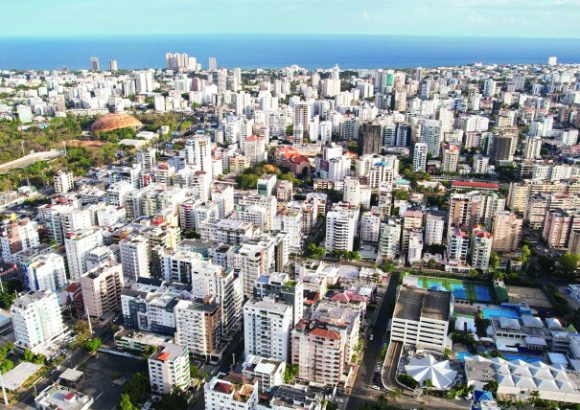
The Economic Commission for Latin America and the Caribbean (ECLAC) has released its 2026 Economic Survey of Latin America and the Caribbean, which centers its analysis on growth, productivity, and the persistent challenge of high informality across the region, outlining key projections and trends for national economies. Among the findings, the Dominican Republic stands out as one of the region’s faster-growing economies, with a forecasted 4% expansion in 2026 and an acceleration to 4.4% growth by 2027.
The Dominican Republic falls into a group of 15 regional economies projected to grow between 2% and 4% this year, alongside major and smaller economies including Colombia, Brazil, Chile, El Salvador, Honduras, Ecuador, Peru, and several Caribbean island nations. When compared to peer countries in 2026 growth projections, the Dominican Republic outpaces Mexico’s 1.3% forecast and El Salvador’s 3.9% growth estimate, but lands just behind Nicaragua’s projected 4.5% expansion and matches Panama’s 4.4% outlook.
Looking across the broader region, the macroeconomic environment for 2026 and 2027 is expected to grow more challenging, ECLAC warns. Headwinds include slowing global economic momentum, elevated geopolitical tensions that ripple through trade and supply chains, heightened uncertainty in global financial markets, and intensified price and supply pressures on international energy markets.
A core focus of this year’s survey is the link between economic growth and productivity across formal and informal sectors, measured by the Verdoorn coefficient, which quantifies how much growth drives productivity gains. Across the region, the coefficient registers at 0.59 for the formal sector and 0.41 for the informal sector, confirming that economic expansion delivers far stronger productivity improvements in formally registered activities, where workers and businesses operate within regulatory frameworks.
For the Dominican Republic specifically, the informal sector’s Verdoorn coefficient of 0.41 lags behind peer economies such as Chile, which recorded a 0.52 coefficient, and Peru, which hit 0.55. This gap indicates that economic growth in the Dominican Republic has a far weaker impact on boosting productivity in informal activities than in many other regional economies.
On a more positive note, the survey finds that informality rates are trending downward across much of the region. Of the 15 major economies tracked, 11 saw their informality rates decline in 2025. Chile and Costa Rica led the region with a 4.4% drop in informality, while the Dominican Republic and Brazil both recorded a solid 2.5% reduction. Region-wide, the median informality rate between 1993 and 2025 stands at 44.6%, down from 44.9% in 1993 to 42.1% in 2025, marking gradual progress toward broader formalization of economic activity.