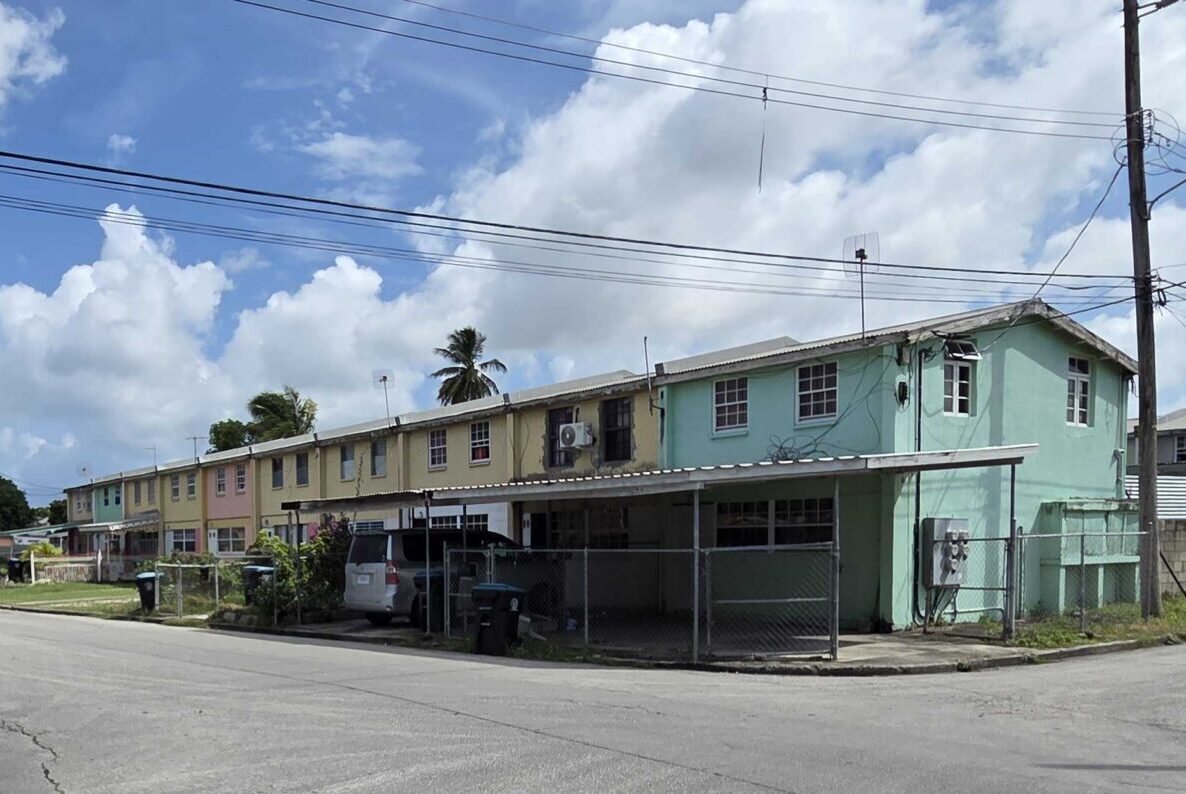
Decades of uncertainty over property ownership for thousands of long-term public housing tenants in Barbados have moved closer to resolution, following new legislation passed by national lawmakers that clears the way for full legal transfer of occupied National Housing Corporation (NHC) units, though residents continue to voice frustration over lingering delays.\n\nThe long-running push to grant ownership to eligible long-term tenants gained formal legislative backing in May this year, when Parliament approved the State (Acquisition and Vesting of Property) Act. The legislation, designed to cut through years of crippling administrative backlogs, paves the way for 3,892 long-term NHC tenants to become official homeowners, with upper house senators hailing the law as a long-overdue reform expected to deliver sweeping social benefits. The measure covers nine major housing estates across the country: Deacons Farm, Grazettes, Fernihurst, Wildey, Bonnetts, Golden Acre, Silver Hill, Gall Hill and Wotton.\n\nIn an update on the programme’s rollout, NHC General Manager Ian Gill confirmed that progress is already visible in the initial distribution phases. To date, nearly 500 households across the first two allocation batches have successfully taken full ownership of their properties through the initiative.\n\nThe government’s scheme builds on the existing Twenty-Year Programme, a policy that grants full legal ownership to NHC tenants who have continuously rented their units for 20 years or more and met all eligibility criteria. For many qualifying residents, however, the promise of ownership has remained unfulfilled for more than a decade, leaving them grappling with serious practical and financial barriers.\n\nWithout official title deeds, many households cannot leverage their property as collateral for loans, unlock equity for home improvements or development, or formalize inheritance arrangements after the death of a property occupant. One long-term Deacons Farm resident, who has waited more than 10 years for her title, shared her experience following her mother’s death: despite having lived in the home her entire life, she was still required to produce formal legal proof of ownership to secure rights to the property. “When my mother got the keys for this house, she put them in my hand. I was the first one to open this door, and to this day I am still waiting for papers,” she said, adding that without formal documentation, she cannot even access basic banking services that rely on property proof.\n\nOther residents have pointed to a pattern of broken political promises around the title transfer process. Multiple residents reported that electoral candidates routinely pledge fast-tracked title deeds during campaign periods to win votes, only for the process to stall immediately after elections conclude. “When election time comes, they bring a piece of paper telling you that they will give it to you after the election in a couple of weeks or months, but it never happens. It is empty promises, and that has been going on for four or five elections now,” one long-term tenant explained, adding that every change in NHC leadership requires residents to restart the entire application process from scratch.\n\nGill acknowledged the frustration among waiting residents but sought to reassure them that the administrative process is moving forward, stressing that legal property transfers require thorough, deliberate oversight to avoid errors. “Everybody across Barbados who has been approved under the twenty-year programme will eventually receive their houses,” he said. “Whatever the legislation states, they will receive their houses. It is only a matter of time. Everything takes time, especially where legal work is concerned.”\n\nWhen asked to address separate resident concerns about the Grotto housing complex, Gill declined to comment on the record but invited local outlet Barbados TODAY to tour the site to observe ongoing work. During the outlet’s visit, two construction cranes were on site carrying out tree removal, and residents reported that the work is part of a broader estate beautification project that will include power-washing and repainting building exteriors, as well as cleaning up common green spaces and grounds.