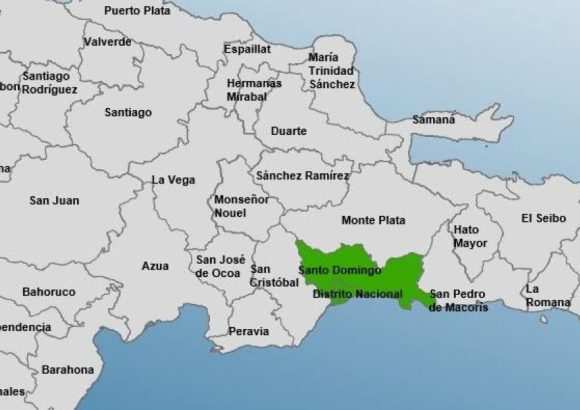
On Wednesday afternoon, the Dominican Republic’s Emergency Operations Center (COE) implemented a green alert for Santo Domingo Province and the National District, responding to elevated risks of flash flooding, urban inundation, and overflow in local rivers, streams and ravines. The weather warning comes as a tropical wave traversing the central region of the country drifts westward, interacting with east-southeasterly trade winds and a low-pressure trough to create unstable atmospheric conditions. Meteorologists project that this convergence of weather systems will fuel rapid cloud development, bringing moderate to intense downpours, severe thunderstorms, and sudden gusty winds across the affected areas. COE officials have issued urgent guidance for local residents, prioritizing warnings for communities settled in high-risk zones adjacent to waterways that are prone to sudden surges. The agency emphasizes that even gradual rainfall can quickly trigger flash flooding in low-lying or steeply sloped areas, so constant vigilance and proactive precautionary measures are critical to avoiding harm. Public safety officials have also outlined key safety rules for residents during the alert period: people are strongly advised not to attempt to cross swollen rivers, streams or ravines, as fast-moving high water can easily sweep vehicles and pedestrians off course. Additionally, all recreational swimming in natural water bodies across the alert zone is discouraged until conditions stabilize to reduce the risk of water-related accidents. COE has urged all people in the affected region to closely follow official guidance issued by civil protection agencies, and to maintain open communication with local emergency response entities, including the Civil Defense Directorate, the Dominican Armed Forces, the Red Cross, National Police, and municipal fire departments. For anyone requiring immediate emergency support during the alert period, multiple hotline lines are operational around the clock: 809-472-0909, 911, and 462, staffed by trained responders ready to coordinate assistance for at-risk communities.