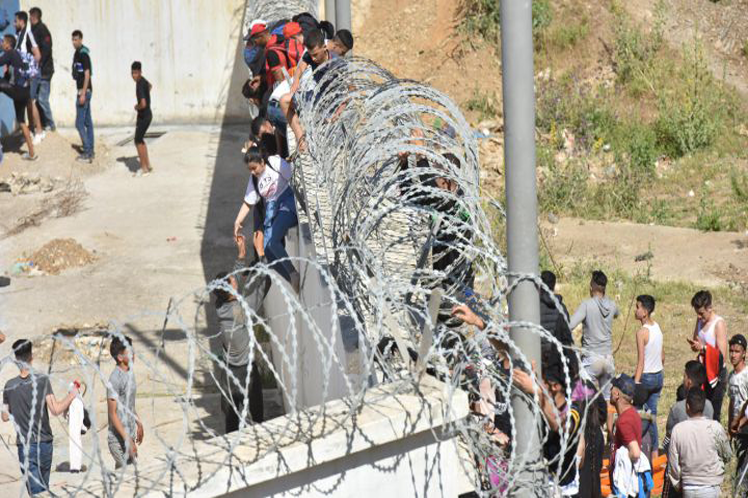
Amid growing cross-border tensions between Spain and Morocco, Spanish authorities have moved to reinforce security at the frontiers of its two North African autonomous cities, Ceuta and Melilla, both of which share a land border with Morocco. The ramp-up in defensive measures comes in response to widespread warnings that another large-scale migrant incursion is planned for August 15.
Relations between the two neighboring states have been strained since an unprecedented mass crossing on July 30, when roughly 72,000 migrants entered Ceuta in a single wave of arrivals. While senior Spanish government officials have repeatedly sought to highlight what they frame as productive cooperation from Rabat on border management, independent analysts and international affairs specialists have pushed back against that narrative. These experts argue that Morocco’s deliberate decision to avoid intervening to stop the crossing at minimum created the conditions that allowed the unprecedented influx to take place.
In the wake of the July incursion, Spanish authorities have facilitated the return of most migrants to Moroccan territory. However, the crisis has already left a devastating human toll: official and on-the-ground accounts confirm more than 100 migrant deaths have been recorded, while approximately 1,500 unaccompanied child migrants remain in Spanish custody, and around 4,000 additional people are still unhoused and wandering Ceuta’s public streets.
The standoff has escalated further in recent days after senior Moroccan officials made public pro-independence statements regarding the contested autonomous territories, which have long been a point of friction between Spain and Morocco. In a bold address that garnered overwhelming public backing across Spain, Defense Minister Margarita Robles delivered a firm rebuke of Rabat’s claims two days ago. Robles stressed that both Ceuta and Melilla are unquestionably an integral part of Spanish sovereign territory, and that no challenge to that status would be tolerated. “Any act of aggression against Ceuta or Melilla is an act of aggression against the entire nation of Spain,” Robles stated, cementing the Spanish government’s uncompromising stance amid the escalating crisis.