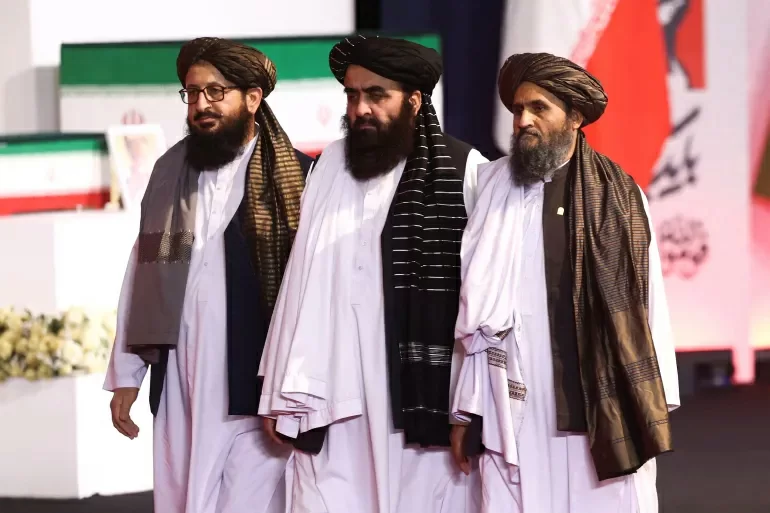
August 16 marked five full years since the Taliban reclaimed full control of Afghanistan following the collapse of the Western-backed former government in Kabul. Half a decade on, the landscape of armed opposition to Taliban rule has shifted dramatically: what once began as a unified, fronted resistance has fractured into a sprawling network of disparate armed groups, operating across multiple provinces and expanding their digital footprint in recent months. This fragmentation has left analysts questioning whether the growing visibility of resistance signals a broad, expanding pushback against the Taliban, or deeper division that weakens the overall opposition movement.
Recent heavy clashes in Badakhshan Province’s Zebak District have thrust the shifting resistance landscape into the spotlight. In these engagements, the Afghanistan Freedom Front launched coordinated strikes against Taliban military positions, successfully seizing several key outposts. While Taliban officials officially claimed they had repelled the assault, fighting persisted for multiple days – a departure from the short, surprise hit-and-run attacks that have defined most resistance operations since 2021.
The first major organized armed resistance to emerge after Kabul fell was the National Resistance Front, which drew thousands of exiled soldiers from the former Afghan government to the mountainous Panjshir Province, where leaders attempted to establish a permanent stronghold for opposition operations. The Taliban launched a swift offensive to crush the movement, however, and seized full control of the Panjshir region. Since that defeat, the National Resistance Front has been limited to carrying out only sporadic small-scale attacks across remote areas.
Today, the resistance ecosystem extends far beyond these two prominent groups, with smaller factions including the Homeland Army, Freedom and Justice Movement, and Green Movement all claiming operational activity across the country. This proliferation has created a tangled, often unclear network of opposition groups, with multiple factions frequently claiming credit for the same attack on Taliban targets. Analysts also note that social media has emerged as a critical secondary battleground, where groups work to amplify their presence and attract support to maintain relevance.
Afghanistan analysts including Karim Amini have outlined core structural challenges facing the fragmented resistance movement. Amini points out that most opposition groups are organized and based outside of Afghanistan’s borders, severely limiting their ability to build a deep, sustained popular base within the country. Compounding this challenge, decades of continuous war have left Afghan civilian society exhausted and largely unwilling to throw their support behind a new cycle of armed conflict.
Most critically, experts agree that resistance groups have failed to align their movement with the immediate needs and priorities of ordinary Afghans. Armed opposition disconnected from local realities and lacking grassroots popular support will struggle to operate as a sustainable political and military force, analysts argue. For the movement to gain long-term traction, it needs not only the capacity to carry out attacks against Taliban targets, but also to win public trust and present a credible, unified political alternative to Taliban rule.
The Taliban for their part have dismissed the resistance as a insignificant threat to their governance, insisting that they exercise full control over all of Afghanistan’s territory. Taliban spokesperson Zabihullah Mujahid has framed opposition groups as largely limited to online propaganda campaigns, and asserted that the Afghan public is fully committed to maintaining domestic security and stability. The movement even held public celebrations in Kabul near the former U.S. embassy to mark the five-year anniversary of their takeover.
While the fragmented resistance has not yet managed to secure and hold any permanent territorial control, its persistent cross-province attacks have forced the Taliban to spread military resources thin and maintain constant active patrols in remote border regions, creating an ongoing, low-grade security challenge that strains the Taliban’s governing capacity. Some analysts, including Rafiullah Kakar, argue that the resistance’s core strategy is not to seize major population centers or defeat the Taliban militarily in open battle, but rather to gradually weaken the group’s hold on power through constant, low-intensity pressure. This strategy requires a careful balance between military operations and building broad public support – a combination that has so far eluded the fragmented opposition.
The growing number of active resistance groups does not mean Afghanistan is on the brink of a full-scale new civil war, analysts note. But it does confirm that the country’s ongoing conflict has never ended, it has simply transformed into a new phase of low-intensity, fragmented opposition after the 2021 government collapse. The Taliban retain formal state control, but continue to grapple with major unresolved challenges, including a lack of domestic political legitimacy and near-universal non-recognition from the international community. For the resistance movement, the path forward carries a dual challenge: factions must unify their scattered military capabilities and build a cohesive platform that offers Afghans a credible political alternative for the country’s future.