Two regional agricultural knowledge-sharing events have wrapped up in Saint Lucia, leaving local producers excited to test innovative, climate-adaptive farming practices while calling for holistic solutions to the growing challenges of rising temperatures and shifting weather patterns. The second and concluding symposium, held August 14 at Orchid Garden in Union, Castries, brought together experienced farmers, agricultural engineers, and industry leaders to unpack tested, accessible strategies for boosting productivity amid a changing climate.
For Fimbar Evans, a 10-plus-year veteran farmer who tends a half-acre plot of tomatoes, corn, cucumbers, peppers and tree crops, the event opened new doors to sustainable production. Already reaping the benefits of a drip irrigation system paired with rainwater harvesting that he installed in January, Evans says the method has cut down his labor time and reduced unnecessary water waste. Now, he is planning to add hydroponics to his operation.
“I already have the space; I think I could adapt to try it,” Evans said, noting that the symposium’s focus on climate- and environmentally-resilient practices aligned directly with the on-the-ground challenges he faces, including increasingly hot growing conditions.
The pair of symposiums were organized by Isratech, a Jamaica-based agricultural supplier and program facilitator that operates across the Caribbean region. The company is also preparing to launch a new local outlet in Saint Lucia in the near future to better serve producers on the island.
At the closing event, Agricultural and Biosystems Engineer Faustinus Monero and Isratech Technical Director Arturo Ramirez walked attendees through a suite of modern farming methods that have already delivered positive results for producers across Saint Lucia and the broader Caribbean. Monero emphasized that all the techniques shared are tailored to the specific pain points that local farming communities currently navigate, which include water scarcity, extreme flooding driven by shifting climate patterns, rising pest pressures, and widespread labor shortages.
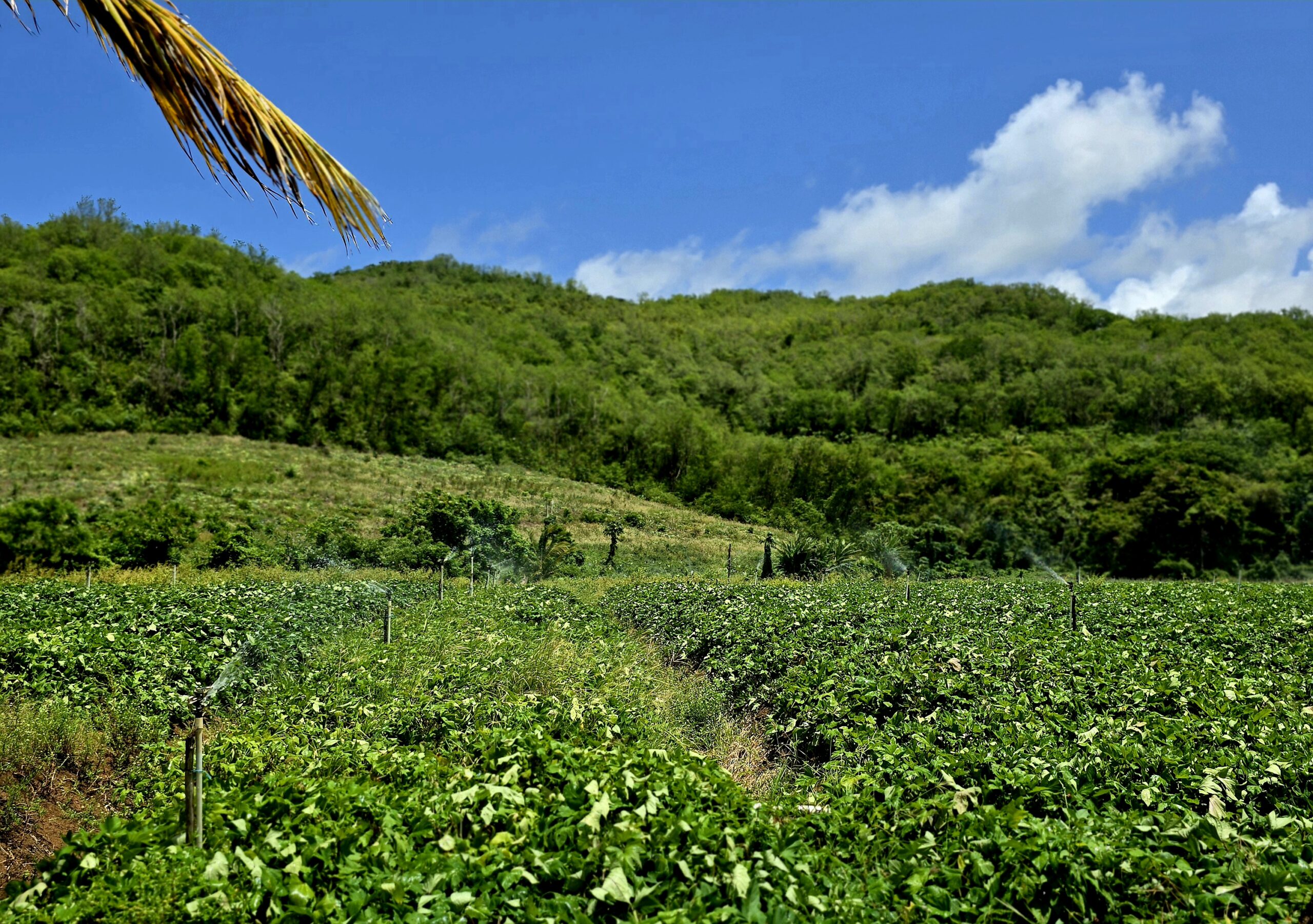
The adaptive strategies covered during the discussions ranged from low-cost, accessible solutions to higher-tech systems: vegetable grafting, large-scale rainwater harvesting infrastructure, solar-powered irrigation pumps, soil nutrient management through composting, hydroponic growing systems, improved pest and disease identification protocols, and multiple efficient irrigation methods including drip, micro and sprinkler systems.
Lindsay Daniel, an ornamental plant producer who grows roughly 700 varieties of air-purifying plants, cacti, succulents and palms, echoed Evans’ positive assessment of the symposium’s focus on efficient irrigation. For Daniel, who lives with physical challenges that make manual watering difficult, the increasingly hot conditions amplified by El Niño over the past two months have made frequent irrigation an exhausting burden. Learning about automated, efficient irrigation systems has simplified her work dramatically.
“It is interesting to know how easy it is to turn a pipe on and take care of my plants,” Daniel said, highlighting how the event’s practical discussions address real on-farm needs.
During open discussions at Friday’s symposium, farmers and agricultural stakeholders raised critical questions about the performance, drawbacks, and upfront costs of the new practices. Ramirez responded by reaffirming Isratech’s commitment to collaborating with local producers to develop customized solutions that fit their individual operations and budgets.
Addressing the pressing issue of water scarcity in Saint Lucia – an island that receives abundant tropical rainfall but fails to capture enough of it for agricultural use – Ramirez emphasized that rainwater harvesting is a foundational resilience-building step. “Even though we are in Saint Lucia with the tropical weather and with a lot of rainfall we are not taking advantage of that, so I think that first we need to look at the rainwater harvesting capability of the greenhouses for example or the houses and store that water in order to use it in the future not only for agriculture but for other uses,” he explained.
Looking ahead, Isratech plans to host additional symposiums across the island to keep the collaborative conversation going between producers, industry experts and agricultural stakeholders, as the community works toward long-term, well-rounded solutions for a changing climate.