Barbados TODAY has exclusively obtained information that the island nation’s agricultural regulators are currently reviewing the highly toxic herbicide paraquat, sold under the brand name Gramoxone, with a possible full ban or tighter import and use restrictions on the table. This review comes more than four decades after researchers first flagged the chemical’s potential to cause severe harm to human health, and follows a growing global trend of nations phasing out the product, most recently California in the United States.
Decades of scientific research have increasingly linked paraquat exposure to Parkinson’s disease and a range of other chronic health conditions, earning the herbicide a long-held reputation as one of the most dangerous pesticides in global circulation. As early as 1985, the Pesticide Action Network International included paraquat in its high-profile “Dirty Dozen” campaign, which called for strict regulation, full bans, and eventual elimination of the 12 most hazardous pesticides on the market. By the start of the 1990s, dozens of countries had already implemented full bans or severe restrictions on paraquat due to its extreme acute toxicity and long record of fatal poisoning incidents.
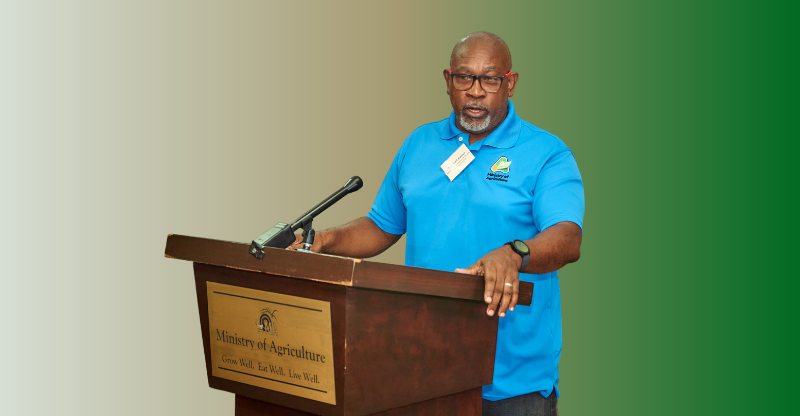
Deputy Chief Agricultural Officer Michael James confirmed the ongoing review in an interview with Barbados TODAY Thursday. “That is but one of the products under our radar that we are currently discussing,” James said. “I can’t give you our final policy on that just yet, because we haven’t come to a conclusion on that; but I can tell you that it is one of the chemicals we are actively evaluating.” He added that international health and agricultural agencies regularly submit chemicals for local review to determine whether continued use is appropriate, and paraquat is currently at the top of that list. James also emphasized that regulators cannot move forward with a ban until a suitable replacement is identified. “You can’t just ban certain products overnight,” he explained. “You have to look at what alternatives exist for these products. All of this is currently being taken under consideration. We are aware of the studies linking it to Parkinson’s disease, as well as the risks associated with accidental or intentional ingestion.”
Barbados TODAY has learned that the Pesticide Control Board, an independent watchdog under the Ministry of Agriculture, will hold an upcoming meeting to decide the future of the fast-acting, widely used herbicide on the island. Options on the table include restricting sales exclusively to registered professional farmers, or only to certified personnel trained in safe paraquat handling. “There may be different options, but I can’t speak to the final outcome, because it is currently still under discussion,” James noted.
Paraquat has been available on Barbados’s domestic market for decades, sold under a range of brand names beyond Gramoxone. James Paul, chief executive officer of the Barbados Agricultural Society (BAS), said any final regulatory decision should be left to scientific and agricultural experts, noting that local farmers already adhere to strict national safety guidelines for chemical use. “We have to follow the science in terms of it,” Paul told Barbados TODAY. “We have very strict safety guidelines in terms of chemicals in this country; and one of the things that we try to do is encourage farmers to abide by those safety guidelines, and by and large, I believe that they do. As to whether or not it should be banned, I do not know. It is widely used in local food production, and there are still many countries around the world, including Caribbean nations that we import food from, that still permit its use. If it is ultimately banned, we will of course need to transition to a suitable alternative. The key issue for us is whether users are following all established safety protocols, that is where the public can find reassurance.”
The recent decision by California, the largest agricultural producing state in the United States, to phase out paraquat has amplified global concerns about the chemical’s long-term health impacts. This move comes even as many American farmers argue paraquat is an irreplaceable tool for their operations, and the U.S. still sees millions of pounds of the herbicide sprayed on crops annually. Earlier this year in March, following thousands of lawsuits from plaintiffs who blame paraquat exposure for their chronic illnesses, global agrochemical giant Syngenta announced it would end all production of the chemical, leaving only generic manufacturers to supply the market. A company spokesperson has repeatedly stated that all claims linking paraquat to illness in lawsuits are completely meritless. In May, Vermont became the first U.S. state to implement a full paraquat ban. Just one month later, two U.S. congresswomen from opposing political parties—Democrat Chellie Pingree of Maine and Republican Anna Paulina Luna of Florida—introduced federal legislation to ban paraquat across the entire country. To date, federal regulators have declined to take action, a situation environmental advocates say highlights the gridlock and weaknesses of U.S. pesticide regulation, which makes it extremely difficult to remove chemicals that many farmers have come to rely on from the market.
Paraquat has a long commercial history dating back to the 19th century. It was first synthesized in 1882 under the name methyl viologen, and was originally used as an industrial chemical dye. Its powerful weed-killing properties were not discovered until 1955, in laboratories operated by British firm Imperial Chemical Industries (ICI). ICI launched full industrial production in 1961, and began international marketing under the brand name Gramoxone in 1962, quickly positioning it as a solution for controlling grass and broadleaf weeds. After media coverage highlighted paraquat’s widespread availability in Barbados back in 1992, ICI, the original developer, defended the product as “the poor man’s hoe”—a low-cost, fast-acting, non-selective herbicide that boosted smallholder productivity.
Paraquat’s popularity grew rapidly across the globe, thanks to its unique mechanism of action: it disrupts plant photosynthesis and releases free radicals that kill targeted weed cells, causing visible wilting and browning within hours of application, and immediately becomes inactive once it contacts soil, preventing runoff or long-term soil contamination. But across the Caribbean region, paraquat has carried a far deadlier reputation beyond agricultural use. After its widespread introduction to the region in the 1970s, paraquat became one of the most common methods of intentional self-poisoning, due to its easy over-the-counter access and extremely high lethality even in small ingested doses.
Historical public health data confirms the scale of this crisis across the Caribbean. Paraquat-linked suicides have been recorded in Suriname, Dominica, and Jamaica, with the worst impact seen in Trinidad and Tobago. In southern Trinidad in 1996, 39 out of 48 recorded suicides—81.3 percent of the total—involved paraquat. A 1996–1997 forensic review found paraquat was responsible for 80 out of 105 fatal acute poisoning cases across the country. In response to this crisis, as well as a rising number of accidental poisoning deaths, ICI modified the formulation of Gramoxone: it changed the product’s original cola-like color to a distinct bright green to reduce accidental ingestion, and added an emetic to trigger vomiting if the chemical is consumed.
Today, paraquat is already fully banned or severely restricted in more than 70 countries, including the United Kingdom and all 27 member states of the European Union. Corporate restructuring over the decades shifted production rights from original developer ICI to Zeneca in 1993, and then to Syngenta in 2000, when the company was formed through a merger of Novartis Agribusiness and Zeneca Agrochemicals.