After more than five years of being barred from hosting international football matches on home soil, Haiti is taking concrete steps to reverse this exclusion, with the country’s football governing body spearheading efforts to meet international stadium standards set by regional confederation CONCACAF.
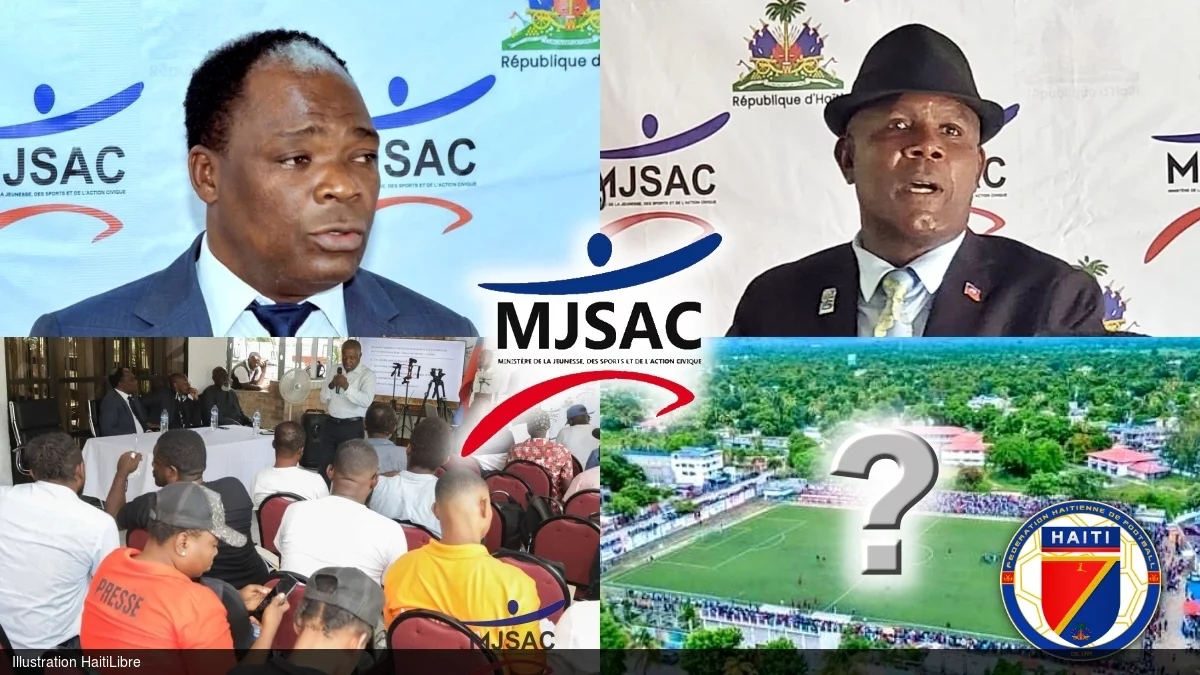
Earlier this week, Haiti’s Ministry of Youth, Sports and Civic Action (MJSAC) gathered nearly 60 sports journalists for a detailed briefing focused on the newly released CONCACAF Stadium Guidelines for the 2026-2027 cycle, held at the ministry’s Frères headquarters with Sports Minister Pythagore Dumas in attendance. The meeting was structured to clarify the roadmap for upgrading domestic infrastructure to meet the requirements needed to welcome international teams back to Haitian territory.
Opening the session, Belizaire Gabrie, coordinator of MJSAC’s Studies and Programming Unit, walked reporters through core project management fundamentals critical to the infrastructure upgrade effort. Key topics included the link between project scope and budget allocation, sequential phases for rolling out public sports investment projects, and defined roles for all participating government and sports institutions. Gabrie also emphasized clarity around common misconceptions, drawing clear distinctions between a project’s initial announcement, official validation, secured funding, and the actual start of construction work.
Following the introductory project management overview, the briefing turned to the full breakdown of CONCACAF’s 2026-2027 stadium requirements, the mandatory checklist all venues must pass to earn hosting approval for international matches.
Haiti’s five-year ban on hosting home fixtures traces back to two high-profile violent incidents that eroded international confidence in the country’s security for visiting teams. In January 2021, at the second leg of the Haitian national championship final between Violette AC and Arcahaie FC at Park Saint-Yves, widespread violent unrest left at least two people dead and multiple others injured. Just two months later, in March 2021, the bus transporting the Belize men’s national football team through Haiti was targeted in an attack by armed assailants. That incident prompted the Belize Football Association to formally demand enhanced security guarantees from CONCACAF and global governing body FIFA, cementing the decision to block Haiti from hosting future home matches.
Despite the extended pause, the Haitian Football Federation (FHF) remains committed to bringing national team football back to home fans. Officials have identified Park Saint-Victor in the northern city of Cap-Haïtien as the leading candidate to host future international matches, primarily due to the city’s significantly more stable security landscape compared to the violence-plagued Port-au-Prince metropolitan area. Cap-Haïtien already holds two key advantages that meet CONCACAF requirements: the city is home to multiple hospitals and hotels that meet the international standards needed to host visiting teams and match officials.
Still, a number of critical upgrades remain to be completed before CONCACAF can grant hosting approval. Required improvements span core venue infrastructure: the playing pitch, player locker rooms, spectator seating and bleachers, field lighting for night matches, and overall stadium surrounding environment. If these upgrades are completed on schedule, Haitian football fans could soon see their national team compete on home soil for the first time in more than half a decade.