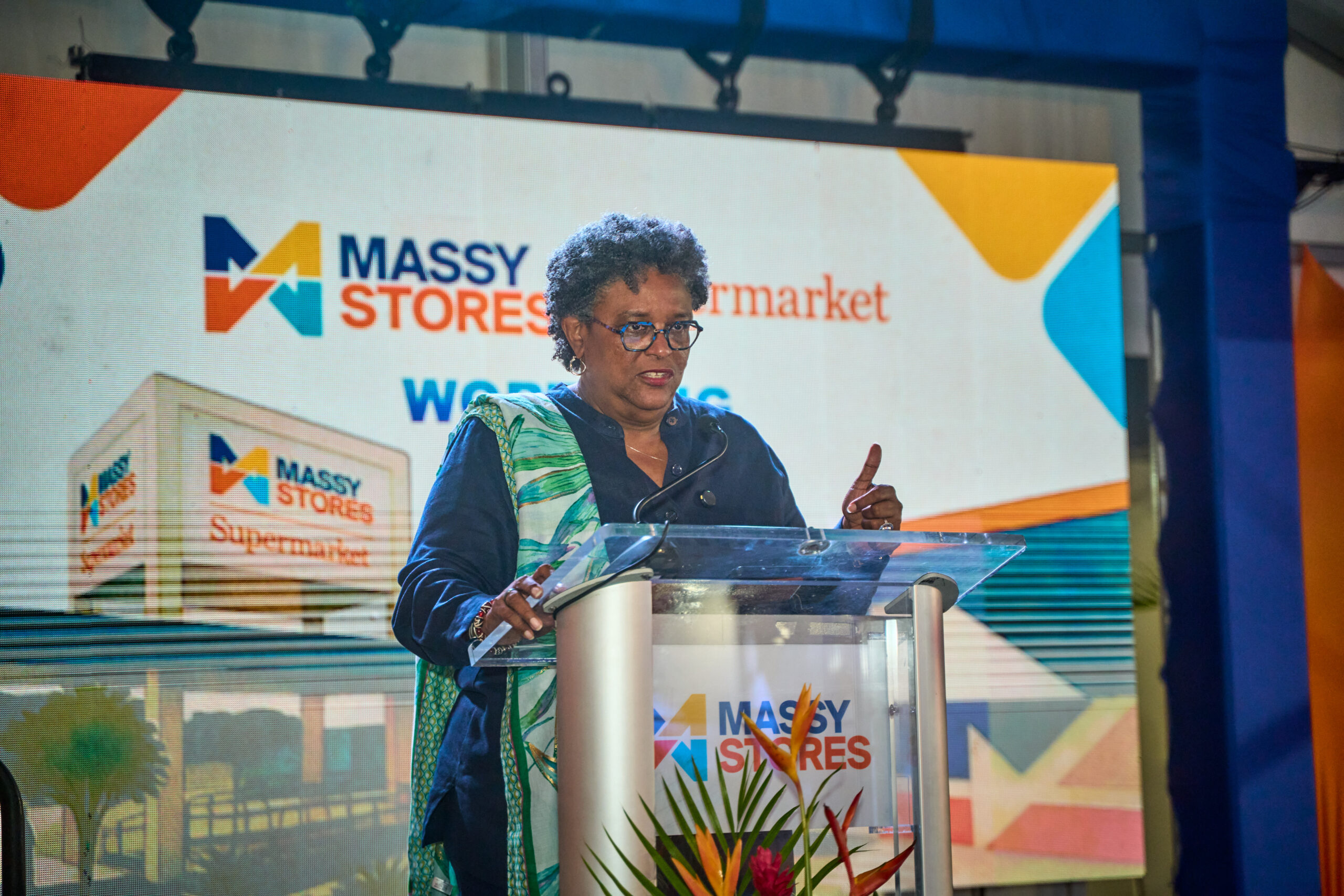
Barbadian Prime Minister Mia Mottley has issued a public call to major regional retail chain Massy supermarkets to embed formal contract purchasing into the company’s core operational framework, framing the policy shift as a critical foundation for expanding the island nation’s agricultural sector. The announcement came during Monday’s official reopening of Massy Stores’ Worthing location in Christ Church, a site that recently completed a $46 million renovation and expansion project.
Mottley emphasized that local farmers cannot reasonably ramp up production based on informal, uncertain arrangements where supermarkets may reject harvests at the last minute. For the agricultural industry to reach its full potential, producers require guaranteed market access and predictable revenue streams that only formal binding contracts can provide, she argued. Recounting past experiences where farmers grew crops in response to market encouragement only to have their orders canceled at the eleventh hour, Mottley noted that long-term financial stability, not speculative promises, is what growers need most to invest in expansion.
Immediately following her call for reform, Mottley announced a substantial government commitment to back the initiative: $2 million in public funding every quarter, totaling $8 million annually, to support contract farming coordination. The allocated funds will be managed by the Barbados Agricultural Development and Marketing Corporation (BADMC) and Export Barbados, which will partner with Massy and other industry stakeholders to rebuild and fully activate the country’s agro-processing segment.
Beyond domestic market reform, Mottley also outlined a broader strategic vision for Caribbean agriculture, arguing that the region’s small population sizes leave CARICOM economies unable to achieve the production scale needed for lasting transformation. “With the exception of Haiti, every country in this Caribbean region is underpopulated,” she said. “It means that effectively, across CARICOM, we do not have the scale.” To address this gap, she pushed for aggressive expansion into untapped international markets, pointing to high European demand for tropical produce and Africa’s massive reliance on imported food as major growth opportunities. As an example, she noted that Africa imports nearly $5 billion worth of fish annually, but Caribbean producers capture just 1.5 percent of that market share.
Mottley lauded Massy’s existing strategic shift toward expanding market access outside the Caribbean, noting that new international outlets would not only create more reliable sales channels for regional producers but also stabilize national foreign exchange earnings. Expanded agricultural exports, she added, would deliver overlapping benefits: strengthening regional food security, opening new income streams for farmers and food manufacturers, and making staple food products more affordable for local consumers. Reiterating her core message, the Prime Minister stressed that industry growth cannot depend on vague commitments: “They cannot do it on the basis of a promise. They need contract buy-in.”