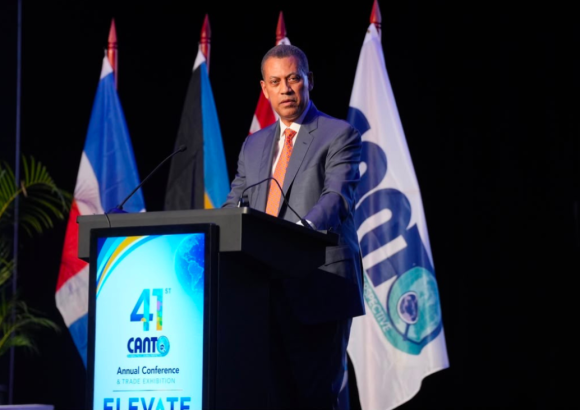
PUNTA CANA — As regional technology leaders gathered this week for one of the Caribbean’s most important telecommunications gatherings, a top Dominican regulator has framed universal digital access as the foundational pillar for shared growth across the island region.
Speaking at the opening ceremony of the 41st Annual Conference and Exhibition of the Caribbean Association of National Telecommunications Organizations (CANTO), hosted August 9 to 12 at Punta Cana’s Hard Rock Hotel & Casino, Guido Gómez Mazara, president of the Dominican Institute of Telecommunications (Indotel) Board of Directors, emphasized that robust digital connectivity has evolved from a convenience to a core strategic driver of national competitiveness, foreign direct investment, social equity, and broad-based economic development across the entire Caribbean.
Gómez Mazara outlined the Dominican Republic’s ambitious national agenda to reshape its domestic production model by prioritizing large-scale investment in digital infrastructure and expansion of the digital economy. At the heart of the country’s plans is a commitment to inject more than $500 million into upgrading digital exchange infrastructure, boosting international connectivity through new and expanded submarine cable routes, and advancing the implementation of the national Artificial Intelligence Strategy. Beyond infrastructure, the country is actively working to build homegrown AI innovation capacity and carve out a sustainable role for Dominican stakeholders in global semiconductor supply chains.
Indotel’s immediate regulatory priorities also focus on closing long-standing access gaps across the country, Gómez Mazara noted. The agency is pushing forward with aggressive expansion of 4G and 5G mobile networks, modernizing management of the public radio spectrum to accommodate growing demand, cutting the persistent digital divide that leaves marginalized communities disconnected, and fostering healthy, pro-consumer competition across the telecommunications sector.
A core principle of the country’s regulatory approach, he stressed, is balancing two critical goals: creating a clear, attractive policy environment that draws in private and public investment, while ensuring that all telecommunications services remain affordable and accessible to every segment of the population. This balance is designed to prevent exclusion from the digital economy rooted in cost barriers, geographic isolation, or gaps in digital literacy, he explained.
The conference also marked a milestone for Indotel: the Dominican regulator formally joined CANTO as a full member, making this year’s event its first annual participation as an official member of the regional association. Gómez Mazara highlighted that cross-border cooperation between Caribbean nations is not optional, but essential, to tackle shared technological challenges, harmonize regulatory frameworks, and exchange successful policy experiences that benefit the entire region.
This year’s CANTO conference gathers hundreds of telecommunications providers, regulators, technology innovators, and policy stakeholders from across the Caribbean and beyond. Attendees are engaging in four days of discussions covering pressing industry topics including universal connectivity expansion, emerging digital innovation, new investment opportunities, adaptive regulatory policy, and building long-term digital competitiveness for small and medium economies across the region.