Nearly three years after landmark anti-violence legislation was formally gazetted, The Bahamas’ long-awaited Protection Against Violence Commission is marking a key milestone this month: it will officially move into its permanent new facility on Pitt Road, bringing the interagency body one step closer to full operational capacity. Even with the new headquarters opening, commission leadership confirms the body will not yet be prepared to offer direct support services to survivors of violence, a gap that will continue to be filled by existing public and non-profit entities for the immediate future.
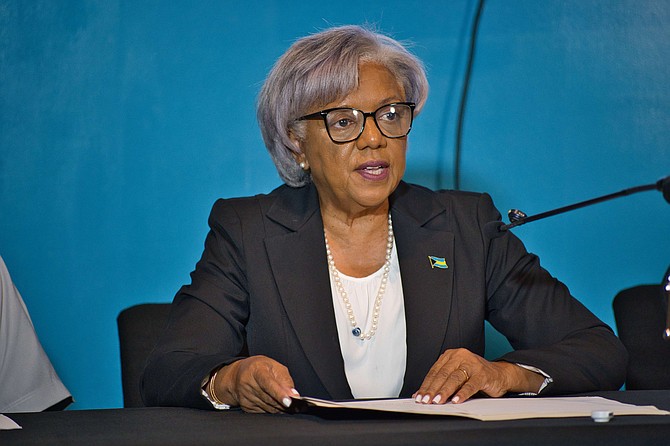
Commission Chair Marisa Mason-Smith shared updates with The Tribune on the body’s progress, noting that substantial foundational work has been completed since the commission’s members were officially appointed in March 2024. She explained that at this stage, existing public infrastructure remains responsible for supporting survivors: “Social services is the machinery that is dealing with that at this time. There are still other NGOs and departments within the Ministry of Social Services that are already addressing these needs, and the Police Violence Unit also carries out these core support functions right now.”
Mason-Smith’s comments follow an official announcement from Social Services Minister Barbara Cartwright, who scheduled a formal commissioning ceremony for the new Pitt Road building for August 14. Cartwright emphasized that the new facility will clear the way for the commission to begin its full mandate, adding that the government is “anxiously waiting” for the body to launch its core work.
Established under the 2023 Protection Against Violence Act, the commission is designed to serve as the national central coordinating body for efforts to combat gender-based violence across the country. Its statutory responsibilities include centralized data monitoring on violence incidents, overseeing the network of emergency shelters for survivors, and ensuring that all survivors can access the legal protections and support services guaranteed under national law. Notably, the commission’s official appointment came nearly three years after the enabling legislation was formally gazetted, drawing criticism from advocacy groups over delays in rolling out the new body.
The current Davis administration has allocated an initial $42,900 to the commission to launch its operations – a figure that women’s rights advocates across the country have repeatedly warned is far too small to allow the body to fulfill its broad legislative mandate.
When asked about the funding gap, Mason-Smith acknowledged that the initial allocation is not sufficient to cover all of the commission’s planned work. However, she pushed back against concerns that limited initial funding would derail the body’s progress, noting that government officials have committed to allocating additional supplementary funding through the Ministry of Social Services’ existing budget.
“In the short term, the initial allocation will assist us with getting set up, but the Ministry of Social Services has identified other funding streams from across their budget that will complement the work we are doing,” she explained. Mason-Smith also expressed confidence that the commission will receive a much larger, more robust budget allocation for the next fiscal year, noting that the body was appointed late in the current budget cycle.
“Recognizing that we came in towards the end of the budget cycle, I am grateful that they have included us at all,” she said. “We know that the initial amount is not enough, but we have been assured that we will not be disadvantaged when it comes to meeting the needs and advancing the core priorities of this commission.”
In the months leading up to the move to the new facility, the commission has made steady progress on laying the groundwork for full operations, Mason-Smith confirmed. The body has already held multiple working sessions for its members and is currently developing a multi-year strategic plan to guide its work once fully operational. It is also ramping up public outreach efforts, including educational forums and public town halls, to help residents across the country understand the commission’s mandate and core responsibilities.
Another key priority in the coming months will be recruiting and appointing a full secretariat and support team to handle day-to-day operations. The secretariat will serve as the commission’s core technical division, with responsibilities including coordinating support for community-based anti-violence projects, developing formal protocols for funding applications, and publishing public guidance for service providers and survivors.
Reflecting on the milestone of securing a permanent headquarters, Mason-Smith expressed optimism about the commission’s path forward: “So we are proud and excited, and we’re grateful for the opportunity to have a resting place.”