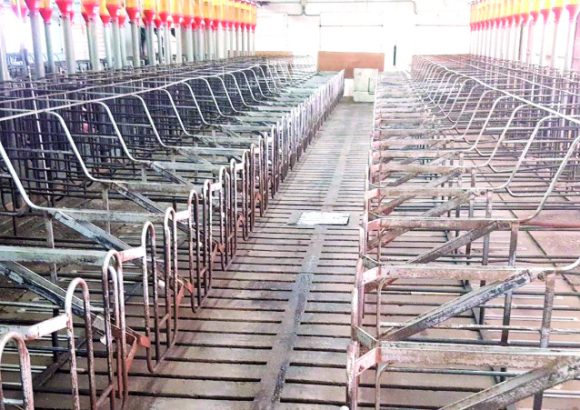
For generations, the Don Pedro sector of Monte Adentro in Santiago, Dominican Republic, bustled with activity: dozens of small-scale family pig farms and local butcher shops fed communities across the region, and pig rearing was the steady livelihood for hundreds of local households. Today, that longstanding tradition lies in ruins. Most pigpens stand barren and overgrown, and the handful of producers who have stayed in the industry describe an uphill daily battle to survive, squeezed by three overlapping threats: the persistent spread of African swine fever (ASF), a flood of cheap imported pork, and skyrocketing production costs.
This on-the-ground crisis matches warnings first sounded in a recent investigative report by local outlet Listín Diario, where agricultural specialists and independent producers called out mismanagement of the national ASF response and sounded the alarm about a dramatic collapse in domestic pork output. In Don Pedro, the national decline is not just a statistic—it is visible in every empty corral and shuttered small farm.
Jose, universally known by his nickname “Mañaño” who manages one of the last remaining operational farms in the sector, says the generations-old local pig-farming identity has been all but erased. “Fewer than half of the producers who worked this land 10 years ago are still here today. ASF and unregulated imports wiped out hundreds of small and medium-sized farmers,” Mañaño explained during a tour of his farm, one of the few still active in the area.
His account aligns with analysis from Dr. Francisco Trincado, a leading veterinarian and swine disease specialist who spoke with Listín Diario. Trincado confirmed that ASF remains endemic across large swathes of the country, continuing to hammer domestic production, while the sharp rise in pork imports has squeezed local smallholders out of the market entirely. For Trincado, the national production decline numbers translate directly to the empty corrals and displaced families seen across Don Pedro: an entire traditional livelihood pushed to the brink of extinction.
Even for producers who have not given up, the rules of doing business create additional financial strain. Mañaño explained that every pig intended for commercial sale must undergo a costly mandatory health inspection before it can hit the market. Producers themselves have to cover all associated fees: blood samples are drawn from each animal, shipped to the national capital of Santo Domingo for ASF testing, and only pigs that pass get a sales permit. There is no government subsidy to offset these costs.
A walk through any active Don Pedro pig farm makes clear why so many have chosen to exit the industry entirely. Raising a pig from weaning to market weight takes months of constant upfront investment in feed, veterinary medication, corral maintenance, and labor—with zero guarantee that producers will recoup their costs if an ASF outbreak hits their herd. Pigs go through three distinct developmental feeding stages, each requiring a specialized concentrated feed blend sold in 100-pound bags. Each bag costs between 1,500 and 2,000 Dominican pesos (RD$), and for even a mid-sized herd, an entire bag can be used up in less than a week. After three to four months of steady feeding, any additional feed consumed before sale barely adds to the animal’s market weight, making extra months of rearing a net financial loss.
On top of feed costs and disease risk, local producers face another hit to their bottom line: falling domestic pork prices directly tied to the flood of imported pork. Mañaño noted that just a few months ago, local producers received around RD$135 per kilogram of live pig. Today, that price has dropped to RD$120 per kilogram. While the 15-peso drop may seem minor, it adds up to a major loss of revenue for producers already burdened by high feed, medicine, and maintenance costs. “That is one of the core reasons why so many producers have shut down for good,” he said.
Local merchants in the Don Pedro area confirmed the drastic transformation of the sector, with multiple family-run butcher shops telling Listín Diario that local pig production has collapsed in just a few short years. “There are no local pig farms or breeders left within a five-kilometer radius of this shop,” one longtime butcher said, describing how a community that was nationally known for its small-scale pork production for decades now has only a handful of producers still clinging to the business.