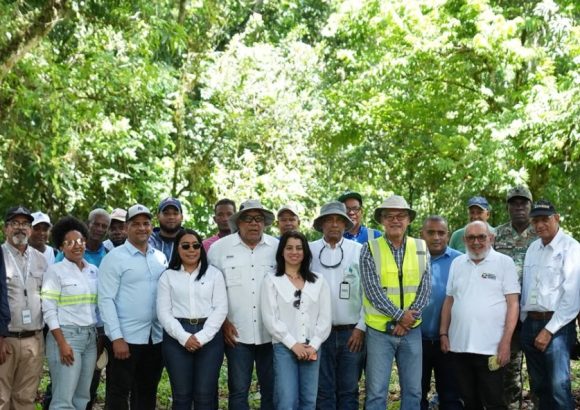
In a collaborative push to strengthen environmental conservation and protect critical water resources, Dominican Republic’s Ministry of Energy and Mines has led a large-scale reforestation and tributary cleanup day in the Hatillo community of Cotuí, located in Sánchez Ramírez province. The initiative brought together dozens of partners from multiple state agencies and a major local mining operator to restore ecologically vital river basins that support regional water security.
Over 70 participants from the Ministry of Environment and Natural Resources, the National Environmental Protection Service (Senpa), and Barrick Pueblo Viejo joined the event, planting a total of 240 native seedlings across the Colorao, Zinc, and Margajita river basins. The selected species—220 cedar, mahogany, and Juan Primero seedlings plus 20 bamboo plants—were chosen to match the local ecosystem’s needs, and were placed approximately five meters from riverbanks to maximize soil stabilization and water protection. Beyond tree planting, volunteers collected accumulated plastic waste from the tributaries to reduce water pollution and preserve aquatic habitats.
Speaking on behalf of Energy and Mines Minister Joel Santos, Vice Minister of Mines Giovanni Bloise emphasized that environmental stewardship is a top national priority for the Dominican Republic, an island nation entirely dependent on internal freshwater production. “The environmental issue is vital for the Dominican Republic, because we are an island and we must produce water within our own territory,” Bloise noted. He also pushed back against the misconception that mining development and ecological protection are incompatible, arguing that well-regulated, responsible mining operations can actually enhance environmental value rather than detract from it. “The environment and supervised, responsible mining activity are perfectly compatible; and instead of detracting from its value, it actually adds to it,” he stated.
This river basin project is just one part of the Ministry of Energy and Mines’ ongoing series of national environmental initiatives. In addition to large-scale reforestation work across the country, the institution runs community crop and reforestation programs in Sánchez Ramírez that plant food crops including beans, cassava, sweet potatoes, avocados, and plantains. Omar Dotel, Director of Environmental and Social Affairs at the ministry, highlighted that the organization has already delivered successful ecological restoration at previously damaged sites, including the Mejita dam, where a former environmental liability area has been transformed into a thriving fully recovered forest.
Dotel added that these collaborative community events deliver long-term value beyond immediate ecological gains, building environmental awareness among participants at low cost while leaving a lasting positive legacy for coming generations.
Regional environmental leaders and private sector partners have praised the initiative as a model for cross-sector cooperation. Franklin Bautista, provincial director of the Ministry of Environment and Natural Resources in Sánchez Ramírez, thanked the Ministry of Energy and Mines for advancing projects that strike a critical balance between productive mining activity and ecological protection in the region’s mining district. Jahaziel Serrano, Superintendent of Social Responsibility at Barrick Pueblo Viejo, echoed that sentiment, reaffirming the private sector’s commitment to collective natural resource conservation. Serrano emphasized that a sustained focus on sustainability allows for responsible resource management today while securing a healthier future for generations to come.
Senior leadership from across participating institutions attended the event, including Director of Mining Promotion Golye Latoufe, Senpa provincial head Major Leonardo Rodríguez, and Ministry of Energy and Mines provincial technical sub-director José Ramón Gómez, among others.