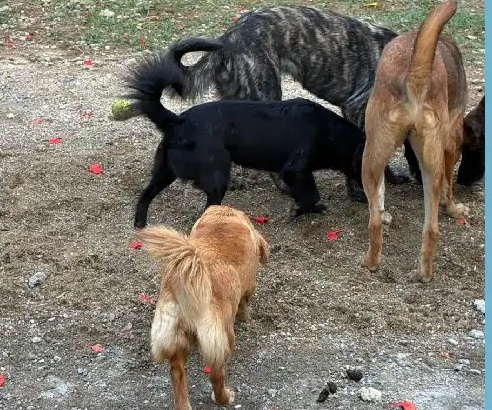
In Santiago Rodríguez, a new cross-institutional working group has been formed to strengthen the implementation of the country’s landmark 2012 Animal Protection and Responsible Ownership Law (Law 248-12), bringing together representatives from dozens of government and non-profit organizations focused on animal welfare across the province.
The inaugural gathering centered on clarifying role boundaries for participating institutions, addressing existing gaps in cross-agency communication, and building formal coordination frameworks that have been lacking since the law was passed more than a decade ago. For animal welfare advocates, fragmented institutional responsibility has long weakened enforcement of animal protection standards, leaving cases of abuse, abandonment and overpopulation unaddressed in many parts of the province.
Yadira Rivas, president of the regional animal welfare NGO Manadas de Rescate Noroestana Foundation, which led the initiative, told attendees that aligned action is critical to upholding the law. She underlined that all relevant entities must fully understand the mandates assigned to them under Law 248-12, particularly when responding to systemic issues like large-scale animal abuse, widespread pet abandonment, and chronic canine and feline overpopulation. A key point Rivas raised that extends far beyond animal welfare is the interconnectedness of animal protection to broader community well-being: strong animal protection policies directly improve public health outcomes, boost community safety, support sustainable livestock production, drive inclusive local economic development, and raise overall quality of life for provincial residents.
Rivas opened her remarks by thanking Santiago Rodríguez Governor Glehany Azcona Torres for supporting the convening of cross-sector stakeholders, a step that has laid the groundwork for future collaborative action. Moving forward, her foundation will host a series of targeted orientation sessions for agency representatives to help each entity map its specific responsibilities under the law, build shared response protocols, and streamline communication during emerging animal welfare crises.
During the meeting, Rivas also highlighted a key gap in participation that organizers aim to address in future gatherings: many institutions sent mid-level staff rather than executive decision-makers to the first working group meeting. The presence of senior leaders with authority to approve policy changes and allocate resources, she noted, would significantly speed up the adoption of new measures and ensure consistent follow-through on commitments made by the working group.
Participants agreed that a follow-up meeting will be held in 25 days to review progress on initial planning steps and launch the first round of coordinated enforcement actions. In a key policy position laid out during the gathering, Rivas explicitly rejected the common practice of poisoning free-roaming dogs as a solution to overpopulation, arguing that the crisis can only be resolved through long-term, humane strategies: expanded public education on responsible pet ownership, widespread access to low-cost or free sterilization services, and consistent enforcement of the existing animal protection law.
Law 248-12, the national legislation at the center of the working group’s work, formally enshrines the Dominican state’s obligation to protect animal rights, shield animals from abuse, abandonment, neglect, cruelty and all other forms of violence, and promote conservation of native species and their natural habitats. Rivas closed the gathering by emphasizing that cross-institutional alignment will deliver widespread benefits for the entire province: “When institutions work together, the entire province benefits.” Her remarks were confirmed and shared by journalist and local community leader Juan Pablo Bourdierd Núñez.