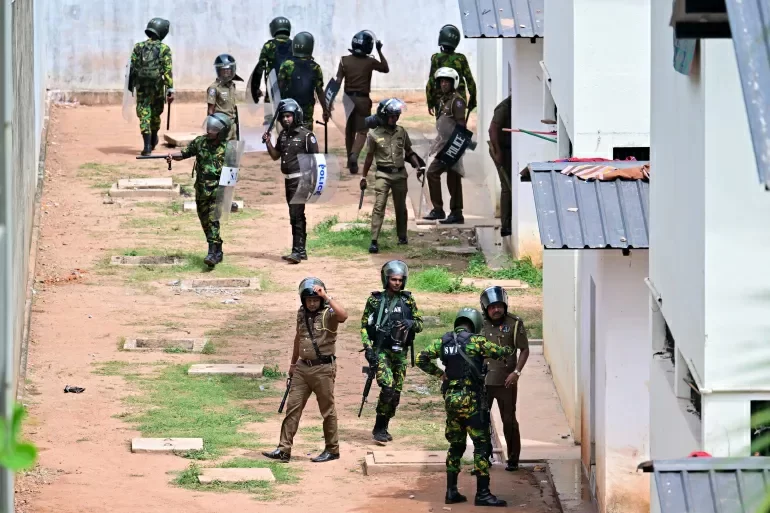
A wave of coordinated prison unrest across multiple Sri Lankan correctional facilities has left at least three inmates dead and 23 others injured, with authorities pointing to drug trafficking conflicts and long-running systemic overcrowding as the root causes of the escalating violence.
The first outbreak of unrest erupted on Thursday evening at Colombo’s New Magazine Prison, when roughly 40 inmates broke out of their cells, leaving one person dead. The violence escalated the following morning at the Kuruwita Prison, located approximately 80 kilometers outside the capital, where a second confrontation claimed the lives of two additional inmates. Public Security Minister Ananda Wijepala confirmed that all 23 injured inmates have been transported to local hospitals for treatment.
Simultaneously, security forces were forced to deploy tear gas to regain control of protesting inmates at the open Pallansena Prison in Negombo, a coastal town 40 kilometers from Colombo. Riot police worked through the day to corral inmates who had climbed to prison rooftops and gathered in open areas, forcing them back to their cells. Images from the scene show members of Sri Lanka’s elite Special Task Force and local police conducting patrols inside the facility following the clash.
Addressing parliament, Minister Wijepala stated that the coordinated timing of the multiple outbreaks suggests pre-planning by rival criminal gangs involved in the prison drug trade. “It appears there was deliberate planning and an intentional sabotage effort behind these incidents,” he said, adding that a full official investigation will confirm the exact circumstances of the unrest.
The string of violent incidents is the latest in a growing pattern of prison instability across Sri Lanka. Just last month, a major riot at another Negombo correctional facility left 10 prison staff members and 20 inmates dead. Just over a week ago, an outbreak at the Mahara Prison near Colombo left one inmate dead and multiple others injured.
The root of the repeated unrest lies in a decades-long severe overcrowding crisis that has stretched Sri Lanka’s prison system to breaking point. Justice Minister Harshana Nanayakkara confirmed that the system, which was originally designed to hold just 10,000 inmates, currently holds more than 39,000 detained people. Senaka Perera, chair of the Prison Rights Commission, described the conditions as “untenable” for years, noting that the four-time overcapacity has left inmates in deteriorating conditions for extended periods.
Compounding the crisis, a large share of the current inmate population is made up of people awaiting trial on drug-related charges, and recent tighter bail requirements have only worsened overcrowding by increasing the number of people held in pre-trial detention. To ease pressure on the overburdened justice system, the Sri Lankan government is currently considering constitutional amendments to extend the tenure of senior judges by two years, a move designed to help clear the backlog of more than one million pending court cases and reduce the overall prison population.