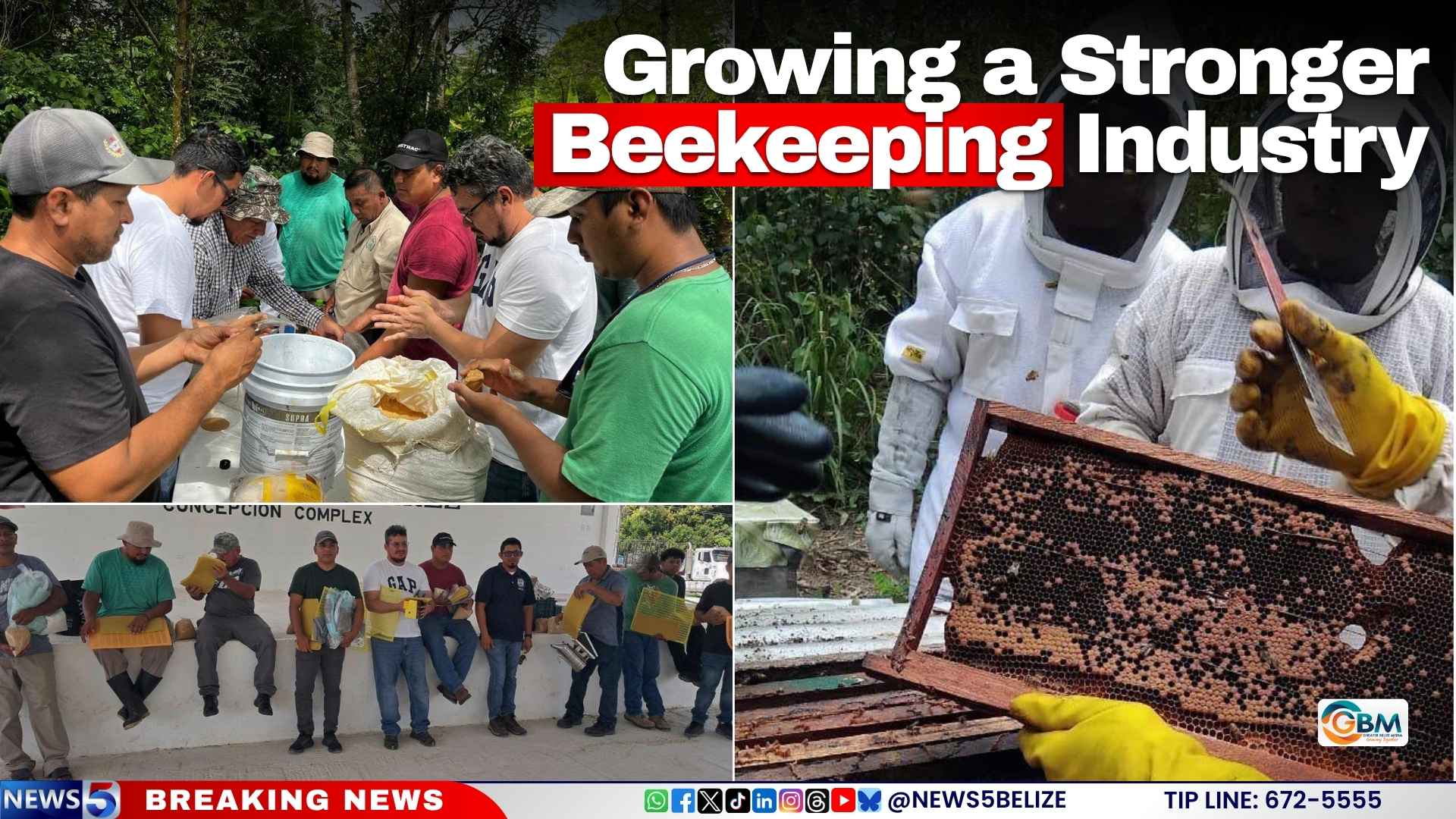
In a targeted effort to bolster Belize’s fast-developing apiculture sector, 18 local beekeepers from northern regions of the country have completed a comprehensive two-day technical training program focused on building industry resilience and boosting long-term honey production.
Organized jointly by the Corozal District office of Belize’s Agriculture Department, national beekeeping coordinator Miguel Huertas, and the Climate Resilient Agriculture Project (CRESAP), the workshop wrapped up this week, equipping participants with evidence-based skills to elevate apiary management practices. The initiative receives sponsorship from RF&G Insurance Ltd., a local firm that has backed capacity-building efforts for small-scale agricultural producers across the country.
Attendees included 18 active honey producers alongside agriculture extension officers, who delved into three core skill areas identified as foundational to long-term sustainable beekeeping. These modules covered foundational bee biology and optimized hive infrastructure design, science-based methods for delivering appropriate supplemental nutrition to bee colonies during periods of resource scarcity, and integrated strategies for controlling common pests and diseases that threaten hive health.
Training organizers prioritized addressing two of the most destructive threats to global beekeeping populations in recent decades: the varroa mite, an invasive parasite that has caused massive honeybee colony die-offs across every major beekeeping region worldwide, and the small hive beetle, another invasive pest that damages comb, honey, and bee brood. To give participants practical, on-the-ground experience, the hands-on segment of the training was held at the working apiary of local beekeeper Samuel Lainez in Concepcion village, where attendees got to test new management techniques in a real production setting.
The training comes as Belize works to expand its beekeeping industry, which supports small-scale rural livelihoods and contributes to both local food security and ecosystem health through pollination services. By equipping producers with the skills to manage climate and pest-related risks, the initiative aims to create a more stable and growing apiculture sector across northern Belize.