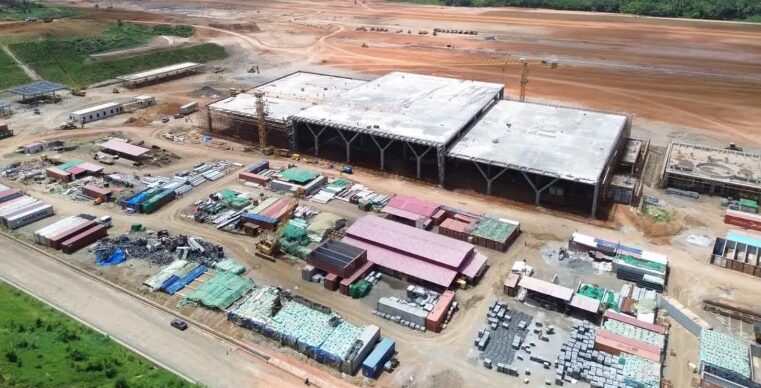
Dominica’s flagship infrastructure initiative — the construction of its new international airport — is progressing according to schedule and is set to open to the public in the second quarter of 2028, government officials confirmed during the recent 2026/2027 national budget presentation. Touted as the single largest infrastructure investment in the island nation’s modern history, the project has already hit key construction milestones that put it firmly on track to meet its delivery timeline.
As of the latest government update released on August 4, core construction work has advanced significantly across multiple project sites. Preliminary infrastructure works including earthworks and culvert installation are roughly 78 percent finished, while construction of the airport’s critical runway and connecting taxiway system has surpassed the 60 percent completion threshold. Work is also ongoing on other key airport facilities, including the main cargo handling terminal, air traffic control tower, aviation fuel storage farm, and dedicated aircraft rescue and firefighting facility, according to Dr. Irving McIntyre, Dominica’s Minister of Finance.
In his address to the nation during the budget presentation, McIntyre emphasized that the transformative project carries far greater importance than just expanding the country’s air travel capacity. Positioned as the cornerstone of Dominica’s long-term national development strategy, the new airport is expected to reshape the island’s economic trajectory by opening up increased direct international air access, boosting longer-term tourist arrivals, and expanding opportunities for local exports across multiple key sectors. Beyond travel and tourism, the government anticipates the facility will unlock new growth opportunities for Dominica’s agriculture, fisheries, ground transportation, construction, hospitality, and creative industries, creating sustained economic benefits for local communities.
A key social and economic benefit already emerging from the project is widespread local employment, McIntyre revealed. Currently, more than 400 Dominican nationals hold direct construction roles on the project site, giving local workers the chance to build hands-on expertise in a range of high-demand technical fields. These include heavy civil construction techniques, land surveying, heavy machinery operation, and skilled concrete and steel work. Government officials note that these marketable skills will continue to benefit workers and the broader national economy for decades after the airport’s construction is completed, supporting future infrastructure projects across the country.
To keep the project progressing on schedule, the Dominican government has earmarked an additional EC$250 million in funding for the international airport in the 2026/2027 fiscal year, cementing the administration’s commitment to delivering the transformative infrastructure project on time and on budget.