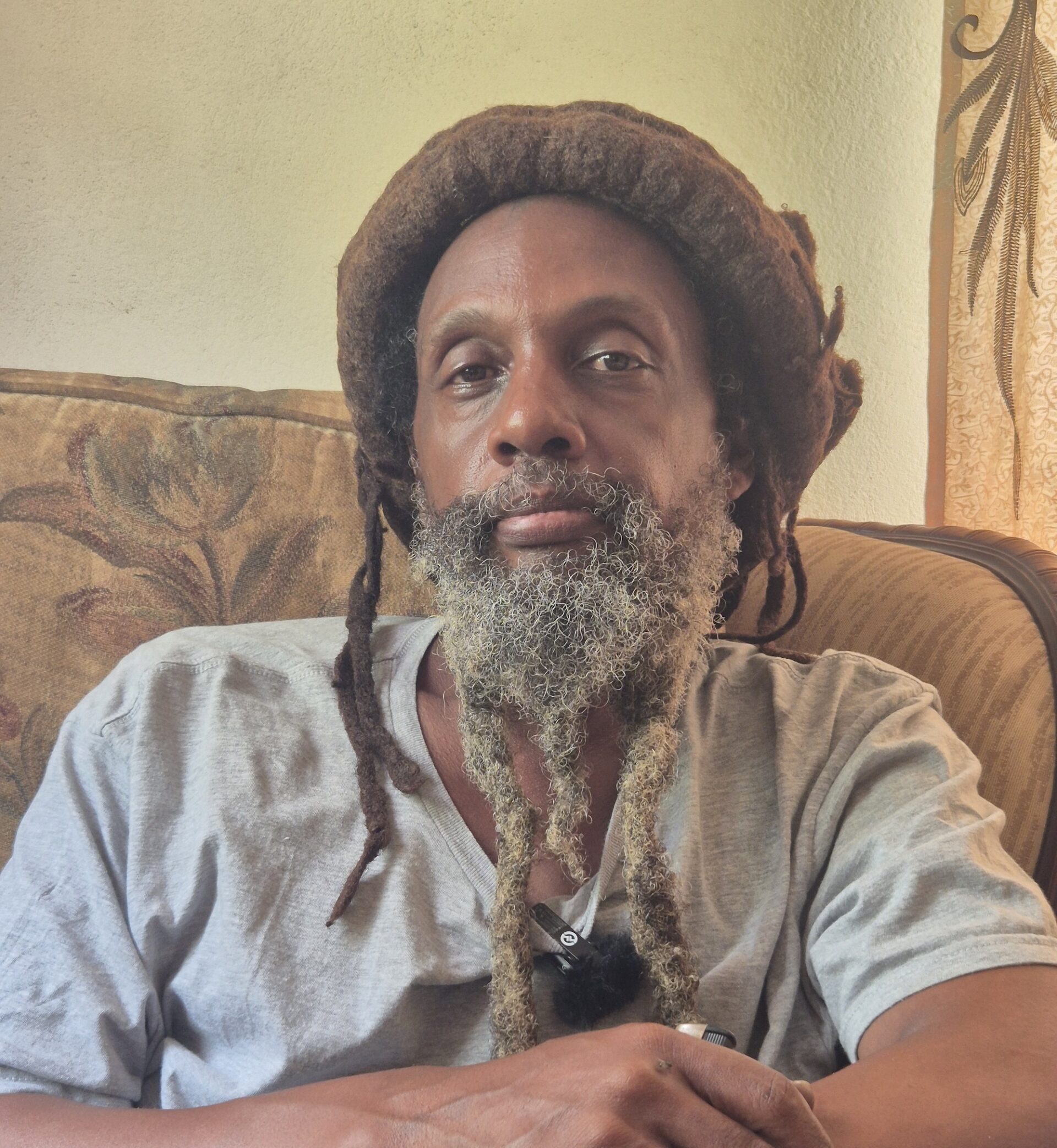
In a landmark constitutional ruling that balances religious accommodation with public welfare priorities, a High Court judge has dismissed a legal challenge brought by a Rastafarian practitioner seeking to expand the rights to sacramental cannabis use in private homes. Paul Ras Simba Rock, represented by attorney Lalu Hanuman, argued that key provisions of the Drug Abuse Prevention and Control Act (DAPCA) were discriminatory, and claimed that location restrictions on permitted Rastafarian cannabis use outlined in the Sacramental Cannabis Act (SCA) unlawfully infringed on his constitutionally protected religious freedom.
Delivering the final judgment, Justice Michelle Weekes rejected Rock’s core discrimination claim against the DAPCA, noting that the legislation applies uniformly across all populations, and that the SCA already creates an explicit carve-out that benefits Rastafarians rather than targeting the community for adverse treatment.
Justice Weekes acknowledged in her ruling that Sections 6, 8, and 11 of the DAPCA do, on their face, interfere with constitutional protections enshrined in Sections 11 and 19 of the national constitution — including the right to home privacy and freedom of conscience — and that these restrictions carry disproportionate weight for Rastafarians, for whom cannabis holds central sacramental importance in religious practice. However, she emphasized that this superficial interference does not automatically render the contested provisions unconstitutional.
“On the evidence before the court, the state has demonstrated that the restrictions imposed by the DAPCA are reasonably required to protect public health, maintain public order, preserve public safety, and prevent criminal activity,” Justice Weekes wrote. “The claimant has failed to overcome this public interest justification, or prove that the provisions are not reasonably justifiable in a democratic society.”
The judgment clarified that the SCA already establishes a limited, legal exception permitting Rastafarians to use cannabis for sacramental purposes exclusively in officially approved places of worship. Justice Weekes stressed that the fact the exception does not extend to private home use or private cultivation, as Rock requested, does not make the underlying legislation unconstitutional. “It is not this court’s role to create new statutory provisions or rewrite existing legislation that Parliament has enacted,” she noted. “That legislative authority rests exclusively with the elected parliamentary body.”
In his original challenge, Rock alleged multiple violations of his constitutional rights, including the right to personal liberty, privacy, equal protection under the law, freedom of conscience, expression, assembly and association, freedom of religion, and protection from discrimination based on creed — violations he claimed ran counter to both domestic constitutional provisions and the 1966 International Covenant on Civil and Political Rights.
The court accepted that the DAPCA’s prohibitions on cannabis possession, cultivation, and non-medical use engage the rights outlined in Article 11 of the constitution, and that the law intrudes on home privacy because its prohibitions apply even to private, personal use within a person’s own residence. It also formally acknowledged that cannabis plays a central role in Rastafarian worship, meditation, healing, and spiritual observance.
Supporting the state’s defense, witness testimony from senior law enforcement and mental health experts — including Deputy Police Commissioner Erwin Boyce, Senior Consultant Psychiatrist Brian MacLachlan, and senior psychiatry lecturer Dr Maisha Emmanuel — outlined compelling public health and crime prevention justifications for maintaining strict cannabis regulation.
Addressing the challenge to the SCA’s limited scope, Justice Weekes explained that the SCA does not itself criminalize private home cannabis use: that prohibition comes from the DAPCA, while the SCA acts to relax the general ban by creating a permitted regime for sacramental use, possession, cultivation, preparation, storage and disposal in approved settings. “The question is not whether the SCA itself criminalizes the claimant’s preferred religious practices, but whether the accommodation it creates is so narrow or burdensome as to amount to unconstitutional interference,” she said. “The court is not satisfied that this is the case.”
She added that while the claimant may be disappointed the exemption does not extend to private homes, that disappointment does not turn the existing accommodation into an unconstitutional ban, and the court has no authority to expand the statutory exemption beyond what Parliament has written into law. On the claim of violated religious freedom under Article 19, Justice Weekes ruled that the state had sufficiently justified the DAPCA’s limitations by linking broad prohibitions to core public health, public safety and crime reduction goals, and that Rock had failed to prove the limitation was unreasonable in a democratic society.
The judge also dismissed the discrimination claim brought under Article 23, noting that Rock had not presented evidence showing Rastafarians receive less favorable treatment than followers of other faiths in comparable circumstances. “The DAPCA’s contested provisions apply generally to all people, regardless of religious creed,” Justice Weekes explained. “Any disproportionate impact on Rastafarians arises because cannabis is sacramental to their faith, not because the law targets or classifies people based on their religion. And as we have found, this impact is justified by overriding public health, public order and crime prevention priorities.”
She further emphasized that the SCA explicitly prioritizes Rastafarians by creating a statutory accommodation that is not available to followers of other religions or the general public. “A limited benefit is not the same as less favorable treatment under anti-discrimination law,” she concluded.