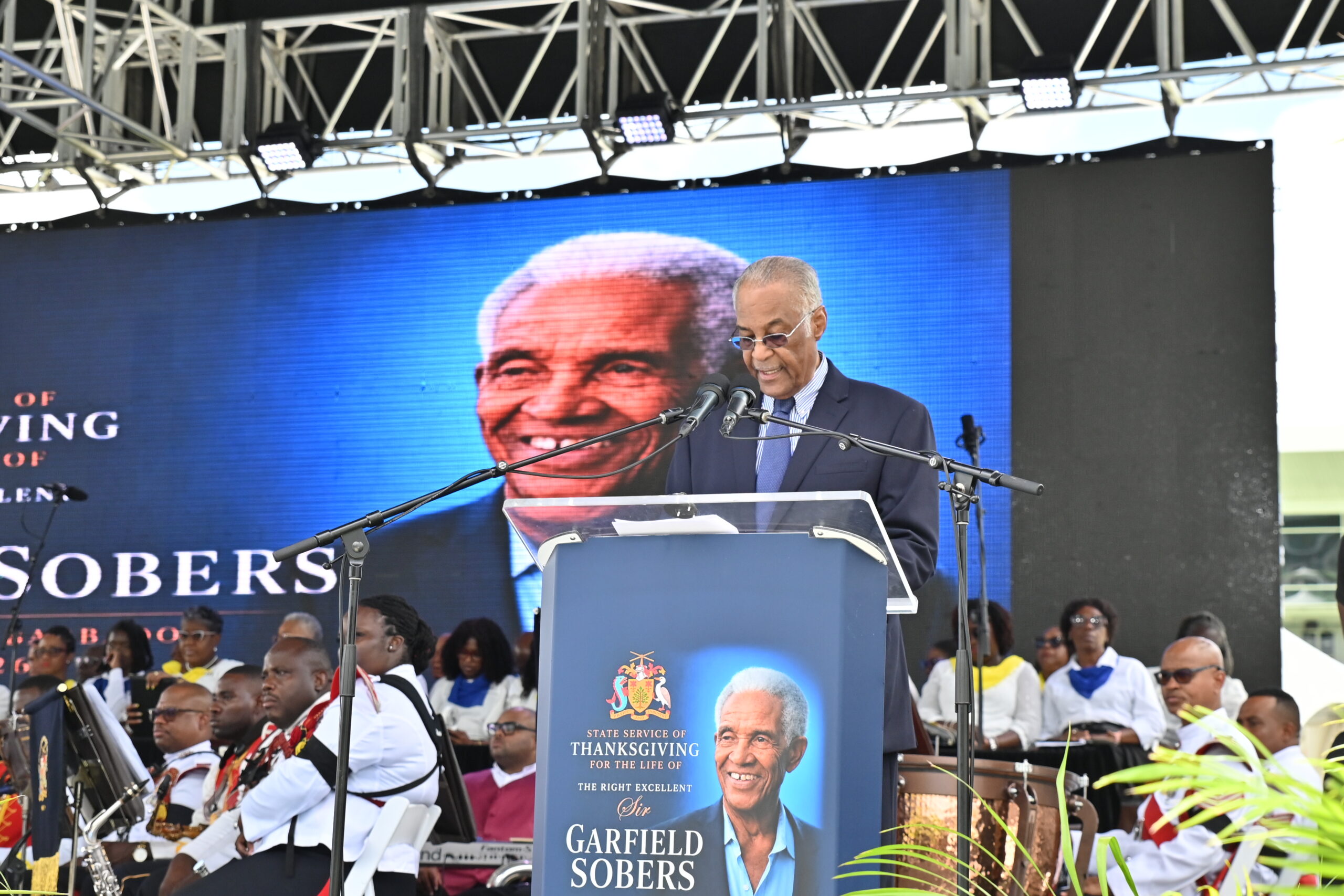
On Wednesday, hundreds gathered at Barbados’ iconic Kensington Oval to bid a final farewell to national hero and cricket giant Sir Garfield Sobers, whose decades-long career left an indelible mark not just on global cricket, but on the Caribbean’s decolonization journey. In a moving keynote tribute delivered during the state service, former chief justice Sir David Simmonds traced the powerful overlap between Sobers’ historic rise and the region’s push for self-rule, framing the cricketer’s 1966 performances as a defining catalyst for national pride on the cusp of Barbadian independence.
Simmonds noted that Sobers’ journey from working-class, humble beginnings with limited formal secondary education to the pinnacle of world cricket mirrored the trajectory of Caribbean nations moving away from British colonial rule toward full self-governance. At a moment when Barbados was preparing to stand as an independent nation, many locals questioned whether the small island nation could thrive on the global stage — a doubt that Sobers’ extraordinary display at London’s Lord’s Cricket Ground, the historic “home of cricket”, definitively erased.
In that landmark 1966 Test series against England, Sobers delivered a statistical masterclass that solidified his legacy: he amassed 722 runs at an average of 103 runs per match, claimed 20 wickets, and secured 10 catches. “Here was a Barbadian at the very home of cricket in the mother country proving to the world as we sought freedom from British rule that we were perfectly capable of managing our affairs and excelling,” Simmonds told the mourners gathered at the ground where Sobers played many of his most iconic matches.
Simmonds also highlighted how Sobers broke through systemic barriers long before national independence was formalized. Long before Barbados secured its full sovereignty, Sobers shattered the long-standing Test record held by England’s Len Hutton, following in the footsteps of his own idol, fellow West Indian cricketer Everton Weekes. In doing so, he proved that poverty and lack of advanced formal education were not insurmountable obstacles to achieving world-class excellence. By the time Sobers claimed that historic record, the governments of Barbados, Jamaica, Trinidad and Tobago had already secured full internal self-governance, and the region’s people were already walking the path to full decolonization — just as Sobers was walking his own path from a talented small-island player to the greatest cricketer the world had ever seen.
Beyond his on-field achievements, Simmonds celebrated Sobers’ ability to bridge political divides across the Caribbean. The legend built and maintained close, respectful friendships with political leaders of all ideological stripes, including former Barbadian prime ministers Errol Barrow and Tom Adams, and former finance minister Sir Richard Haynes. He never allowed partisanship to overshadow the unity his talent and character brought to the region.
Simmonds emphasized that Sobers’ legacy is rooted not in individual fame, but in collective pride. Throughout his decades in the public eye, the cricketer repeatedly said he never stepped onto the pitch for personal glory — he played for his team, first and foremost. “I must add that as a supreme entertainer, he also played it for us, the people of the West Indies and the fans and supporters,” Simmonds added, as the nation said goodbye to the icon who helped give them the confidence to build an independent future.