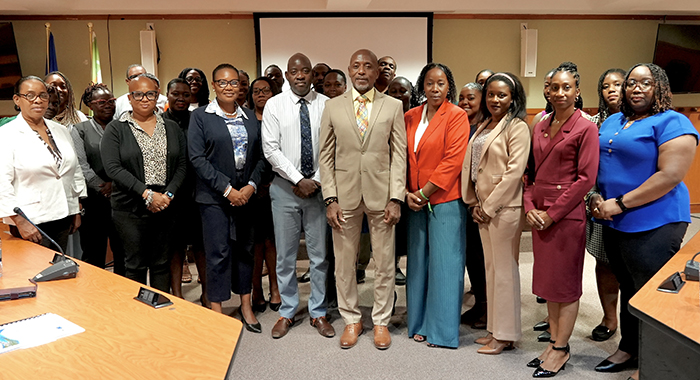
Against a backdrop of expanding regional integration and shifting global trade dynamics, the government of St. Vincent and the Grenadines has reaffirmed its dedication to fostering a pro-business environment, positioning itself as what leaders call “a business government” that prioritizes private sector growth and trade opportunity. The commitment was laid out publicly by Dwight Fitzgerald Bramble, the country’s minister overseeing foreign affairs, foreign trade, foreign investment and diaspora affairs, during the opening ceremony of the Organisation of Eastern Caribbean States (OECS) Specialised National Services Sector Training Workshops, held in Kingstown.
In his opening remarks to attendees spanning four days of programming, Bramble made clear that the administration stands fully behind the private sector, which drives actual trade activity. “I can assure you that you have our full support,” Bramble stated, adding that ongoing input from business leaders and industry stakeholders is critical to shaping effective policy. “Governments do not trade; it is individuals, organisations and businesses that do. Your input is therefore critical to ensuring that we continue to provide the support you need.”
Delores Francis, a representative of the OECS Commission, echoed the significance of the training initiative, framing it as a core component of the regional body’s longstanding mission to lift up member states through targeted capacity building. The workshop, she explained, is designed to upgrade the technical expertise of a broad range of stakeholders, from trade policy specialists and public sector services officials to representatives of business support organizations and private service suppliers.
“This investment is critical, as it equips participants to confidently navigate the rapidly evolving landscape of international trade in services,” Francis noted. Beyond building practical skills, the training helps stakeholders understand and leverage the trade commitments negotiated for their countries under regional and international agreements. Most notably, it supports the translation of pledges laid out in the Revised Treaty of Basseterre — the founding agreement that governs OECS economic integration — into tangible commercial opportunities that benefit local businesses and economies.
The full workshop ran from an initial opening on Monday through to concluding activities on Thursday, with all interactive, hands-on sessions led by Audel Cunningham, a trade consultant commissioned by the OECS. Over the course of the four-day program, participants dived into a comprehensive slate of timely topics relevant to modern services trade. These covered rules and opportunities for services trade within both the OECS and the broader Caribbean Community (CARICOM) bloc, strategies for regulatory reform to support trade growth, frameworks for international services trade policy, best practices for services trade negotiations, methods for services statistics tracking and classification, WTO rules governing domestic regulation of services, and the fast-growing areas of e-commerce and digital trade.
The workshop wrapped up with a dedicated sensitization session focused on two high-priority topics: market intelligence specifically tailored for the services sector, and the growing trend of “servicification” — the increasing integration of services into manufacturing production and value chains.
The specialized training workshop is just one part of the OECS Commission’s broader ongoing push to strengthen institutional capacity and boost the competitiveness of the services sector across all its member states. For its part, the government of St. Vincent and the Grenadines says it will continue collaborating with both regional and international partners to build domestic trade capacity, advance a services-led growth model, and position the small island nation to capitalize on emerging opportunities in regional and global trade.