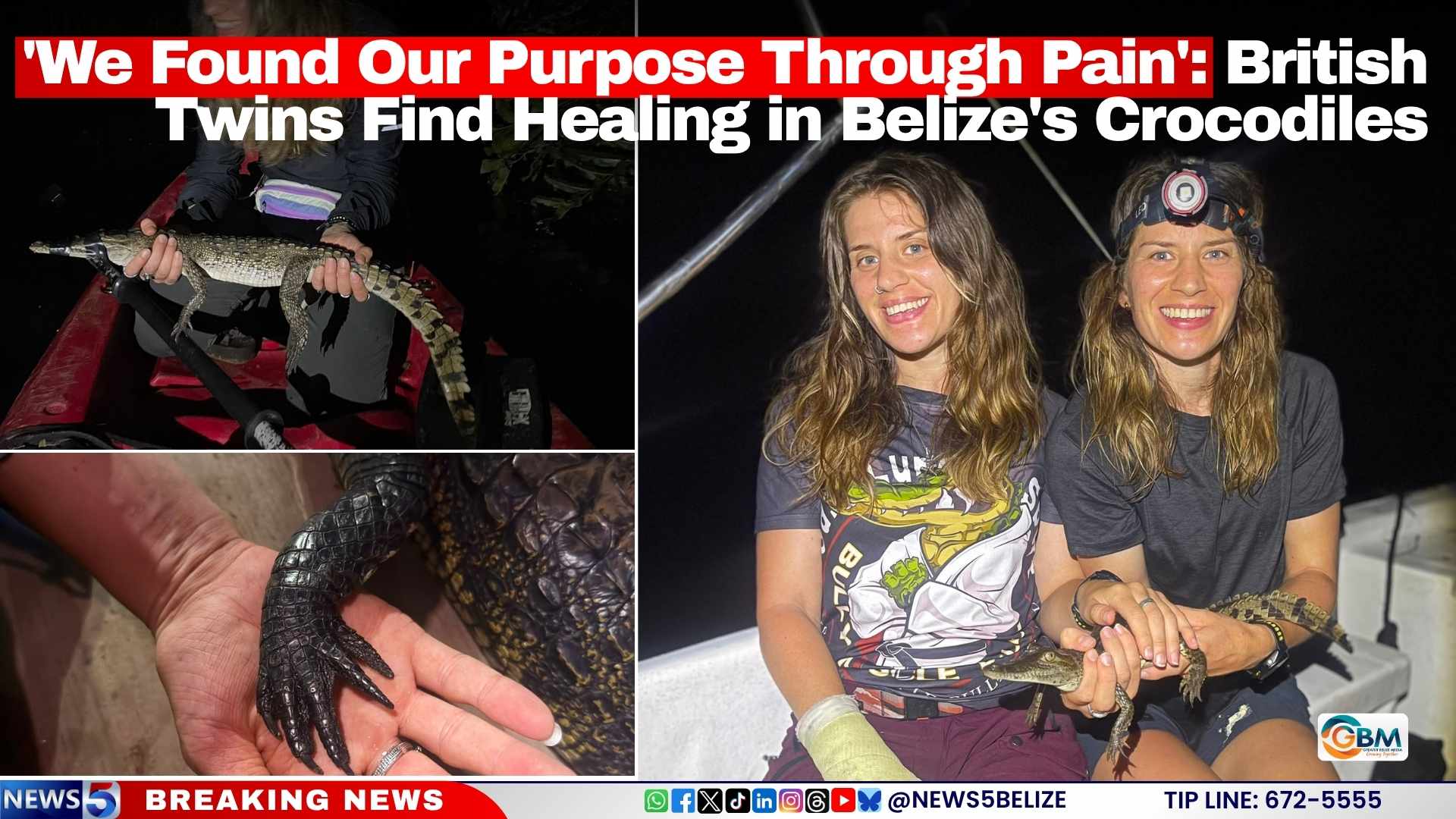
Five years after a crocodile attack in Mexico nearly took Melissa Laurie’s life, the 33-year-old British woman and her twin sister Georgia are marking the somber anniversary in an unexpected place: the heart of Belize’s crocodile habitat, where they have spent two months working alongside conservation scientists to protect the very species that forever altered their lives.
It was June 6, 2021, when Melissa was dragged underwater by a crocodile while swimming in Mexico’s Manialtepec Lagoon, near Puerto Escondido. In a split-second act of courage, Georgia, who was with her that day, repeatedly punched the reptile until it released her sister. Melissa developed sepsis after her wounds became infected and spent months recovering, while Georgia’s quick thinking and bravery was later recognized with a Civilian Gallantry Medal from King Charles III in December 2024, placing her among the first recipients of the honor under the new monarch.
Rather than letting fear and trauma define their relationship with crocodiles, the sisters from Sandhurst, Berkshire, made the deliberate choice to channel their experience into action. For the fifth anniversary of the attack, they joined a two-month conservation fellowship with the Crocodile Research Coalition (CRC), a Belize-based organization dedicated to protecting crocodile populations and their coastal ecosystems.
Under the guidance of CRC founder and lead crocodile researcher Dr. Marisa Tellez, the twins took on hands-on work ranging from community outreach to critical field research. They conducted nocturnal “eye-shine” surveys to count wild crocodile populations around Placencia Lagoon, monitored crocodile nesting sites, helped restore degraded mangrove habitats critical to the species’ survival, and assisted with research sampling: taking body measurements and collecting stool samples to test for mercury contamination, a key indicator of broader water ecosystem health.
For Melissa, the most profound moment came on the exact five-year anniversary of the attack, when she stepped into the field to work alongside the research team. “All of a sudden, I just had this wave of emotion hit me because the scenery was so similar to that day,” she recalled. “I was thinking, five years ago, this was the worst day of my life, and now I feel the safest I have ever felt. It almost healed a part of me I didn’t know needed healing.”
In one iconic moment that encapsulates their journey, Melissa caught a young juvenile crocodile from the side of a research boat—with Tellez holding her legs to keep her secure—and named it Mani, after the lagoon where her attack occurred. It is a far cry from the terror of that day five years ago, a symbol of how the twins have reframed their trauma.
The sisters do not hold anger toward the crocodile that attacked Melissa. Both agree the animal was acting on instinct, protecting its nest and offspring just as Georgia protected Melissa that day. “It was protecting its babies,” Georgia explained. “Like I was protecting Mel; it was protecting his babies.”
Their work has also opened a new platform to speak about the long-term impacts of trauma, PTSD, and the unexpected strength that can emerge from crisis. “The trauma of the crocodile attack comes into play for me raising awareness about mental health and trauma and PTSD,” Georgia said. “We’ve had some moments where it’s taken us back to that day. Yeah. But it just takes time to process.”
She added that the experience revealed a depth of human resilience most people never discover in daily life. “With your fight or flight response, people say, like, ‘Oh, I don’t think I could do that,’ but you have this deep reservoir of strength within you that never comes out in your day-to-day nine-to-five life. It’s a very visceral reaction, like we will do anything to survive and to protect people that we love, and in that moment, love overwhelmed fear. That was the strongest thing.”
Dr. Tellez noted that the Laurie sisters’ journey aligns with a pattern she has observed among other wild animal attack survivors, particularly shark attack survivors, who often become some of the most passionate advocates for the species that harmed them. She added that crocodiles have long been revered rather than feared across much of human history, a cultural context that is often lost in sensationalized headlines about attacks.
As the twins prepare to wrap up their program and leave Belize on Monday, they carry with them new purpose, even despite a minor injury (Georgia broke her hand in an unrelated accident during the trip). Moving forward, they plan to continue their advocacy work, combining education about respectful coexistence with wildlife and open conversation about trauma healing. For them, the crisis that nearly broke Melissa has given their lives new meaning.
“We found our purpose through pain, and it’s like in a way this was meant to happen because we feel like we are strong voices for crocodiles,” Melissa said.