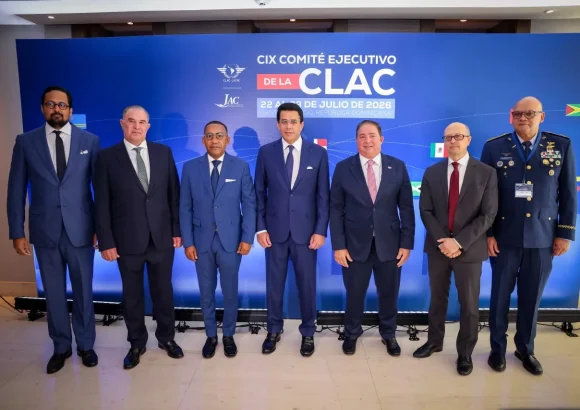
The Dominican capital of Santo Domingo opened its doors this Wednesday to a pivotal regional aviation gathering, hosting the 19th Meeting of the Executive Committee of the Latin American Civil Aviation Commission (CLAC). The event brings together top civil aviation regulators and leaders from across Latin America and the Caribbean, centered on three core priorities: boosting cross-regional air connectivity, advancing aviation market liberalization, and aligning regional preparations for the upcoming ICAO World Air Transport Conference.
Presiding over the two-day summit is Héctor Porcella, who leads both the Dominican Republic’s Civil Aviation Board (JAC) and currently holds the CLAC presidency. In his opening remarks, Porcella emphasized that the meeting will serve as a critical platform to shape the commission’s strategic agenda for the next two years. Under the agreed framework, the organization will prioritize expanding accessible air travel across the region, deepening institutional and regulatory collaboration between member states, and closing gaps in regional connectivity that have long hindered economic and tourism growth.
Porcella outlined the Dominican Republic’s own proactive approach to aviation development, noting that the country has implemented a series of market-opening policies designed to streamline airline operations, expand cross-carrier codeshare partnerships, and build stronger air links with major global markets including South America, Canada, Europe, and Asia. He added that the coordinated partnership between the country’s public sector regulators and private aviation and tourism stakeholders has driven consistent growth, with the Dominican Republic consistently hitting new records for both passenger volumes and total flight operations in recent months.
david Collado, the Dominican Republic’s Minister of Tourism, reinforced the interconnected nature of aviation and national economic growth, noting that robust air connectivity is the fundamental bedrock of the country’s booming tourism sector. Collado confirmed that the national government will maintain close collaboration with civil aviation authorities, airport operators, and commercial airlines to continue expanding the country’s network of international routes. This ongoing effort is designed to cement the Dominican Republic’s standing as the top tourism destination in the Caribbean, attracting record numbers of leisure and business travelers from across the globe.
Over the course of the two-day meeting, participating delegates will conduct in-depth reviews of a wide range of pressing industry issues, ranging from the negotiation and implementation of open skies agreements to global aviation safety standards, cross-border technical cooperation programs, industry sustainability initiatives, and the modernization of outdated civil aviation regulatory frameworks across the region. In a key announcement, Porcella confirmed that delegates are set to sign more than eight new regional air transport agreements before the meeting concludes, a development that will significantly deepen institutional and operational aviation ties across Latin America and the Caribbean.