A high-profile murder case in the Bahamas has sparked urgent demands for systemic oversight and institutional accountability after a man accused of killing a prospective prosecution witness violated his bail conditions 81 times over six months without consequence. The killing, which occurred in mid-July on Carmichael Road, has left criminal justice experts questioning critical gaps in the country’s bail monitoring protocols.
The 39-year-old suspect was formally charged on Monday with the murder of James McPhee, a 39-year-old man who was set to testify against the same accused in an upcoming armed robbery trial. Prosecutors have documented that between January 3 and July 8 – just four days before McPhee was killed – the defendant failed to check in at his required local police station 81 separate times in violation of his court-ordered bail terms. When the case moved to address the bail breaches, the suspect attempted to plead guilty to the violations before reversing his position, prompting the court to enter a not guilty plea on his behalf.
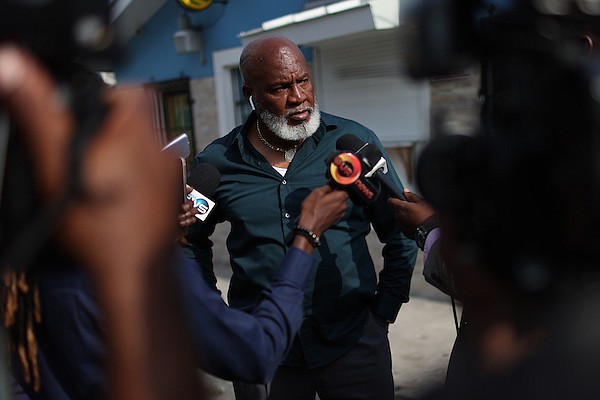
Carlos Reid, a prominent crime consultant who has long called for criminal justice reform in the country, has emerged as the most vocal critic of the systemic failure that preceded the killing. Reid told local outlet The Tribune that repeated, unaddressed bail breaches represent an unacceptable failure of oversight, arguing that “somebody dropped the ball” that allowed a dangerous defendant to remain free and target the witness. “I think somebody should be accountable. Somebody should be made to bear,” Reid stated. “No, we can’t wait until like somebody die before we sound that alarm.”
Reid noted that despite the repeated missed check-ins, the suspect remained active on the court-ordered electronic monitoring program, never cutting off his tracking device. That means law enforcement authorities could have located the defendant immediately at any point after he missed his first required check-in, he argued. “If the court sanctions that you sign it, then you sign in. If you miss signing in, then you’re in breach of a court order. You should be taken back to court and if there’s any time that they wanted to find that person, that person was being monitored. They could have found him in a heartbeat,” Reid said.
The crime consultant is calling for a full investigation into how the repeated violations went unnoticed or unaddressed for more than six months. He has also pushed for a review of official protocols to clarify what steps authorities must take when a defendant repeatedly violates bail reporting requirements, and has asked whether McPhee should have been warned about the defendant’s ongoing breaches. Reid added that he has already raised the issue with the Minister of National Security, who has committed to preventing similar failures in the future.
However, Attorney General Wayne Munroe has pushed back on criticisms of the current system, downplaying the public safety risk tied to the missed check-ins. Munroe argued that the primary purpose of required police station check-ins is not to monitor daily public safety risk, but to ensure defendants do not flee before their trial. “The more positive way that we have to protect the public with people on bail if they’re considered dangerous is to electronically monitor them,” he said. “That way you know where they are 24 hours a day, as opposed to the one moment you walk in a police station and sign a book or do the biometric thing so the condition of signing into a police station is about preventing from you absconding.”
Munroe also questioned the need for dual reporting and electronic monitoring requirements, noting that continuous location tracking eliminates any need for periodic in-person check-ins. “If he’s being electronically monitored, I don’t understand why somebody who’s being electronically monitored needs to sign in at a police station. You know where to find him 24 hours a day,” he said. The attorney general added that any individual who feels threatened by a defendant released on bail can contact police to request an investigation, and officers have the authority to relocate at-risk witnesses if deemed necessary.