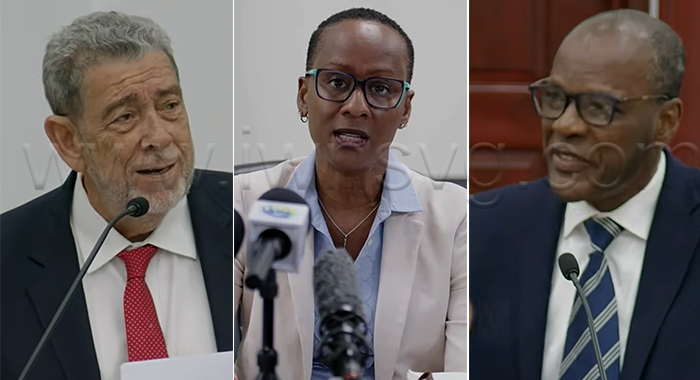
A long-simmering political debate over responsibility for Saint Vincent and the Grenadines’ divisive 2021 COVID-19 vaccine mandate has reignited during parliamentary debate, with the nation’s sitting Health Minister Daniel Cummings publicly clearing Chief Medical Officer Dr. Simone Keizer-Beache of blame for the policy that led to more than 500 public sector dismissals. Cummings told lawmakers Tuesday during discussion of the Compassionate Gratuity Bill that blame for the mandate has been incorrectly placed on the CMO, and that the policy was wholly spearheaded by former prime minister Ralph Gonsalves, whose Unity Labour Party held power from 2001 until 2025.
“I am here to say categorically that is not the truth,” Cummings stated firmly to the national assembly. “COVID madness was the brainchild of the former prime minister who brought it, who insisted on it and who would not hear from any professional voice.”
It remains unconfirmed whether Gonsalves, who now serves as Leader of the Opposition and was present for Tuesday’s parliamentary sitting, was in the chamber when Cummings delivered the remarks. Notably, neither Gonsalves nor two former Cabinet ministers from his administration — Carlos James and Keisal Peters — have publicly challenged Cummings’ account of how the mandate was approved. Gonsalves has repeatedly claimed publicly that his government’s mandate was crafted on professional advice from Keizer-Beache.
Keizer-Beache has retained her post as CMO under the new New Democratic Party administration, which took office in November 2024. Unlike Gonsalves’ narrative, she has never publicly disavowed the former government’s vaccine policy. In fact, she testified in defense of the mandate during a legal challenge brought by public sector unions against the previous administration’s actions. The legal battle remains ongoing: in 2023, the Eastern Caribbean Supreme Court ruled the mandate unconstitutional, but the Court of Appeal overturned that ruling in a split 2-1 decision. The case is now awaiting a final ruling from the London-based Privy Council, the Caribbean nation’s highest court of appeal.
Tuesday’s statement marks the second time in recent weeks that Cummings — who opposed the mandate while he was a member of the opposition — has worked to reframe public understanding of the policy’s origins and assign political accountability for its fallout. The discussion was prompted by South Windward MP Andrew John, a member of the current ruling cabinet, who opened the topic by highlighting the severe human toll of the 2021 mandate, which required mandatory vaccination for specific classes of public workers and resulted in the firing of more than 500 low-wage employees, many of whom still have not received compensation for their lost income and benefits.
John described the mandate as “wickedness to the highest order,” noting that dismissed workers have endured devastating losses including derailed careers and years of erased pension-eligible service. Cummings echoed that harsh criticism, doubling down on his characterization of the policy as “COVID madness” and framing the mandate as an example of the previous administration’s vindictive, retaliatory style of governance.
“When you, for 25 years, operated… with such bile and spitefulness, when anyone who doesn’t agree with you must feel the wrath of your power… That is not how you treat people,” he said.
Cummings went on to argue that Keizer-Beache should not face political repercussions for the actions of the previous government, drawing a parallel to his own experience in politics: when he entered opposition politics years ago, his wife, who then served as president of the Family Court, was removed from her position, a move that was publicly condemned by former attorney general Arthur Williams in a newspaper op-ed. He noted that while Keizer-Beache’s husband Glen Beache served as a ULP Member of Parliament for South Windward between 2005 and 2010, the CMO herself has never participated in partisan politics.
“Dr. Simone Keizer has never been in politics. Her husband was,” Cummings said. “Should we, as a government, punish Dr. [Keizer], who has given such quality service to this country, because her husband is in politics other than ours? I say, Mr. Speaker… hell no. Hell no.”
The health minister emphasized that decisions about retaining senior public servants must be guided by professional merit, not familial or personal political ties. “I defend and support every public servant on merit. And this government… led by Dr. Friday, is absolutely supportive of this mission of working with all our people to deliver the service required,” he stated.
Cummings framed his remarks as part of a broader push to rebuild trust between public servants and the political leadership after the upheaval of the pandemic and its ongoing aftermath. “What I want people to understand: it is not about spiting people. It’s about using our best resources to deliver the best we can do,” he said. He praised the nation’s “serious, hard-working public servants” and pledged that the current administration would continue to support and lift up all public workers regardless of their personal political beliefs.
He added that the new government faces a massive backlog of challenges to address in the national health sector, including widespread burnout among nursing staff, persistent staffing shortages, and crumbling outdated infrastructure, and that repairing working relationships with senior public health leaders like the CMO is a critical first step to tackling those larger issues. Though Cummings’ comments were delivered during a debate focused on providing gratuity payments to low-wage non-pensionable workers affected by the pandemic, they have reopened one of the most divisive chapters of the nation’s pandemic-era politics, forcing a renewed public reckoning over who bears ultimate responsibility for the mandate and its hundreds of dismissals.