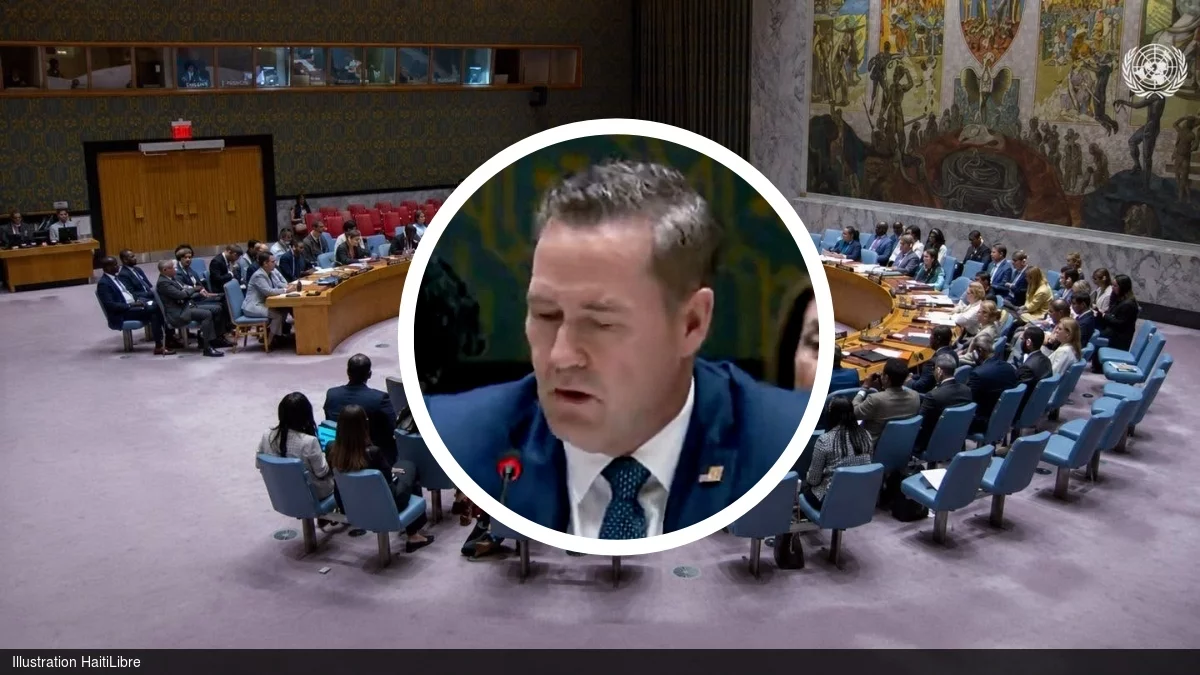
In a July 20 address to the United Nations Security Council’s 10198th meeting focused on escalating instability in Haiti, U.S. Ambassador to the UN Mike Waltz laid out a clear case for urgent, coordinated international action against the transnational criminal networks that have thrown the Caribbean nation into chaos.
Waltz emphasized that Haiti’s geographic proximity, just hundreds of kilometers off the coast of Florida, makes its security crisis a matter of core strategic interest not only to the U.S. but to the entire global community. He explained that armed gangs operating out of Haiti have expanded their influence far beyond the country’s borders, trafficking illegal weapons and narcotics, and spreading instability across the Caribbean, into West Africa, Europe, and even the continental United States. Within Haiti, he added, these criminal groups fund their operations through widespread extortion of vulnerable civilians and a staggering surge in ransom kidnappings, which force already impoverished families to sell their few remaining belongings to secure the release of abducted loved ones.
Against this backdrop, Waltz highlighted the work of the international Gang Suppression Force (GSF), noting that the multinational force’s top operational priority is to retake control of Haitian streets and reopen critical trade and communication routes connecting major ports to inland communities. The U.S. ambassador offered strong praise for the leadership and capability of the GSF’s personnel, which draw contributors from across the globe. From the force’s Mongolian commander down through every level of command, Waltz said, GSF troops and officers are highly trained, well-led, and supported by a carefully crafted operational plan designed by experienced, committed civilian and military planners across UN and regional bodies. During his visit to the region, Waltz noted, he observed incoming contingents from El Salvador, Jamaica, Chad and many other nations, including 300 recently deployed Sri Lankan soldiers who arrived while he was on the ground.
All deployed GSF soldiers and police officers are well-trained, adequately armed, and operating under a clear offensive mandate granted by the Security Council to target the powerful “Barbecue” gang and other major criminal networks. Waltz extended deep U.S. gratitude to all troop- and police-contributing countries, as well as the GSF’s Standing Partners Group, noting that the entire mission would be impossible without their collective determination and sacrifice. He singled out the Dominican Republic for particular praise, noting that the neighboring nation correctly views Haiti’s instability as an existential security threat and has gone above and beyond to facilitate the GSF’s deployment and operational presence in the country.
Looking back at the force’s first 10 months of operations, Waltz argued that the GSF has demonstrated the UN’s ability to deliver meaningful results when it focuses on core, collective security objectives – and he stressed that this progress is only the beginning. Per the framework laid out by Special Representative Christofides, he said, GSF progress will be regularly assessed against clear, predefined benchmarks aligned with the Security Council’s original mandate, a transparent process that the U.S. fully supports. This model, Waltz argued, is how the UN was designed to operate: uniting nations to contain spreading chaos and share the responsibility for resolving global security threats.
As the Security Council prepares to renew the Joint Response Group (JRG) mandate in September, Waltz confirmed that the U.S. is working alongside co-drafter Panama to advance the process. He issued an urgent appeal to all member states with available air transport capacity to support the accelerated deployment of incoming GSF contingents from Sri Lanka, Bangladesh, and Ivory Coast. Air transport, he noted, cuts deployment timelines dramatically compared to far slower sea shipping, so assistance from countries with commercial or military airlift capacity would drastically speed up the delivery of personnel and equipment to support vulnerable Haitian communities. The importance of this support cannot be overstated, he added.
Beyond security efforts, Waltz welcomed progress toward restoring democratic governance in Haiti, commending Haitian authorities for following through on their commitments to the Haitian people. He specifically praised the Provisional Electoral Council for taking concrete fiscal and operational steps to organize the country’s first national elections in a decade.
“Haitians deserve streets free from gang control, institutions free from intimidation, and a government chosen by the Haitian people,” Waltz said. He emphasized that a collapse of Haitian statehood would never be contained to Haiti’s borders: gang violence, drug trafficking, arms smuggling, and irregular migration are all transnational problems that recognize no national boundaries. A more stable, secure Haiti advances the interests of the entire Caribbean region and every country working to eliminate criminal influence in the area. Closing his remarks, Waltz reaffirmed unwavering U.S. solidarity with Haiti and the Haitian people, committing to continued collective work with the GSF, international partners, and Haitian stakeholders to restore security, share the burden of intervention, and help Haitians regain full control of their sovereign nation.