By veteran Caribbean broadcaster Julian Rogers, the world of cricket and the wider Caribbean community are this week mourning the passing of one of the most iconic figures the sport has ever produced: The Right Honourable Sir Garfield Sobers, Barbados’ beloved National Hero and widely regarded as the greatest all-round cricketer in the history of the game, has died at the age of 89, 11 years short of his 100th birthday. In the days ahead, a tidal wave of tributes will pour in from every corner of the global cricket community – from his native Bridgetown to Bangalore, from Melbourne to Manchester, from Kingston’s Sabina Park to London’s iconic Lord’s Cricket Ground – all honoring the extraordinary life and career of a sporting legend.
Countless voices will retell Sobers’ most famous record-breaking feats: the 365 not out he scored against Pakistan in 1958, a Test match record that stood for 36 years; the unprecedented six sixes he hit off a single over in first-class cricket in 1968, a feat that remains etched in cricketing folklore decades later. His unmatched genius with the bat, with the ball, and in the field will be celebrated by fans, players and pundits alike. But for Rogers, reflections on Sobers’ legacy begin not with statistics, but with the man himself.
Rogers recalls a chance encounter years ago in a Belize bank, where he shared news of Sobers with a fellow customer. After a moment of silence, the stranger simply said: “Barbados is tops in so many things,” before going on to praise Barbadian Prime Minister Mia Mottley as the undisputed leader of the Caribbean. The moment drove home a simple truth: Sobers belonged to a rare Barbadian legacy of excellence, one that has repeatedly proven to the world that greatness is never limited by the size of the nation that produces it.
Across multiple meetings over decades – from a special tribute at Trinidad’s Queen’s Park Oval to a gathering honoring West Indian cricket greats in Kingston, Jamaica, to a most recent encounter at Barbados’ Lloyd Erskine Sandiford Centre – Rogers was left with the same unshakable impression: Sir Garry Sobers was a quiet colossus. No superlative in the English language can fully capture the brilliance of his play, which blended masterful batting, versatile bowling (from beguiling left-arm spin to searing pace that humbled the world’s best batsmen) and acrobatic slip catching that turned catches into works of art. But what stood out even more than his on-field genius was his enduring humility – a quality that fit him as naturally as the turned-up collar on his playing shirt, a trademark that became part of his legend, never tarnished by the weight of global fame.
Other commentators and players will do justice to the finer details of Sobers’ cricket career: the impossibly angled late cuts that defied geometry, the majestic cover drives that flowed like poetry, the effortless sixes that cleared any boundary, the unhurried, leisurely walk to the crease that spoke to the quiet confidence of a man who knew he was born for greatness. For generations of Caribbean cricket fans, those iconic moments are still tied to the voices of legendary commentators who brought them into living rooms across the region, from John Arlott to Tony Cozier, whose commentary did more than narrate a match – it narrated a region’s growing belief in its own potential.
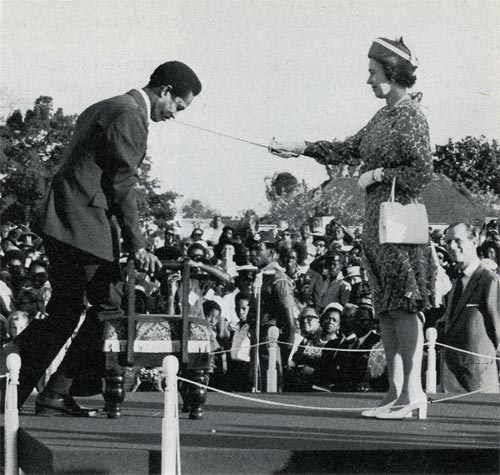
Sobers’ story began in humble beginnings in Barbados’ Bay Land, before his extraordinary talent lifted him to global acclaim, and eventually to being named a National Hero of his native island. Many still recall the iconic 1975 ceremony at Barbados’ Garrison Savannah, where Queen Elizabeth II personally conferred a knighthood on Sobers in front of thousands of spectators who gathered to witness history. It was a moment when the world officially recognized what Barbadians and West Indians had known for decades: greatness had emerged from a small Caribbean island.
In the later decades of his life, Sobers dedicated himself to rebuilding the once-dominant legacy of West Indies cricket. He offered counsel to generations of players, from record-breaking batsman Brian Lara to young rising talents just starting their careers. He understood that the famous maroon West Indies cricket cap belonged to every generation, and he remained one of its most quiet, committed guardians.
For many outside the Caribbean, the gold standard of praise for Sobers remains Sir Donald Bradman’s famous declaration that Sobers was the greatest cricketer he had ever seen. But for the people of the Caribbean, that truth was never in doubt long before Bradman’s compliment. It was already sung by the region’s calypsonians: The Mighty Sparrow captured the collective regional pride in a calypso that celebrated Sobers as a figure whose greatness stretched beyond the bounds of the sport, extraordinary enough to be recognized from Earth to Mars. That was no mere calypso exaggeration – it was a truth wrapped in the region’s signature rhythm, humor and pride.
Sobers’ legacy also captured the imagination of one of the Caribbean’s greatest thinkers, C.L.R. James, who argued in his seminal work *Beyond a Boundary* that cricket was never just a game – it was a mirror that reflected the struggles, ambitions and collective identity of the Caribbean people. For James, Sobers was far more than a great cricketer: he was a symbol of a changing West Indies, a player whose genius marked the arrival of Caribbean cricket as a global powerhouse. While Sparrow gave voice to the people’s pride, James gave meaning to that pride, together explaining why Sobers mattered so much more than the records he broke. He expanded the boundaries of what Caribbean people believed they could achieve, proving that excellence could come from anywhere, regardless of size.
In the coming days, the wave of tributes will only grow: former teammates will share untold stories, opponents will recall the matches they were privileged to lose to his genius, statisticians will revisit his record-breaking numbers, and historians will retrace his career milestones. A grateful Barbados will mourn one of its greatest sons, and a proud Caribbean will mourn one of its own. One day, newspaper headlines will fade, and television specials will end, and a new generation of cricketers will take their place at the crease. But the legacy of Sir Garfield Sobers will never fade. Somewhere, on a small patch of grass across the Caribbean – from Bridgetown to Belize City – a young boy or girl will pick up a secondhand bat, turn up the collar of their shirt, and dare to dream an impossible dream. That is Sobers’ greatest legacy: he did not just score runs and break records. He gave an entire region permission to believe that excellence is never confined to small spaces. Barbados has given the world many great icons, but none greater than Sir Garfield Sobers. Though his innings has ended at 89, some legends can never be measured by the numbers on a scoreboard.