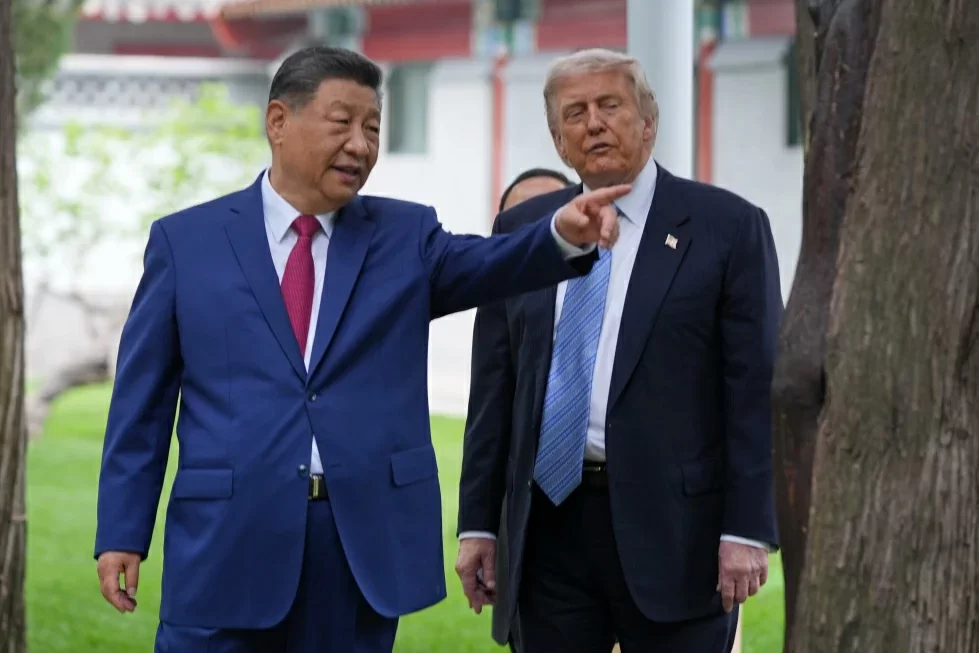
A landmark 2026 global public opinion survey from the Pew Research Center has recorded a historic shift in global attitudes toward major world powers: for the first time in 20 years of tracking, China and its leader President Xi Jinping hold a higher net favorable rating globally than the United States and former President (current officeholder as of 2026) Donald Trump. Researchers link this striking reversal to growing global distrust of the U.S. driven by controversial foreign policy moves of the Trump administration that have strained longstanding alliances.
Across the 36 countries and territories included in the survey, a majority of respondents held more positive views of China than the U.S. in 25 nations – including key U.S. neighbors Canada and Mexico. Only six nations still ranked the U.S. as more popular than China. When it comes to individual leader approval, President Xi earned higher favorable ratings than Trump in 22 nations, including major European powers France, Germany, and the United Kingdom. Notably, the survey also found low overall confidence in both leaders across much of the world.
Laura Silver, associate director of Pew’s Global Attitudes Research, emphasized the uniqueness of this milestone. “Prior to this survey, global opinions of Beijing and Washington were often comparable, but China had never held a significant lead in overall popularity,” she explained.
Silver outlined multiple overlapping factors driving the shift, coming as the global impact of the COVID-19 pandemic continues to fade. “The outbreak of new global conflicts, the widespread perception that the U.S. is not contributing to global peace and stability, and eroding confidence in Trump’s leadership have all played key roles,” she said. Controversial Trump administration policies, including the public proposal to acquire Greenland from Denmark, unilateral military actions in Venezuela, and the U.S. approach to the Israel-Hamas conflict, have sparked widespread negative international pushback, she added. “The U.S. is facing significant international pressure over its recent policy choices.”
Against this backdrop, China has benefited from a growing global perception as a more reliable partner committed to upholding global peace and stability, Silver noted.
Officials from both sides have reacted to the poll findings with contrasting framing. A White House spokesperson defended the Trump administration’s global record, arguing that “President Trump has done more to advance global stability than any other leader in modern history,” pointing to U.S. actions against Iran and narcoterrorism as evidence. In contrast, the Chinese Embassy in Washington said the poll reflects “broad global recognition of China’s governance achievements and development progress.”
The erosion of U.S. favorability is most pronounced among America’s longstanding traditional allies. In Canada, for example, positive views of the U.S. plummeted from 57% in 2023 to just 33% in 2026, while positive views of China jumped from 14% to 44%. Researchers attribute this sharp shift in Canada to trade tensions, including the steep tariffs Trump imposed on Canadian goods.
Across major Western European nations including France, Germany, Spain, Italy, and the United Kingdom, China’s popularity has climbed steadily while U.S. favorability has fallen. In the UK, opinions of the two powers are now nearly evenly matched – a stark change from three years ago, when the U.S. held a large lead in public approval.
Of the six nations where the U.S. still outranks China in favorability, Israel leads with roughly 80% of respondents holding positive views of the U.S., compared to just 19% for China. The other five nations are Japan, India, South Korea, the Philippines, and Poland, though even in these countries, U.S. approval ratings continue to trend downward.
The U.S. still maintains a lead over China in global public perceptions of respect for personal freedoms, though that gap has narrowed in recent years as fewer people around the world believe the U.S. government upholds these values consistently.
Pew researchers conducted the survey by polling more than 42,000 respondents across 35 countries plus the West Bank and East Jerusalem, with a margin of error ranging from 2.3 to 5.5 percentage points, meeting standard global survey research benchmarks.
This notable shift in global public opinion carries far-reaching geopolitical implications. Nations that have long maintained close ties to the U.S. may now be inclined to re-evaluate their foreign policy orientations and economic partnership frameworks. Growing global confidence in China could strengthen Beijing’s global influence, particularly in regions where it has already expanded investment and collaboration through signature initiatives such as the Belt and Road.
The decline in U.S. popularity is partially rooted in America’s domestic political climate, where deep partisan divisions and the Trump administration’s policy agenda have damaged the country’s long-held image as a stable, reliable global partner. On the international stage, controversial U.S. actions – from unilateral military interventions to escalating trade disputes – have fostered a widespread perception of American unpredictability.
Global media coverage also plays a significant role in shaping public perceptions. Widespread reporting on China’s economic expansion, large-scale global infrastructure projects, and commitment to multilateral cooperation has boosted its positive image, while constant coverage of U.S. domestic political conflict and controversial foreign policy moves has eroded global public trust.
Regional variations in preferences remain clear: Israel and several key Asian nations still favor the U.S. due to shared security interests and longstanding historical alliances. This confirms that deep-rooted geopolitical and cultural ties still weigh heavily in shaping global public opinion.
Looking ahead, the global image of both powers will almost certainly continue to evolve. Shifts in U.S. leadership, potential changes in American foreign policy, and China’s continuing emergence as a leading global actor will all shape future global perceptions. This is a dynamic global landscape where trust, stability, and collaborative leadership remain the most critical factors shaping national influence. The shifting tides of global public opinion are already set to impact international negotiations, trade relationships, and security alliances, making it a key factor reshaping the global balance of power in the coming years.