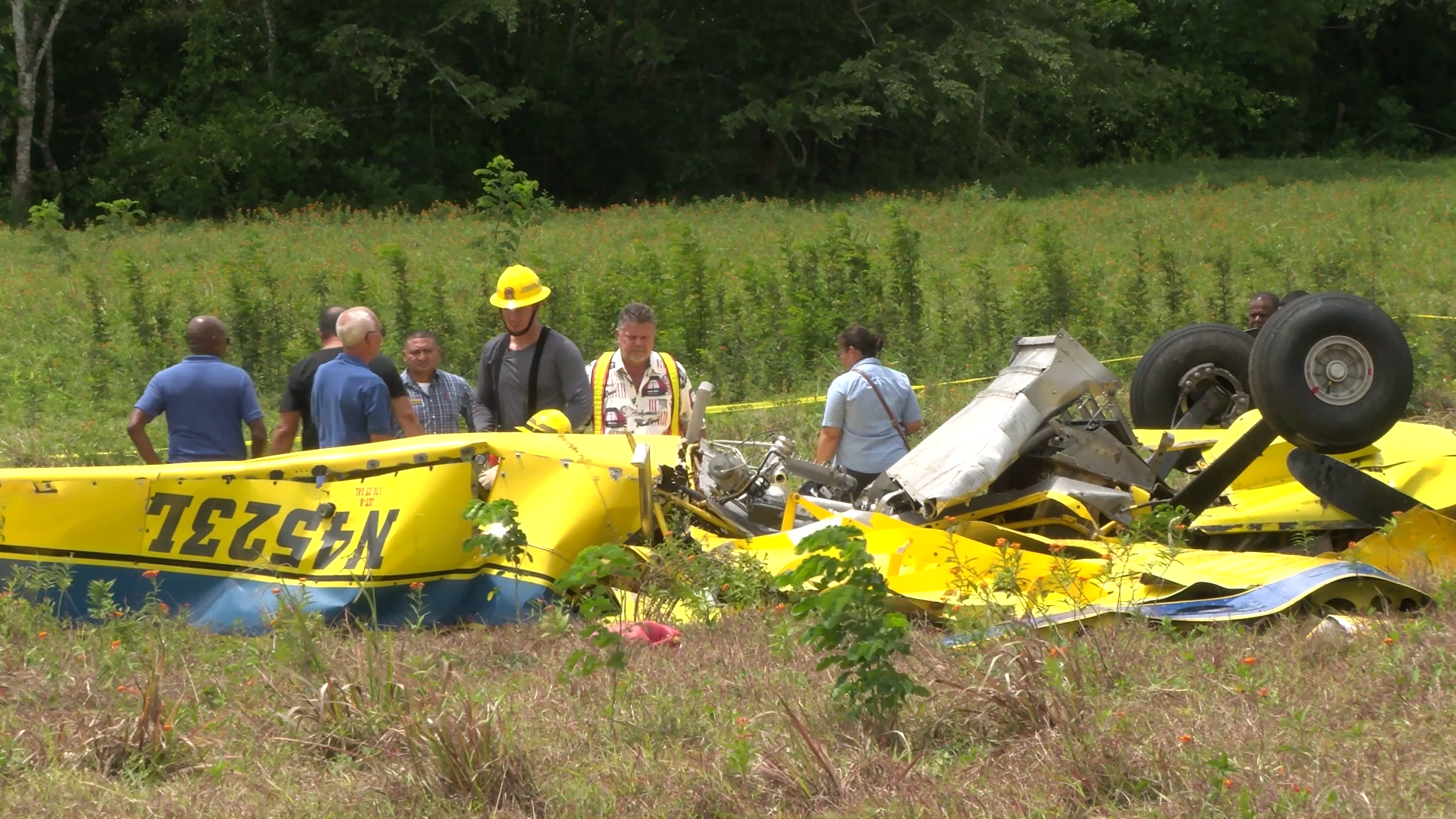
Nearly one week after a veteran pilot lost his life in a deadly agricultural aircraft crash in Spanish Lookout, Belize, the official investigation into the incident is moving into its critical final phase, with authorities set to deliver findings that could reshape the nation’s aviation safety regulations.
Henry Plett, an experienced pilot, died while conducting an aerial spraying mission last week, marking both a total loss of the aircraft and a tragic human fatality — two threshold events that require a full, thorough probe under both international aviation standards and Belize’s domestic aviation laws. Civil Aviation investigators have spent days processing evidence at the crash site and are now nearing the completion of their on-site work, though broader analysis of evidence and final reporting will continue in the coming weeks.
For regulators, the investigation’s core purpose extends far beyond identifying what caused the single crash. In an interview accompanying the probe update, Nigel Carter, Director of Belize’s Department of Civil Aviation, emphasized that every fatal aviation accident offers unique, actionable lessons that can drive systemic improvements to make the nation’s airspace safer for all operators.
“Across the global aviation sector, continuous improvement of safety standards is a core priority,” Carter explained. “Under both our international obligations and local regulatory requirements, we are mandated to conduct a full investigation any time we see a total aircraft loss or a fatality. This case meets both criteria, so a comprehensive probe is not optional — it is required.”
Carter stressed that the investigation process is legally protected and intentionally designed to avoid rushing to assign blame to any individual or organization. Instead, the probe’s central goal is to map out the probable root cause of the crash, as well as any secondary contributing factors that combined to create the fatal outcome.
Once the Accident Investigation Unit finalizes its report, it will put forward targeted safety recommendations to the Department of Civil Aviation. Regulators will then review each proposal closely, implementing any necessary updates to aviation regulations, operational protocols or training requirements to close gaps in existing safety frameworks. The end goal, Carter said, is to eliminate the risk of a similar tragedy occurring in the future.
“This incident has already reminded the entire local aviation community of the inherent risks of agricultural flying, but it also creates an opportunity to strengthen our systems,” Carter added. “By addressing the factors that led to this crash, we can protect more pilots, operators and communities going forward.”
This report is adapted from a transcript of an original evening television newscast from Belize.