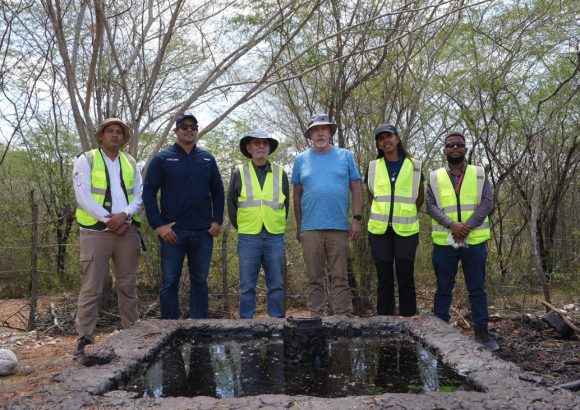
A collaborative geological research initiative between the Dominican Republic and the United States has launched a series of on-site field investigations in the Dominican’s southwestern Azua province, focused on unlocking the Caribbean nation’s untapped hydrocarbon resource potential. The project, a formal cooperative venture between the Dominican government and the Bureau of Economic Geology (BEG) at the University of Texas at Austin (UT Austin), brings together leading academic geoscientists and local energy sector specialists to conduct a holistic assessment of the country’s onshore and offshore sedimentary basins.
Leading the joint expedition are UT Austin geologist Mark Shuster and Dominican energy expert Emilio Núñez. Over the course of their fieldwork, the team has prioritized access to some of the region’s most geologically significant sites, including distinct geological formations across the province and the large Cementos Santo Domingo quarry. At these locations, researchers are conducting detailed studies of the basin’s rock structures, gathering a diverse set of geological samples for laboratory analysis, and measuring key properties that are critical to identifying viable energy reserves. These properties include rock porosity, which determines how much oil or gas a rock formation can hold, and overall mineral composition, which helps contextualize the area’s geological formation history.
A core focus of the current fieldwork is a set of vintage exploration wells located in the Maleno area. Originally drilled in the late 1930s, these wells have long drawn the attention of geologists and energy investors due to naturally occurring crude oil seeps detected at the site, which signal the possible presence of larger commercial-scale hydrocarbon reserves underground. The current research team is conducting the most detailed modern assessment of these wells to date, updating decades-old data with modern geological measurement techniques.
All on-site operations are being guided by local geologists from the Dominican Ministry of Energy and Mines (MEM) and technical staff from the country’s National Geological Institute (IGN). During the expedition, the international and local teams have reviewed the full body of data from past exploration efforts in the region, cross-referencing historical findings with new on-site observations to build a more complete picture of Azua province’s complex geological history.
When completed, the comprehensive assessment is expected to deliver significant long-term benefits for the Dominican Republic. The research will expand and update the country’s national geological database, filling critical gaps in existing knowledge about domestic energy resource potential. By providing accurate, up-to-date geological data, the project will also lay the groundwork for future private and public energy exploration projects, attract targeted international investment in the Dominican energy sector, and support evidence-based policy planning for the country’s energy future.