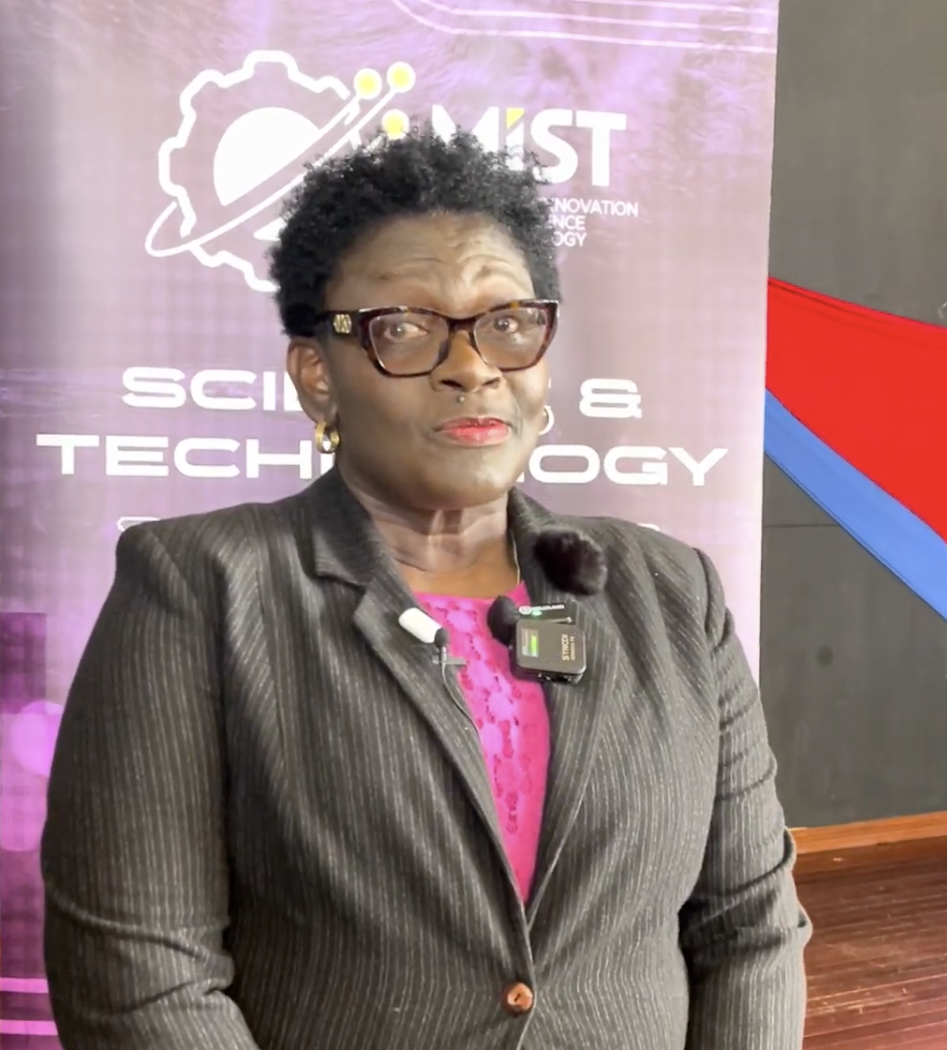
Barbados’ Ministry of Innovation, Industry, Science and Technology (MIST) has kicked off its 2026 iteration of the long-running Science and Technology Summer Camp, retooling the popular five-week program to prioritize immersive, hands-on learning that helps young participants connect scientific concepts to the world around them. Now in its nearly two-decade history after first launching in 2008, the 2026 camp opened its doors this week at Queen’s College in St James, welcoming children between the ages of 6 and 11 to explore a diverse range of STEM (science, technology, engineering and mathematics) disciplines.
Arlene Weekes, acting director of MIST’s Science, Market Research and Innovation Unit, highlighted how the program has transformed dramatically over its 18 years to match rapid global advancements in science and technology. Unlike early iterations that balanced general activities with STEM learning, today’s camp is built entirely around inquiry-driven tech and science exploration. “Over the years as technology has improved, we’ve come to include things such as robotics where we use the mBot and introduce coding to these young children,” Weekes explained. “We’ve introduced artificial intelligence and other forms of technology as the years have gone on.” For 2026, camp organizers have added an entirely new module focused on microbiology, joining longstanding core topics including electricity and magnetism, and acid-base chemistry.
At the conclusion of the five-week program, every participating child will receive an official certificate naming them a certified junior scientist to recognize their engagement and learning. Extra honors will be awarded to the top-performing boy and girl in the camp’s oldest age group, who will take home the titles of Mr. and Miss Science and Technology.
Paulita Benjamin, innovation officer and lead coordinator for the 2026 camp, shared that this year’s theme – “Curious Adventurers: Exploring Our World” – was selected to help young learners recognize that science is not just an abstract school subject, but a force that shapes every part of daily life. “We wanted this camp to have a lasting and memorable experience and show how science impacts our daily lives to understand the world that we live in,” Benjamin said. She framed the camp space as a multi-purpose hub for young learners, telling attendees: “For the next few weeks, this space is your laboratory, your invention workshop, your playground. You are about to experience and do the things that you only read about and see in books.”
Beyond new microbiology training, 2026 camp activities will also explore robotics, electrical engineering, general chemistry, and critical digital online safety. Describing the new microbiology module to participants, Benjamin called microorganisms “those microscopic detectives that are hidden somewhere and you can only see them with a microscope.”
Speaking to parents who enrolled their children, Benjamin expressed gratitude for the opportunity to nurture young curious minds, saying: “Thank you for giving us your children and… providing them with the opportunity to fuel their curiosity to become problem solvers, critical thinkers, investigators, discoverers. We promise to return your children with bigger smiles, and incredible stories.”
Tamisha Eytle Harvey, director of Future Barbados, attended the official opening on behalf of Innovation Minister Jonathan Reid, and issued a playful yet meaningful challenge to young campers: referencing the minister’s absence, she joked “The minister could have been here, but we haven’t figured out teleportation. So that is your challenge from me for the next few weeks because each of you are the future of Barbados.”
Harvey emphasized that STEM skills open doors across nearly every career path, regardless of what children choose to pursue as they grow. “You are the next electrical engineer… I know there are future researchers… You are future farmers because there’s agriculture in science. You are future designers because design, science, fashion, they’re all connected,” she explained. She encouraged campers to embrace curiosity over the coming weeks, urging them not to shy away from complex questions: “I want to challenge you all this week to not be scared, to ask the hard questions… We want to make sure that you keep asking questions and questioning the whys, the hows, and the whats because that will make it more fun.”
She also called on parents to continue nurturing their children’s scientific curiosity after the camp concludes each day, saying: “When they come home hopefully exhausted and tired… we need to figure out ways to continue this excitement and joy and freedom to learn and ask why.” Closing her remarks, Harvey reaffirmed the critical role of STEM education for the island nation’s future: “The future of Barbados is science. It is technology. It is making sure we are building the solutions that will not only shape our futures but shape the futures of the rest of the world.”
The 2026 camp’s opening ceremony wrapped up with interactive live science demonstrations designed to give attendees an early taste of hands-on learning. A crowd favorite was the plasma ball experiment, which let children safely interact with and observe visible electrical energy, including the unexpected effect of an unpowered fluorescent bulb lighting up when held near the plasma sphere. The demonstration gave campers a tangible introduction to core electrical concepts ahead of their five weeks of exploration and discovery.