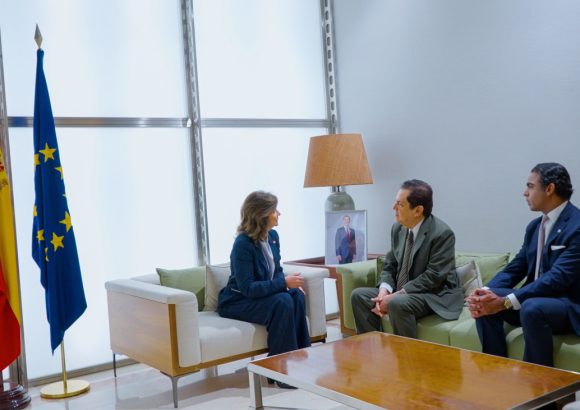
The Dominican Republic’s Vice President Raquel Peña is set to launch an official two-day visit to Spain this Wednesday and Thursday, with an agenda centered on boosting foreign capital inflows, cementing robust public-private collaboration, and expanding strategic cross-border partnerships that underpin the nation’s long-term economic expansion trajectory.
This official trip forms a core component of President Luis Abinader’s broader foreign economic strategy, which aims to deepen diplomatic and commercial connections with global partners while solidifying the Dominican Republic’s standing as one of the most attractive investment hubs across the Caribbean and Latin America. The country has steadily built a reputation for economic resilience and policy predictability in recent years, making this outreach a logical next step to unlock new growth opportunities.
As the sitting leader of the Dominican Republic’s Investment Promotion Cabinet, Peña will hold key talks with executives from the Spanish Confederation of Business Organizations (CEOE). The scheduled discussions will cover emerging cross-border trade openings, pipeline infrastructure and commercial investment projects, and expanded joint collaboration between Dominican and Spanish firms across high-priority strategic sectors that align with both nations’ economic goals.
These bilateral business engagements come on the heels of the Dominican Republic’s high-profile participation in the American Investment Forum 2026, where national government representatives highlighted the country’s competitive investment climate, consistent macroeconomic stability, and a suite of pro-business regulatory policies designed to lower barriers for international entrants.
Beyond business-focused meetings, Peña will also take part in the inaugural Libertas Forum, a high-level gathering that brings together European and Latin American leaders to deliberate on shared priorities including democratic governance, the rule of law, protection of fundamental rights, and inclusive sustainable economic development. During her participation, she is scheduled to outline the Dominican Republic’s current public policy framework, which prioritizes sustained economic growth, durable institutional stability, and productive public-private partnerships.
Peña’s official agenda also includes dedicated meetings with leadership from the Royal Spanish Academy (RAE), as well as representatives from Spain’s political and cultural spheres. These discussions are intended to strengthen people-to-people and institutional ties across non-economic domains, building a more comprehensive bilateral relationship between the two nations.