The Bahamian government is set to launch a transformative step for the nation’s energy sector on Thursday, holding the long-awaited groundbreaking ceremony for the new liquefied natural gas (LNG) terminal on New Providence. This kickoff comes just days after a crippling island-wide power outage last Sunday exposed the critical vulnerabilities of the country’s aging electricity infrastructure, making the modernization project far more urgent than before.
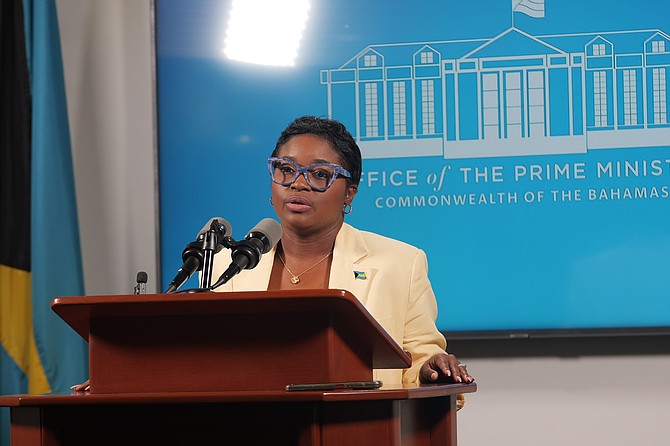
Energy, Utilities and Aviation Minister JoBeth Coleby-Davis officially announced the ceremony this Thursday, framing the LNG terminal as a cornerstone of the government’s sweeping energy reform agenda. The overarching goals of this initiative are threefold: boost power supply reliability, cut national fuel expenditures, and bring down household electricity bills for Bahamian consumers.
The recent full island blackout served as a stark reminder of the risks inherent in upgrading a decades-old power network while still relying on it to serve the entire population. In her address, Coleby-Davis broke down the role LNG will play in the country’s future energy system, explaining that LNG – natural gas cooled to liquid form for safe transport to The Bahamas – will be regasified on-site and used to generate power. Unlike the heavy fuel oil and diesel currently relied upon by the nation’s generators, natural gas burns far cleaner, producing significantly lower greenhouse gas and pollutant emissions, and requires far less ongoing maintenance of generation equipment.
Economic benefits are a core draw of the transition. Ministry projections estimate that shifting to LNG will generate up to $100 million in annual fuel cost savings for the system, savings that will be passed directly to consumers through reductions in the fuel portion of their electricity bills. The transition will also allow Bahamas Power and Light, the national utility, to cut its dependence on expensive temporary rental power generation, freeing up capital to invest in permanent, long-lasting grid infrastructure upgrades.
The LNG terminal is not a standalone solution: it forms the backbone of a fully diversified national energy portfolio that will pair 172 megawatts of LNG-powered generation with utility-scale solar farms, utility-scale battery energy storage systems, fully upgraded substations, and modernized transmission infrastructure. “This balanced energy portfolio gives us greater reliability, greater resilience, lower emissions and stronger energy security,” Coleby-Davis noted.
Development of complementary renewable energy projects is already well underway, the minister confirmed. Utility-scale solar developments on New Providence have secured required land parcels, construction is progressing on schedule, and the first utility solar power is expected to connect to the grid and start delivering electricity in March 2027. Parallel upgrades to the island’s transmission and distribution network are also moving forward, with new substations, intelligent switching systems, and digital control technologies being installed across the grid. Final system testing for these distribution upgrades is on track to wrap up by the end of July this year.
Coleby-Davis acknowledged the complexity of the undertaking, comparing the ongoing grid upgrade process to renovating a home while still living in it. “We are rebuilding our electricity system while continuing to provide electricity to an entire nation,” she said. “It is complex and challenging, but it is necessary.”
Bahamian consumers can expect to begin seeing tangible benefits from the full suite of energy reforms by 2025, with lower fuel costs, cleaner power generation, and a far more resilient and reliable power network. The Clifton Pier LNG terminal is just one component of the government’s national energy reform plan, which also extends to the Family Islands, where new renewable energy and hybrid power projects are being developed to improve reliability and cut electricity costs across the entire archipelago.