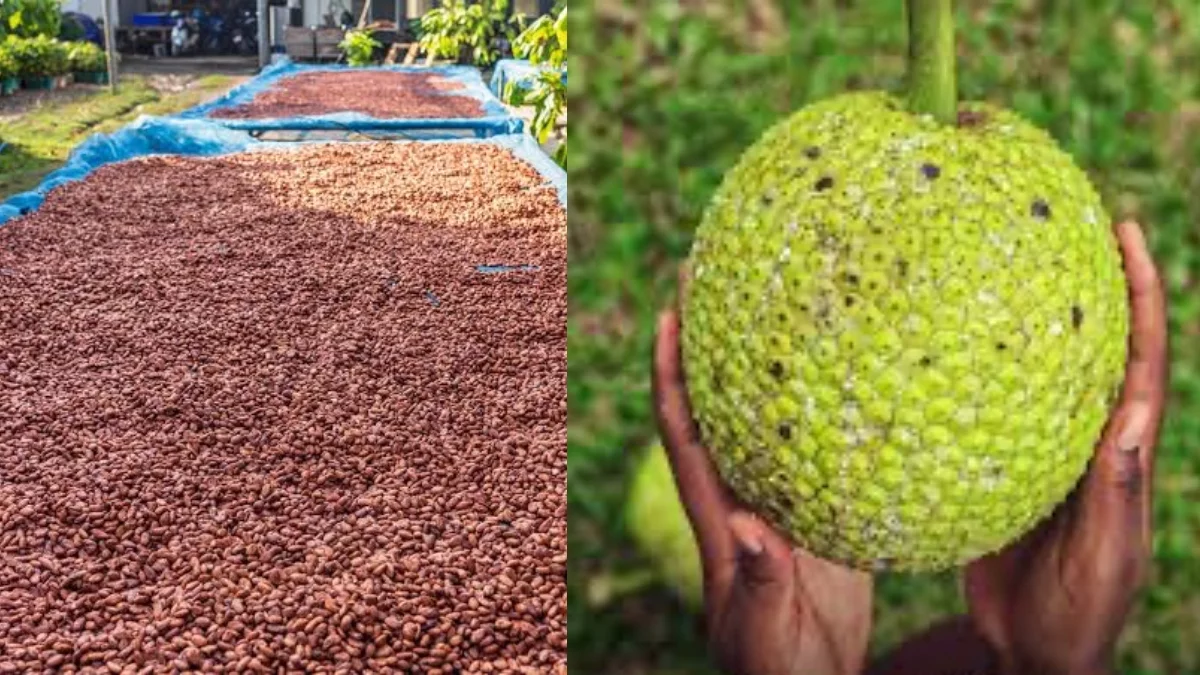
In early July 2026, a senior delegation of diplomatic and institutional stakeholders traveled to Haiti’s Grand’Anse department to review on-the-ground progress of two landmark international agricultural development initiatives: the Agricultural Value Chain Promotion for Employment and Resilience (PROFIT) project and the Smallholder Agriculture Market Support (SAMS) program. Jointly implemented by the International Labour Organization (ILO) and the World Food Programme (WFP), these programs are designed to empower small-scale Haitian producers by focusing on two high-potential domestic sectors—cocoa and breadfruit—with the dual goals of revitalizing the country’s rural economy and generating formal, dignified employment opportunities for local communities.
Nicole Boni Kouassi, Deputy Special Representative of the UN Secretary-General for Haiti and the country’s UN Resident and Humanitarian Coordinator, emphasized that the PROFIT project has already delivered tangible proof that strategic investment in agricultural value chain development can deliver transformative results for Haiti. Early outcomes in the cocoa and breadfruit sectors confirm that significant untapped economic potential exists, and that Haitians—particularly the country’s large youth population—are eager to participate in sustainable economic activity when clear, actionable opportunities are made available to them.
Haitian cocoa has long been celebrated globally for its distinct, high-quality aromatic profiles and flavors, positioning it well to access premium, profitable niche markets, especially through international fair trade networks. Breadfruit, meanwhile, delivers multiple layers of value: it strengthens national food security, creates opportunities for local value-added processing, and allows smallholder producers to diversify their income streams to reduce vulnerability to market shocks. As an early indicator of the sector’s growing international traction, PROFIT-supported Haitian producers showcased their cocoa products and byproducts at the 2025 Paris Chocolate Salon in November, where the offerings drew substantial interest from international buyers and consumers alike.
The success of these interventions depends on robust cross-sector coordination between Haitian public institutions, international technical and financial partners, local private sector businesses, and grassroots producer organizations. This collaborative approach ensures that all program activities are adapted to local context and needs, while also expanding and improving the support services available directly to cocoa and breadfruit producers across the country.
Since the launch of the two projects, they have delivered a wide range of measurable impacts across Grand’Anse. Key achievements include the construction of a 250-ton annual capacity cocoa fermentation facility and four breadfruit processing centers with a combined monthly processing capacity of 100 tons, as well as the full reconstruction of the Chambellan public market. The initiatives have created 2,000 direct and indirect jobs for local workers, completed a technical and economic feasibility study focused on processing breadfruit into flour and other value-added products, and registered and georeferenced more than 10,000 producers on a centralized logistics intelligence platform to improve market access.
Additional outcomes include the establishment of 70 fully functional solidarity producer cooperatives, capacity building for six local agricultural service providers to improve the quality of support they offer smallholders, and a threefold increase in cocoa exports from Grand’Anse over just two years. The projects have also facilitated the sale of more than 30 tons of locally produced breadfruit flour to WFP for use in its national school feeding programs, enabling 6,789 local producers to secure stable income through WFP’s local procurement initiative, which represents a total investment of more than $2 million in local agricultural communities.
More than 1,900 lead producers have completed training in agroecological farming practices, post-harvest handling, aflatoxin prevention, and financial and commercial management. Over 2,000 smallholder farmers have received critical agricultural inputs, including 5 tons of seeds, 99,500 seedlings, and 352 goats to support production. Five new beekeeping enterprises have been launched to help rural households diversify their income streams, and 2.5 kilometers of critical agricultural access roads have been rehabilitated, with a truck and four tricycles provided to reduce barriers to transporting products to market.
The projects have also supported the creation of eight community mutual aid societies and selected eight local micro-enterprises to receive targeted financial support. Major structural investments have been completed, including the construction of a grain mill, two product aggregation centers, two storage facilities, and a dedicated cocoa drying area. Almost 2,900 small-scale producers have been trained in the Participatory Integrated Climate Services for Agriculture (PICSA) approach, and receive customized climate information via SMS and radio to help them adapt to changing weather patterns. After Hurricane Melissa hit the region, the programs disbursed more than $81,280 in compensation payments to 1,726 insured farming households, supporting their post-disaster recovery and strengthening long-term resilience to climate shocks.