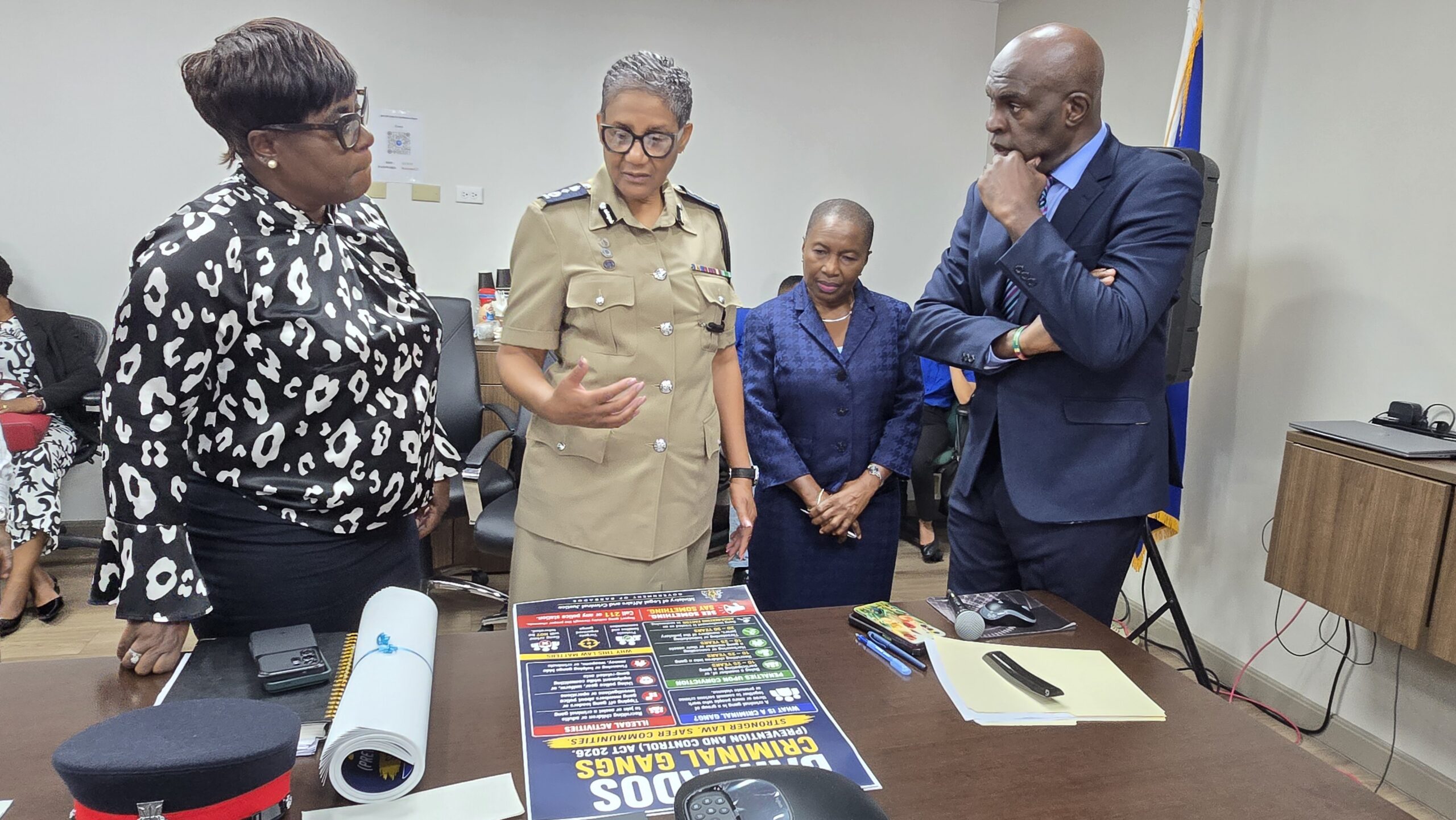
Barbados’ government is taking a proactive, community-centered step to curb gang-related violence and organized crime, launching a nationwide public education campaign designed to deter citizens from harboring fugitive gang members and assisting criminal gang operations. The initiative comes directly on the heels of the recent passage of the landmark Criminal Gangs (Prevention and Control) Act, legislation that introduces harsh, mandatory penalties for a range of gang-connected offenses to disrupt criminal networks across the island.
Under the new law, a broad set of gang-specific activities have been formalized as criminal offenses, with nearly all carrying mandatory minimum prison sentences ranging from 10 to 25 years. For particularly severe offenses – including targeted attacks on law enforcement personnel, and individuals holding leadership roles or providing critical organizational support to gangs – maximum sentences can stretch up to 35 years behind bars.
The official launch of the campaign was hosted at the Office of the Attorney General, drawing attendance from newly appointed Commissioner of Police Sonia Boyce, senior ministry officials, and representatives from the Barbados Association of Principals of Public Secondary Schools, who accepted batches of campaign posters to distribute across secondary institutions nationwide. A photo from the event captured Lashley and Boyce unveiling the campaign’s central public awareness poster (Credit: Lourianne Graham/Barbados TODAY).
Minister of Legal Affairs and Criminal Justice Michael Lashley outlined the structure of the multi-channel campaign, which forms a core component of the national government’s broader crime prevention strategy. At its center are two distinct public service announcements (PSAs): one that breaks down the specific provisions and penalties outlined in the new Criminal Gangs Act, and a second that delivers a general message about the legal risks of harboring wanted gang members. Lashley emphasized that the new legislation imposes “very stiff penalties” for anyone found hiding gang affiliates or facilitating recruitment of new members into criminal organizations.
Beyond broadcast PSAs, the campaign will expand into communities across the country, deploying printed posters, in-person outreach to secondary schools, local community groups, and national service clubs. Lashley stressed that cross-sector collaboration is critical to the initiative’s success, noting that every stakeholder with a role in crime prevention must be brought into the effort. To maximize reach, particularly among younger audiences, the campaign will also leverage major social media platforms including WhatsApp, Instagram, and Facebook to spread its message.
Notably, community members played a central role in developing the two PSAs, a deliberate choice that Lashley says marks the start of a broader community-centered engagement strategy. He encouraged all Barbadians to see the campaign not just as a formal warning about legal consequences, but as a collective call to action to join the national fight against organized crime.
Lashley also expressed full confidence in newly appointed Police Commissioner Sonia Boyce’s leadership, while underlining that law enforcement action alone cannot solve Barbados’ gang crime crisis. “We cannot solve it by just enforcement,” he explained. “You have to solve it by reaching into communities and getting persons who are at the brink of touching the criminal justice system, and persons who are young. That we believe are vulnerable, who might not be part of the criminal justice system but might be vulnerable to gang leaders and drug dealers.”
The outreach to secondary schools reflects this focus on prevention: by engaging young people early, the government hopes to cut off recruitment pipelines that gangs rely on to expand their membership and criminal operations across the island.