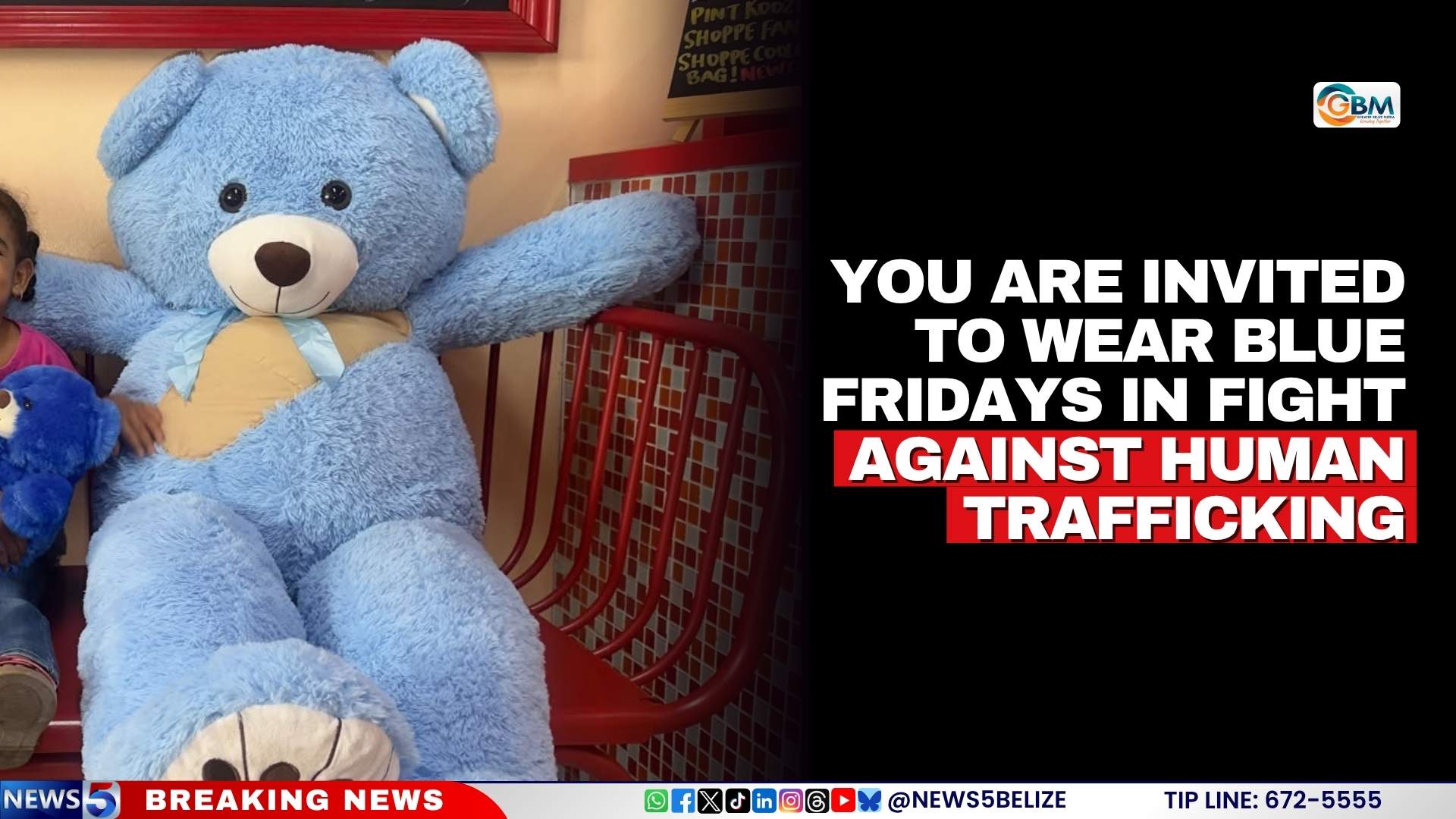
In a collective push to turn public attention to the pervasive crisis of human trafficking and child exploitation, Belize’s National Commission for Families and Children (NCFC) has issued a nationwide call for residents, local organizations, and private businesses to participate in Blue Fridays throughout the month of July. The initiative forms a core outreach arm of the ongoing Blue Teddy Bear Campaign, a multi-stakeholder effort dedicated to strengthening protections for vulnerable communities across the Central American nation.
Unlike large-scale policy-driven campaigns, this effort centers on a small, accessible act of solidarity: wearing blue clothing every Friday. Organizers note that this simple visible gesture is designed to create natural openings for community conversations, break down silence around the topic of human trafficking, and push the public to recognize that ending exploitation cannot be left to government agencies alone. Collective action from every corner of society, they emphasize, is required to keep children and other at-risk groups safe from abuse and exploitation.
To amplify the campaign’s reach, participants are invited to document their participation by taking photos with friends, colleagues, or family members, then share their posts on popular social media platforms using two official hashtags: #BlueTeddyBear and #WearBlueFriday. Tagging the NCFC in posts also helps organizers track public engagement and highlight community participation across the country.
The Blue Teddy Bear Campaign itself launched earlier in 2026 as a partnership between NCFC, UNICEF Belize, and Belize’s Ministry of Human Development, Family Support and Gender Affairs. The initiative’s core mission extends beyond basic awareness-raising: it seeks to equip local communities with the tools to identify, prevent, and report violence and abuse against children. At the heart of the campaign’s branding is a distinctive symbol: a blue teddy bear wrapped in a bandage, which stands as a visual representation of the comfort, healing, and targeted protection that the movement aims to deliver to children who have experienced harm. Rather than stopping at raising public consciousness, the campaign prioritizes empowering local institutions including families, schools, community associations, and workplaces to take tangible action against exploitation and trafficking.