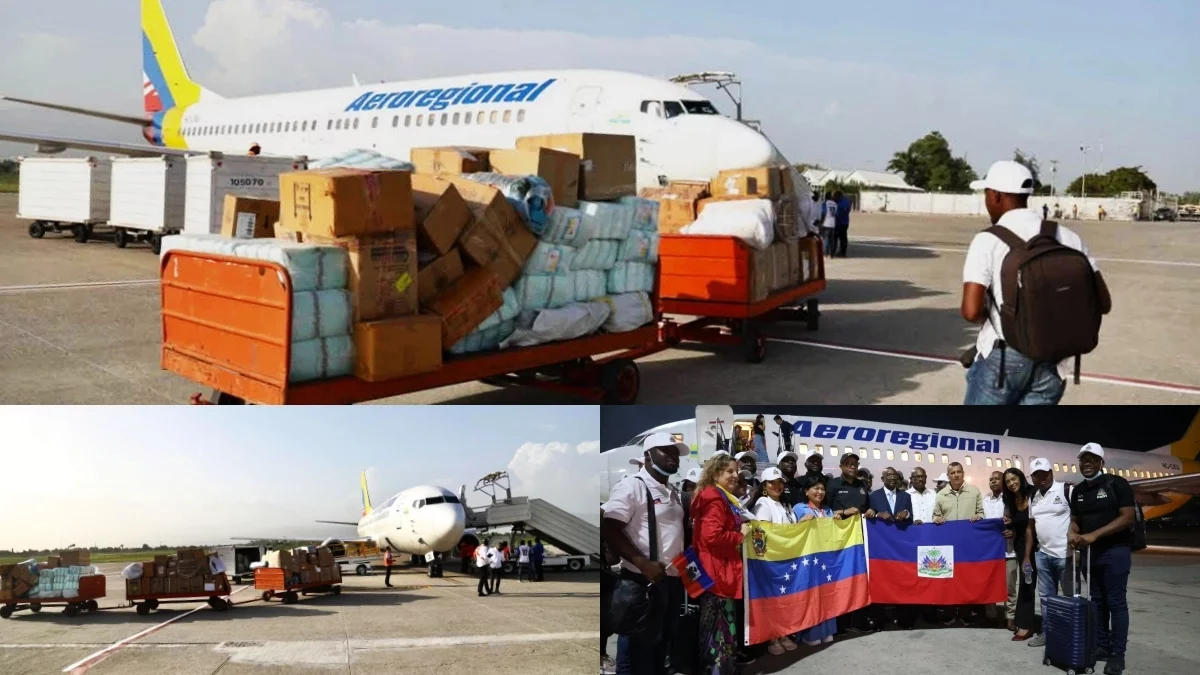
In an extraordinary display of cross-border solidarity that defies widespread domestic challenges, the government of Haiti launched a large-scale medical and humanitarian mission to earthquake-stricken Venezuela on Tuesday, July 7, 2026. The deployment comes in response to the devastating pair of earthquakes that struck Venezuela on June 24, leaving a staggering trail of destruction that has been tallied as at least 3,685 dead, over 16,700 injured, and an estimated 20,000 to 50,000 people missing, according to provisional data updated July 8.
Heading the Haitian mission is Dr. Sinal Bertrand, the country’s Minister of Public Health and Population (MSPP), who leads a team of 29 top-tier specialists covering critical care specialties: orthopedics, general surgery, anesthesiology, gynecology and internal medicine. Alongside the medical team, the delegation carries 5.5 tons of life-saving essential supplies, including portable ultrasound machines, oxygen concentrators and specialized pediatric care equipment, all bound for communities impacted by the seismic disaster.
Unlike many symbolic aid missions that bring only advisory support, this Haitian delegation is structured to deliver direct, frontline care for as long as Venezuelan authorities require it. “We did not come here to deliver leftovers, but to share what little we have with the Bolivarian people of Venezuela, as a sign of solidarity and fraternity,” Dr. Sinal told reporters on arrival at Simón Bolívar International Airport. “We did not send a consultative delegation; we came with specialists ready to make themselves available to the Venezuelan government for 15, 20, or 30 days, or even as long as necessary.”
At the airport, the Haitian delegation was formally welcomed by senior Venezuelan officials, including Vice Minister of Outpatient Care Networks Dr. Noly Fernández and Major General Manuel Castillo Rengifo, Venezuela’s ambassador-designate to Belarus.
In remarks following the reception, Dr. Fernández expressed profound gratitude on behalf of the Venezuelan government and public, underscoring how meaningful the Haitian support is at a moment of national crisis. Venezuela’s Ministry of People’s Power for Health has already begun coordinating deployment of the Haitian medical team through its internal Observatory of Strengths and Weaknesses, with the specialists set to be sent to the hardest-hit regions, primarily the capital district of Caracas and the coastal state of La Guaira.
“Venezuela welcomes them with great love, solidarity, and respect for Bolivarian ideals. We share a common history that will allow us to move forward together,” Dr. Fernández said. “Thanks to these specialists, we will be able to support our citizens both spiritually and physically, demonstrating that Venezuela is not alone.”
Beyond delivering immediate care, the mission carries broader symbolic weight: as Haiti continues to navigate its own persistent social and economic challenges, the decision to share its limited resources reflects longstanding fraternal ties between the two nations. The Haitian government extended formal condolences to families who lost loved ones in the quakes, conveyed wishes for a swift recovery to all injured people, and affirmed its full confidence in Venezuela’s ability to rebuild and recover from the disaster.