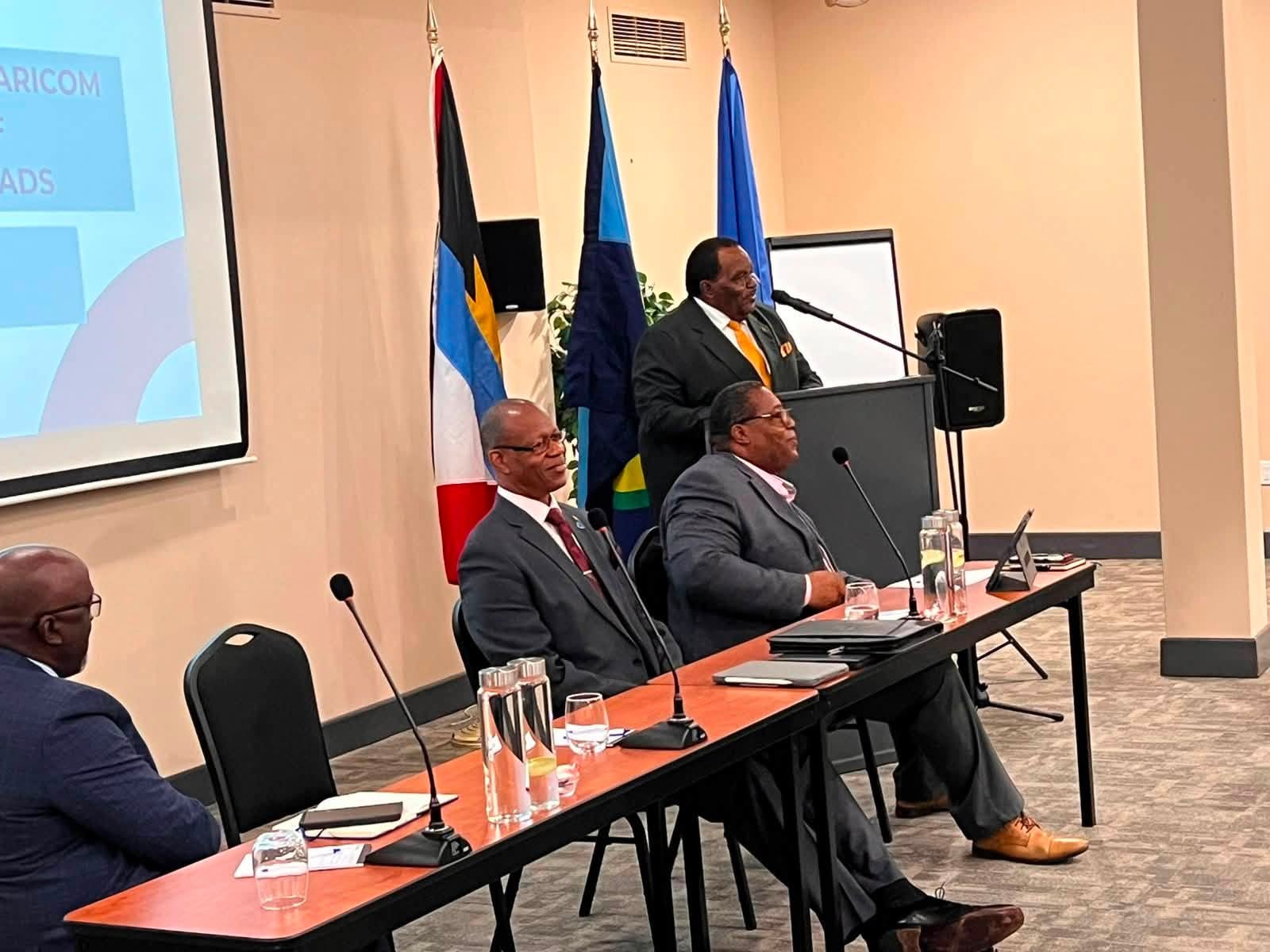
From July 1 to 3, 2026, the capital city of St. John’s in Antigua and Barbuda welcomed 32 senior intelligence representatives from all Caribbean Community (CARICOM) member states, alongside delegates from seven regional and global partner organizations, for the 35th annual gathering of the Standing Committee of Regional Intelligence Heads — one of the Caribbean’s most high-stakes and influential security cooperation events. Organized jointly by the CARICOM Implementation Agency for Crime and Security (CARICOM IMPACS) and Antigua and Barbuda’s Office of National Drug and Money Laundering Control Policy (ONDCP), the three-day summit centered on aligning regional strategies to counter the growing wave of cross-border security threats endangering Caribbean communities.
At the official opening ceremony, Antigua and Barbuda’s Attorney General, the Honourable Sir Steadroy C. Benjamin, delivered a keynote address on behalf of Prime Minister Gaston Browne, who was unable to attend the event. In his pre-recorded message, Prime Minister Browne stressed a core, unifying principle for the gathering: regional security is a collective responsibility. No single Caribbean nation has the resources or reach to defeat transnational organised criminal networks on its own, he emphasized, noting that coordinated action and information sharing are non-negotiable for protecting regional stability. Browne also drew a direct connection between the summit’s outcomes and Antigua and Barbuda’s upcoming hosting of the Commonwealth Heads of Government Meeting (CHOGM 2026), scheduled for November this year. A robust, coordinated regional intelligence framework, he argued, is the critical foundation for delivering a safe, secure, and successful landmark global event.
Over the course of the summit, intelligence leaders conducted deep dives into the full spectrum of urgent security challenges facing the region. Beyond long-standing threats including drug trafficking, illicit weapons smuggling, irregular migration, and the persistent risk of terrorism and violent extremism, delegates zeroed in on one rapidly growing menace that has emerged as a top priority: cyber-enabled organised fraud. Delegates unanimously agreed that cyber fraud is no longer a peripheral financial issue or a minor nuisance for consumers. It has evolved into a highly sophisticated, globally coordinated criminal industry that drains life savings from working-class Caribbean households and generates billions in illicit revenue that funds other serious criminal operations across the region.
A key focal point of the gathering was a dedicated working session with representatives from regional and international partner organisations, which reinforced the summit’s core theme: countering transnational crime demands collaboration that extends beyond national and even regional borders. By the close of the meeting, delegates reached a consensus on three key priority actions: strengthening real-time cross-border intelligence sharing, deepening existing strategic partnerships between member states and external stakeholders, and leveraging advanced financial intelligence tools to trace and disrupt the money flows that sustain transnational criminal networks.
The summit was chaired by ONDCP Director Lieutenant Colonel Edward Croft, who concluded his tenure in the role at the close of the event. CARICOM IMPACS Executive Director Lieutenant Colonel Michael Jones publicly praised Croft for his steady, insightful leadership throughout the proceedings and highlighted his decades of dedicated service that have delivered tangible, lasting improvements to regional security across the Caribbean. For Antigua and Barbuda, hosting the 35th meeting marks a meaningful milestone in the nation’s commitment to regional cooperation, with the summit successfully advancing collective action to build a safer, more secure future for all CARICOM member states.