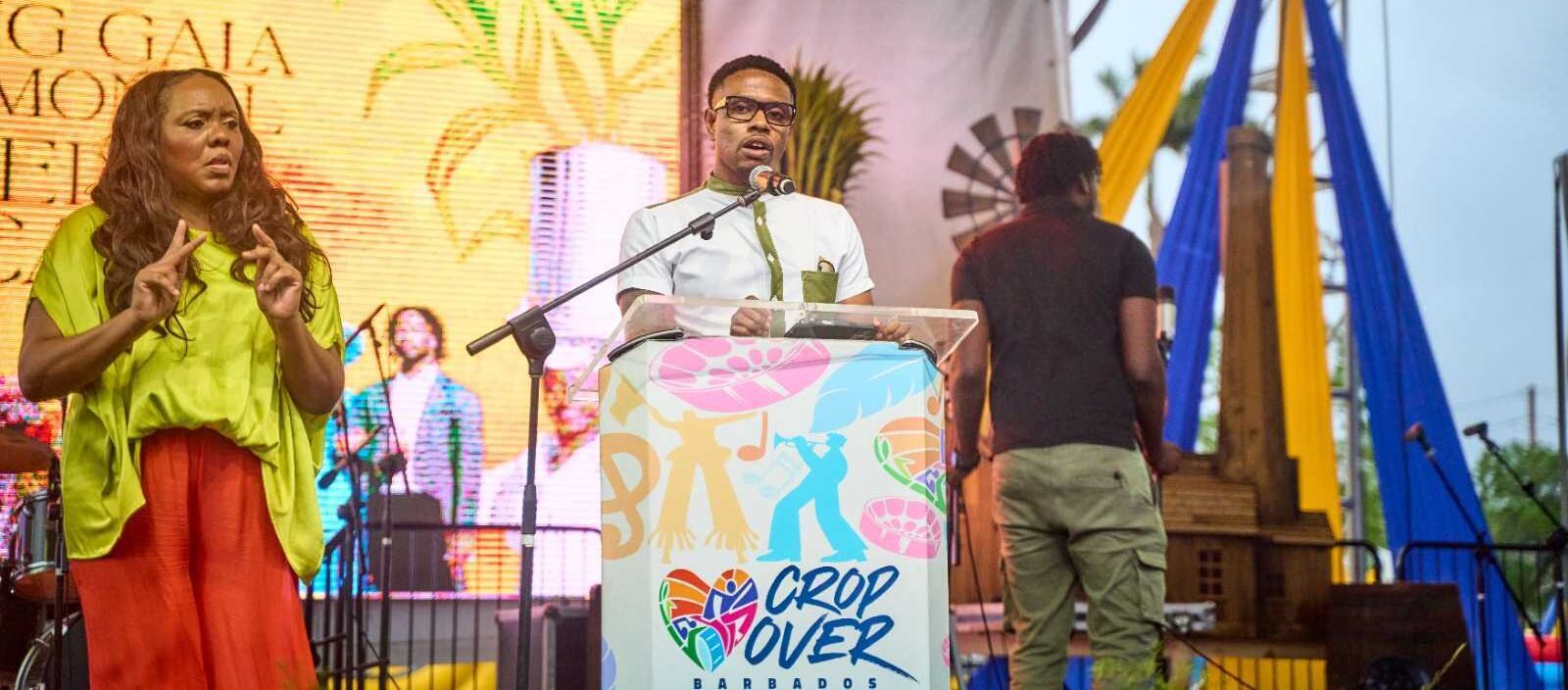
At the official launch of the 2026 Crop Over Festival, held Saturday at Queen’s Park during the traditional Ceremonial Delivery of the Last Canes, a senior Barbadian government official has outlined an ambitious vision to reshape the nation’s creative economy, moving it beyond seasonal activity to become a sustained, year-round driver of income and opportunity. Senator Shane Archer, Minister of State in the Prime Minister’s Office with oversight for Youth and Culture, used his keynote address to frame the iconic national festival as standing at a critical turning point — one that requires intentional evolution to unlock greater economic value while preserving its unmistakeable Barbadian identity. Against a backdrop of colorful performances, infectious music and joyful community celebration that captures the spirit of the annual harvest festival, Archer laid out his vision for a reimagined cultural sector that delivers consistent benefits to creative practitioners long after the final notes of Crop Over fade each year. “We are standing on history, feeling the energy of the present and building towards a future that must be more organised, more inclusive, more professional, more profitable for practitioners, and more deeply rooted in Barbadian culture,” Archer told the gathered crowd. The minister acknowledged that the festival’s current operational structure has gaps that need addressing, pointing to planning, cross-stakeholder coordination, internal communication, production workflows, and overall attendee experience as key areas for improvement. “We have already identified places where improvements can be made. Those lessons will be taken seriously,” Archer said, confirming that government representatives have already held extensive consultations with creative workers, performing artists, event promoters and other core stakeholders to gather input for reform. He emphasized that widespread public and industry support for strengthening the festival creates a strong foundation for change, noting “People love Crop Over. People want it to succeed. People want stronger systems, and people are ready to build it.” Looking ahead to the 2026 event and long-term sector reform, Archer stressed that earlier, more intentional planning and sharper execution will be critical to shifting the nation’s approach to cultural production. The core of his proposal is abandoning the long-held framing of culture as a seasonal, weeks-long activity, and instead building an ecosystem that supports creative work and income generation across the entire calendar. “That means stronger preparation, earlier engagement, sharper execution, and clearer pathways for practitioners to plan their year,” he explained. “It means moving beyond the idea that culture is something that we remember for a few weeks…culture must live. Culture must work all year, but most importantly, culture must earn all year.” Archer also used the occasion to redefine the mandate of the National Cultural Foundation (NCF), the public body that oversees cultural activity in Barbados. He noted that the NCF was never intended to function solely as an events coordination office, and that its core mission is to empower Barbadians to grow and develop through engagement with their native culture. “We inherit the vision. We also inherit the duty to update the systems that carry that vision,” he said. Tying the 2026 festival to two landmark national milestones — the 60th anniversary of Barbados’ independence and the sixth year since the nation became a republic — Archer framed Crop Over as one of the most powerful expressions of Barbadian national identity forged over the country’s modern history. “Across those six decades, Crop Over has been one of the clearest expressions of nationhood,” he said. Through its diverse artistic forms, including calypso, soca, steel pan, masquerade, dance, visual art and local cuisine, the festival shares a clear message about Barbados with the global community, he added: it “tells the world that Barbados is a place of imagination, discipline, resilience, brilliance, style and depth.”