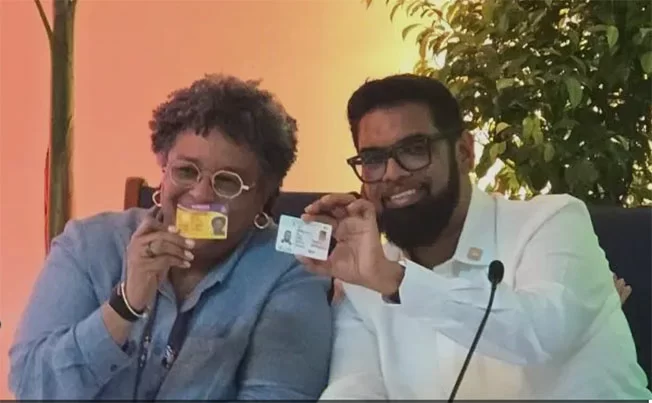
Two Caribbean nations, Guyana and Barbados, have marked a groundbreaking turning point for regional integration within the Caribbean Community (CARICOM), rolling out a new regime that allows their citizens to cross shared borders using only a digital national electronic ID (e-ID), eliminating the longstanding requirement for a physical passport. The policy officially came into force on July 1.
This launch makes Guyana and Barbados the first member states of CARICOM to roll out a fully functional passport-free travel framework built entirely on nationally issued electronic identification. The arrangement is open to all citizens of both countries who hold e-ID credentials that meet the strict international standards set by the International Civil Aviation Organization (ICAO).
A ceremonial inaugural flight to mark the historic change took place on Wednesday, carried out by regional carrier Caribbean Airlines on the route from Guyana’s capital Georgetown to Barbados’ capital Bridgetown. Senior immigration officials from both nations traveled on the flight to formally activate the new cross-border processing procedure. According to statements from the two governments, the entire system was planned and rolled out in less than six weeks, after the initial agreement was struck earlier this year by Guyanese President Irfaan Ali and Barbadian Prime Minister Mia Mottley.
Officials from both countries say the new arrangement is designed to make cross-border travel simpler, faster and more affordable for all eligible citizens. Travelers no longer need to apply for or renew a passport when making trips exclusively between the two nations, cutting down on administrative costs and wait times. Beyond convenience, the policy is expected to drive growth in key areas including cross-border tourism, bilateral trade, business networking and labor mobility across the two countries.
CARICOM leaders have framed the move as far more than a minor adjustment to travel rules—it aligns directly with the long-term ambition of the CARICOM Single Market and Economy (CSME), which seeks to build out full free movement of people, goods, services and capital across the entire Caribbean region. The bloc has spent decades working toward a unified system that allows Caribbean citizens to move seamlessly between member states for work, leisure and family visits.
The development also carries important implications for fellow CARICOM member state Suriname. Suriname has committed to advancing regional integration and free movement of people as part of its bloc membership. While passports are still required for travel to and from Suriname for now, the Guyana-Barbados agreement provides a tested blueprint for future bilateral or regional free movement arrangements. Notably, Suriname already issues modern, ICAO-aligned electronic identity documents, making it technically well-placed to join similar initiatives in coming years.
Regional observers and CARICOM officials broadly expect that more member states will join similar passport-free travel frameworks over the next several years. This incremental progress is steadily bringing the Caribbean region closer to a unified border regime that makes intra-bloc travel as seamless as it is within long-established regional blocs such as the European Union.