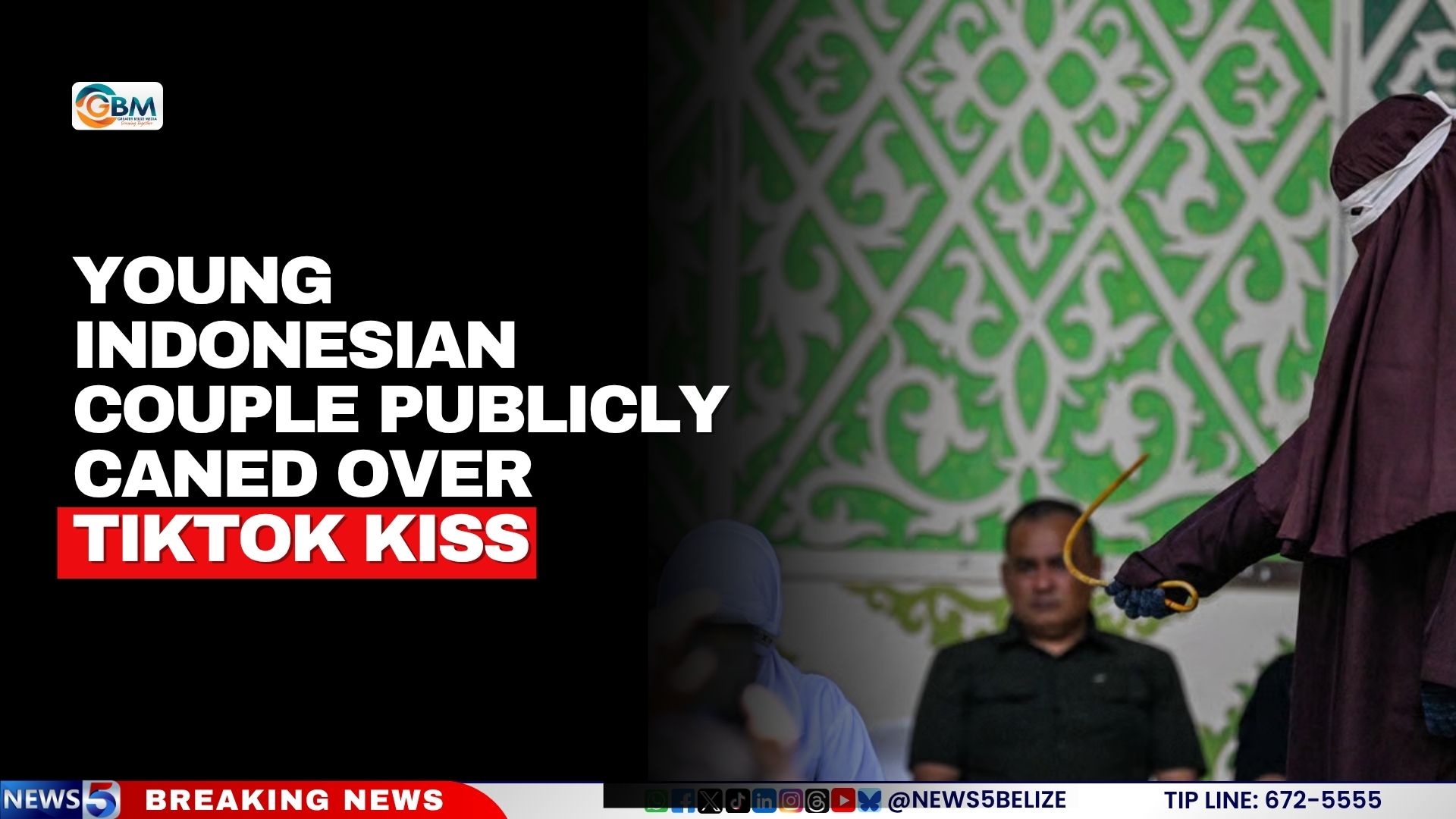
On a recent Thursday in Banda Aceh, the capital of Indonesia’s conservative Aceh province, a young unmarried couple faced a harsh public corporal punishment after their intimate moment captured on a TikTok livestream went viral across social media. The case, first reported by The Guardian UK, has drawn international scrutiny over the province’s strict application of Islamic Sharia law, the only such legal framework enforced nationwide in Indonesia.
The pair—a 22-year-old man and a 25-year-old woman—were each sentenced to 21 strokes of a rattan cane, carried out by masked officials in Bustanussalatin City Park. Local reports confirm that over 100 onlookers gathered to witness the sentence. This public punishment comes four months after the couple’s arrest in April, which followed a wave of public complaints to Sharia authorities over a clip from their February 27 livestream, which showed them kissing inside a private vehicle. Alongside the caning sentence, a court ordered the destruction of the mobile phone and USB drive that held the viral video used as key evidence in the case.
Originally, the court had handed down a sentence of 25 lashes per person, but the punishment was reduced by four strokes to account for the four months the couple spent in pretrial detention. They were not the only ones facing public caning that day: four additional people were also punished simultaneously after being convicted of separate morality offenses, including adultery and illegal online gambling.
Aceh holds a unique position in Indonesia’s legal landscape. It was granted the authority to enforce Sharia law in 2006 as part of a landmark peace agreement that brought an end to a 30-year separatist conflict that had cost thousands of lives. Under the province’s regulations, public caning is the prescribed punishment for a range of offenses labeled as morality violations, including adultery, gambling, consumption of alcohol, same-sex relations, and public displays of intimacy between unmarried people.
Human rights advocates have swiftly spoken out against the sentence. Amnesty International Indonesia issued a strong condemnation of the public caning, labeling the practice cruel, inhumane, and degrading treatment that violates basic international human rights standards. Usman Hamid, the organization’s executive director, questioned whether the couple’s consensual, private intimate act warranted either imprisonment or corporal punishment, arguing that the state’s response was wildly disproportionate to the offense.