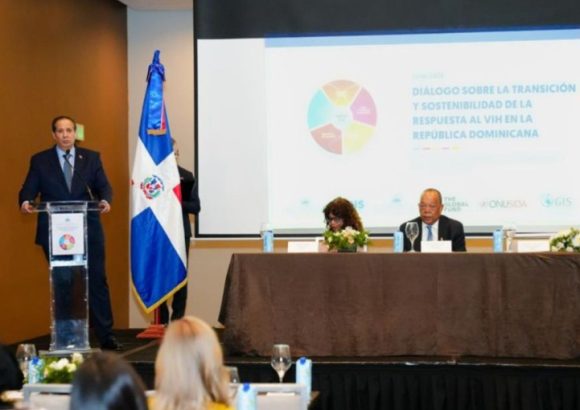
In Santo Domingo, two leading Dominican public health bodies—the Ministry of Health and the National Council for HIV and AIDS (Conavihsida)—have kicked off a nationwide collaborative dialogue focused on crafting the country’s groundbreaking Transition and Sustainability Plan for the National HIV Response, covering the 2026 to 2030 period. The initiative’s core mission is to secure consistent, long-term delivery of critical HIV-related services across prevention, clinical treatment, and ongoing patient care for communities across the Dominican Republic.
Speaking at the launch, Health Minister Víctor Atallah outlined the Dominican government’s formal commitment to embedding long-term financial stability into national HIV programming. A central plank of the upcoming plan is a managed gradual transition: moving away from heavy reliance on international donor funding toward growing domestic investment and national self-sufficiency. Atallah emphasized that the transition will not disrupt patient access to essential resources, underscoring the government’s pledge to keep lifesaving medications, cutting-edge modern treatments, and pre-exposure prophylaxis (PrEP) widely available, while also scaling up nationwide diagnostic testing efforts.
Addressing a common point of public concern, Atallah clarified that the recent uptick in officially reported HIV cases across the country is not evidence of growing transmission rates. Instead, he explained, the increase is a direct outcome of expanded testing reach, which allows public health authorities to identify more existing undiagnosed cases and connect those individuals to care faster.
In a key milestone update, officials confirmed that the Dominican Republic has already exceeded the ambitious 95% treatment coverage target set by UNAIDS, the United Nations program for HIV/AIDS response. Currently, more than 57,700 people living with HIV in the country are receiving life-extending antiretroviral therapy, and more than 51,000 of those patients have achieved durable viral suppression—an achievement that improves individual health outcomes and reduces community transmission risk.
The national dialogue brings together a diverse cross-section of stakeholders, including senior government representatives, civil society organizations focused on HIV advocacy and care, academic public health researchers, and leading international health partners. Over the course of the forum, participants will collaborate to define clear strategic priorities and design robust financing mechanisms that will guide the Dominican Republic’s national HIV strategy through the end of the decade.