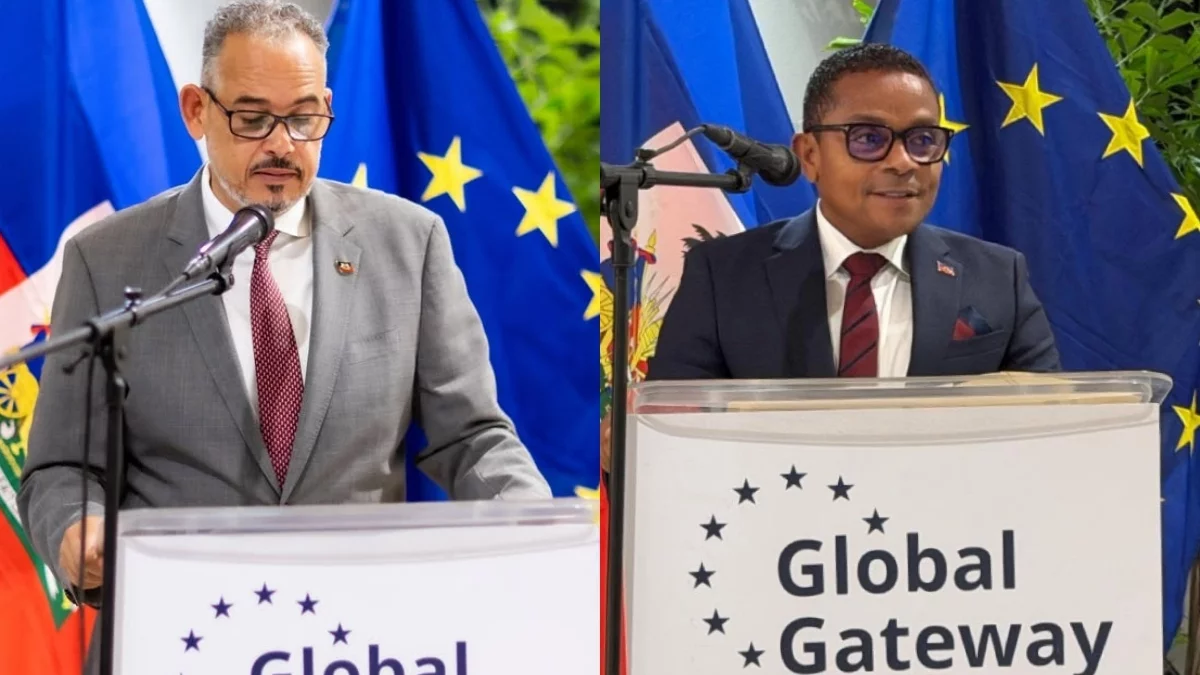
On June 29, 2026, Haiti marked a historic turning point in its quest for economic revitalization with the official launch of its first-ever National Investment Forum, branded Global Gateway Haiti 2026. The high-profile event, convened under the leadership of the European Union, drew a diverse cross-section of key stakeholders: top Haitian political leaders, major international donors from the European Union, France and Spain, leading European financial institutions, and representatives from Haiti’s domestic private sector. All attendees gathered around a unified core goal: to mobilize long-term sustainable capital that will drive inclusive, lasting transformation across the Caribbean nation.
In her opening remarks to the forum, European Union Ambassador Hélène Roos framed the event as a tangible extension of the bloc’s Global Gateway strategy. She emphasized that the initiative is designed to back Haiti’s domestic efforts to build a more secure, stable, and prosperous future by deploying targeted, transformative investments across three critical foundational pillars: governance reform, public security enhancement, and core infrastructure development.
Across the day’s productive discussions, participants reached a striking consensus on the three highest-priority sectors for investment that will unlock Haiti’s long-term economic potential.
The first and most foundational priority identified is reliable energy and electricity access. Attendees universally agreed that consistent, affordable power is non-negotiable for boosting industrial competitiveness across every major sector, from value-added agri-food processing to emerging digital services. Discussions centered on scaling up accessible renewable energy solutions, expanding community-focused mini-grids, and building out robust energy storage infrastructure to end chronic power shortages.
Second, participants prioritized investment in connectivity and transport infrastructure. Plans call for modernizing Haiti’s existing ports, airports, and key logistics corridors to open up economically isolated regions, reconnect Haiti to global trade networks, and help the country integrate meaningfully into regional and global supply chains.
Third, the forum highlighted untapped potential in agriculture and agribusiness. Haiti boasts abundant natural production capacity in high-value export commodities including cocoa, coffee, mangoes, and vetiver, but has long lacked the infrastructure to convert this potential into shared national wealth. Investment priorities here include building out cold chain storage networks, developing centralized logistics platforms, and rolling out international product certification mechanisms to help Haitian goods access premium global markets.
In his keynote address, Haitian Prime Minister Alix Didier Fils-Aimé reaffirmed his administration’s unwavering commitment to addressing the country’s most pressing security and economic hurdles to create a welcoming, stable environment for both domestic and international investment. He outlined the government’s core development priorities, which align closely with the forum’s focus areas: expanding infrastructure, modernizing ports and airports, upgrading logistics networks, and transforming the agriculture and agribusiness sectors. The overarching goal of these efforts, he noted, is to sustainably reconnect Haiti to both Caribbean regional and global international markets.
“The time has come to invest in Haiti’s resilience. The time has come to invest in its youth. The time has come to invest in its productive capacity,” the Prime Minister stated, praising the widespread mobilization of private sector stakeholders that has already laid groundwork for progress. He emphasized that the forum is not a one-off event, but rather the official starting point for an ongoing, structured process to build a transparent, actionable pipeline of investable projects across the country. The Prime Minister reiterated that restoring widespread public security remains an absolute prerequisite for economic recovery and democratic consolidation, while also reaffirming the government’s commitment to putting in place the conditions needed to hold upcoming national elections.
Serving as guest of honor for the forum’s closing session alongside Ambassador Roos, Haiti’s Minister of Public Works, engineer Joseph Almathe Pierre Louis, delivered a clear, confident address rooted in a sense of national responsibility. He laid out a straightforward vision for the path forward: “Waiting for perfect conditions cannot constitute a development strategy.”