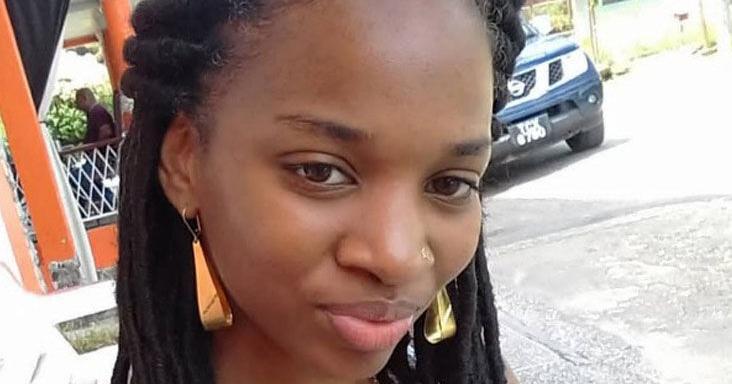
Eight years has passed since 20-year-old nursing student Sharday Emmanuel stepped out of her family’s home in Mamoral, Central Trinidad, hailed a taxi for Chaguanas, and vanished without a trace. For her father, Junior Emmanuel, every day since has carried the same hollow pain: he is certain unidentified burnt human remains found a year after his daughter’s disappearance belong to Sharday, but years of bureaucratic delays and flawed forensic testing have left his family without closure, and the person he believes responsible still free.
The case of Sharday’s disappearance echoes a grim pattern in the southern Trinidad community, coming just seven years after the murder of 12-year-old Mercedez Layne, whose battered body was found not far from where Sharday’s suspected remains were discovered in an abandoned Santa Flora oilfield. In 2019, local authorities recovered a woman’s skeletal remains and pieces of burnt clothing from the oilfield site, but the body was never officially identified. Within days of the discovery, Junior Emmanuel connected the site and evidence to his missing daughter, and reached out to the Southern Homicide Division of the Trinidad and Tobago Police Service (TTPS) to review the case.
Emmanuel was granted access to crime scene photographs of the remains, and two details immediately confirmed his worst fears: the burnt clothing recovered included a pleated skirt matching one Sharday owned, and the abandoned oilfield was an area Sharday was known to visit with a male acquaintance. For seven years, Emmanuel has waited for forensic DNA testing to confirm what he says he already knows, but the process has been mired in repeated setbacks. Senior TTPS homicide officials confirmed the first DNA test, run on a sample provided by Junior Emmanuel, returned an inconclusive result—though no official written documentation of the finding has ever been shared with the family. A second sample collected from Sharday’s mother, Marilyn Emmanuel, was sent for testing years ago, but the family has still not received a formal result.
“After two DNA tests, one inconclusive and one we never got the official results of I’m hopeful that the Homeland Security Minister can get involved and see for himself how the burnt remains fabric and the picture we have of Sharday wearing the same material and pattern matches…and send those remains to get tested again,” Emmanuel said in a recent interview. He believes police previously questioned the man he suspects of harming Sharday, but released him due to the lack of confirmed DNA evidence, letting the alleged perpetrator remain at large. “The authorities know exactly who is responsible for her disappearance but because of the inconclusive DNA result she is still considered a missing person and the demon responsible walks among us,” he added.
The past eight years have irrevocably broken the Emmanuel family, their patriarch says. “Life for my wife and myself has never been the same…not a day goes by without us calling Sharday’s name and remembering the 20 years we had her for,” he shared. Sharday’s brother Cassiel has coped with his grief by never speaking of his sister, a silence the family understands even as it deepens their pain. In the years since Sharday vanished, Cassiel has welcomed three children and is preparing to marry—milestones Sharday will never get to experience, though her young nieces and nephews already know her from family photographs. “We try our best to smile through the pain we feel every single day but inside is an emptiness that never goes away,” Emmanuel said.
The story of Sharday’s disappearance only became public when Emmanuel shared it at a United National Congress (UNC) anti-crime symposium in January 2024, where he publicly called out what he calls “inexcusable police incompetence” in the stalled investigation. When the UNC won the 2025 general election, Emmanuel hoped the new government would prioritize his case, but he has yet to hear from any party officials. He has now turned directly to newly appointed Minister of Homeland Security Rodger Alexander, requesting an in-person meeting to push for a new round of independent DNA testing.
Reconstructing Sharday’s final days has uncovered devastating new layers of pain for the family. On the morning of June 27, 2018, Sharday was captured on surveillance camera at a Chaguanas shopping mall after leaving her home—then all trace of her disappeared. Her boyfriend was supposed to meet her that morning, but when he arrived late she did not answer his calls, prompting him to alert the Emmanuels, who knew immediately something was wrong. “Sharday would not stay away from her mother. They were extremely close and Sharday loved her family,” Emmanuel said, confirming his daughter never would have chosen to leave voluntarily.
As the family searched for clues among Sharday’s friends, they opened what Emmanuel describes as a Pandora’s Box that upended their entire world: they learned Sharday had been trapped in an abusive relationship, and was planning to leave her abuser shortly before she disappeared. Voice notes shared by Sharday’s best friend, sent in the weeks before her disappearance, revealed the young nursing student had planned to tell her father about her “secret life” and feared for her safety. “This broke my heart and I now more than ever wanted to find the person who took my little girl away,” Emmanuel said.
Local media outlet Express reached out to Minister Alexander via WhatsApp Tuesday to share Emmanuel’s request for a meeting and ask if he would intervene in the case. As of publication, no response has been received.