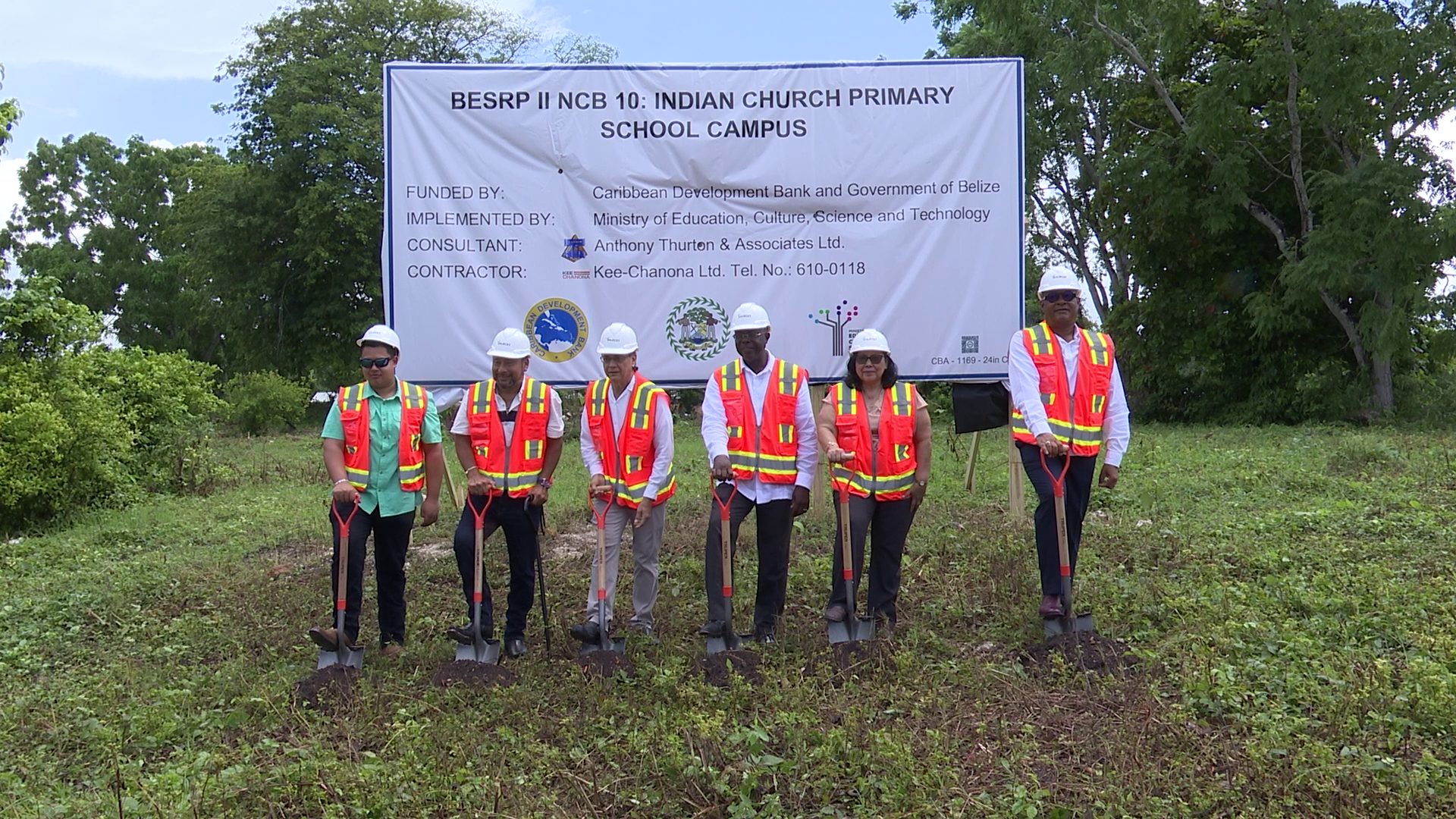
On June 29, 2026, community stakeholders, education leaders, and government officials gathered in the small rural settlement of Indian Church Village, Belize, to mark a long-awaited milestone: the official groundbreaking for a new, modern Government School campus. The development is set to transform access to quality learning for local children, delivering a facility that will more than double the current campus’ student enrollment capacity while outfitting students and educators with upgraded, purpose-built classrooms and collaborative learning spaces.
The initiative forms part of the second phase of Belize’s national Education Sector Reform Project, with funding provided by the Caribbean Development Bank to advance educational equity across rural regions of the country. Speaking at the ceremony, Ramon Cervantes, Minister of State in Belize’s Ministry of Education, emphasized that the project underscores the current administration’s core commitment to expanding accessible, high-quality education for all marginalized rural communities.
“Today marks a very special occasion for the students and for the families of Indian Church and the neighboring communities as we plant the seed for a new school here in Indian Church,” Cervantes told attendees. “This investment in educational infrastructure is a testament that our government is serious in making education accessible to all. This project will create more modern educational space to support the current and future needs of the students, of the teachers, and of the community. It will help in the development of our people, our human capital, especially in rural areas such as Indian Church. This school will accommodate more than double the number of students that are currently enrolled, and it will provide more space for creative, innovative, motivated, and inspired students.”
For Sonia Tun, principal of the existing Indian Church Government School, the groundbreaking represents far more than the start of a construction project. After years of advocacy for improved facilities to serve the growing local population, Tun described the moment as a transformative milestone that brings new hope to the entire village.
“So I am glad of experiencing this moment along with the community,” Tun said. “It’s like, you know, when you have never seen rain and you feel it, it feels like that. Here in Indian Church, this groundbreaking is more than a construction project. It is a promise, a promise that our children will walk into classrooms that inspire them, that nurture their talents, and that prepare them to contribute meaningfully to their families, their communities, and their nation.”
Once completed, the new campus is expected to serve hundreds of current and future students from Indian Church Village and surrounding nearby communities, addressing decades of overcrowding and inadequate infrastructure that have limited educational opportunity in the rural region.