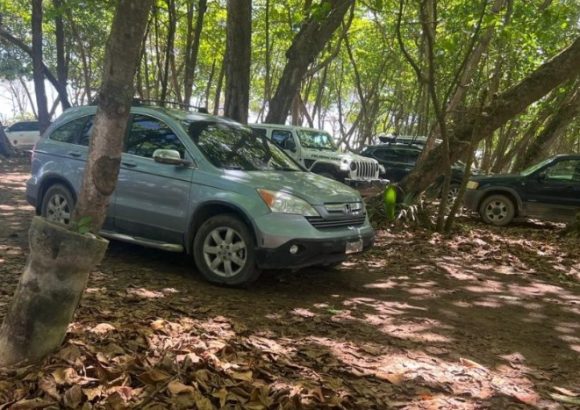
One of the Caribbean’s most iconic surfing hubs, Cabarete’s Playa Encuentro, is facing growing turmoil as local surf schools and community businesses push Dominican government agencies to crack down on unregulated vehicle access along its protected shoreline. Stakeholders warn that ongoing illegal driving and parking on the beach is putting visitors at risk, destroying fragile coastal ecosystems, and eroding the area’s hard-won reputation as a top-tier global surfing destination.
In a formal letter submitted to multiple government bodies including the Ministry of Tourism, Ministry of Environment, and the Dominican Tourism Police (Politur), local business owners outlined the scope of the problem. Despite long-standing regulations that prohibit all vehicles from entering a 60-meter protected coastal strip, cars, motorcycles, all-terrain vehicles (ATVs) and other motorized vehicles continue to enter and park in this restricted zone on a daily basis.
Beyond the environmental damage, business leaders emphasize that the uncontrolled traffic creates immediate, life-threatening hazards for the tens of thousands of tourists and local residents who use the beach each year. Surfers moving between the shore and their vehicles, playing children, vacationing families, and casual beachgoers all face constant risk of collision with motorized vehicles on the sand. Ecologically, the repeated vehicle traffic is accelerating erosion of the beach’s natural dune systems and destroying native coastal vegetation that acts as a natural buffer against storms and sea level rise.
To address the crisis, the coalition of local businesses has put forward a series of concrete demands for targeted, sustained enforcement. These include regular coordinated multi-agency inspections of the protected zone, installation of clear, visible warning signage marking the restricted area, development of designated public parking lots outside the coastal protection boundary, installation of physical barriers to block vehicle access to the sand, and the creation of a permanent collaborative management plan co-developed by local stakeholders and government authorities.
The group stressed that preserving the ecological and recreational integrity of Playa Encuentro is not just an environmental issue—it is critical to the long-term economic survival of Cabarete’s tourism economy. As one of the Caribbean’s most sought-after surfing locations, the region draws thousands of wave sport enthusiasts and casual tourists annually, supporting hundreds of local jobs across surf instruction, accommodation, food service, and retail. Without swift action to enforce existing protections, stakeholders warn, the area could lose its standing as a world-class surfing destination, putting the entire local tourism industry at risk.